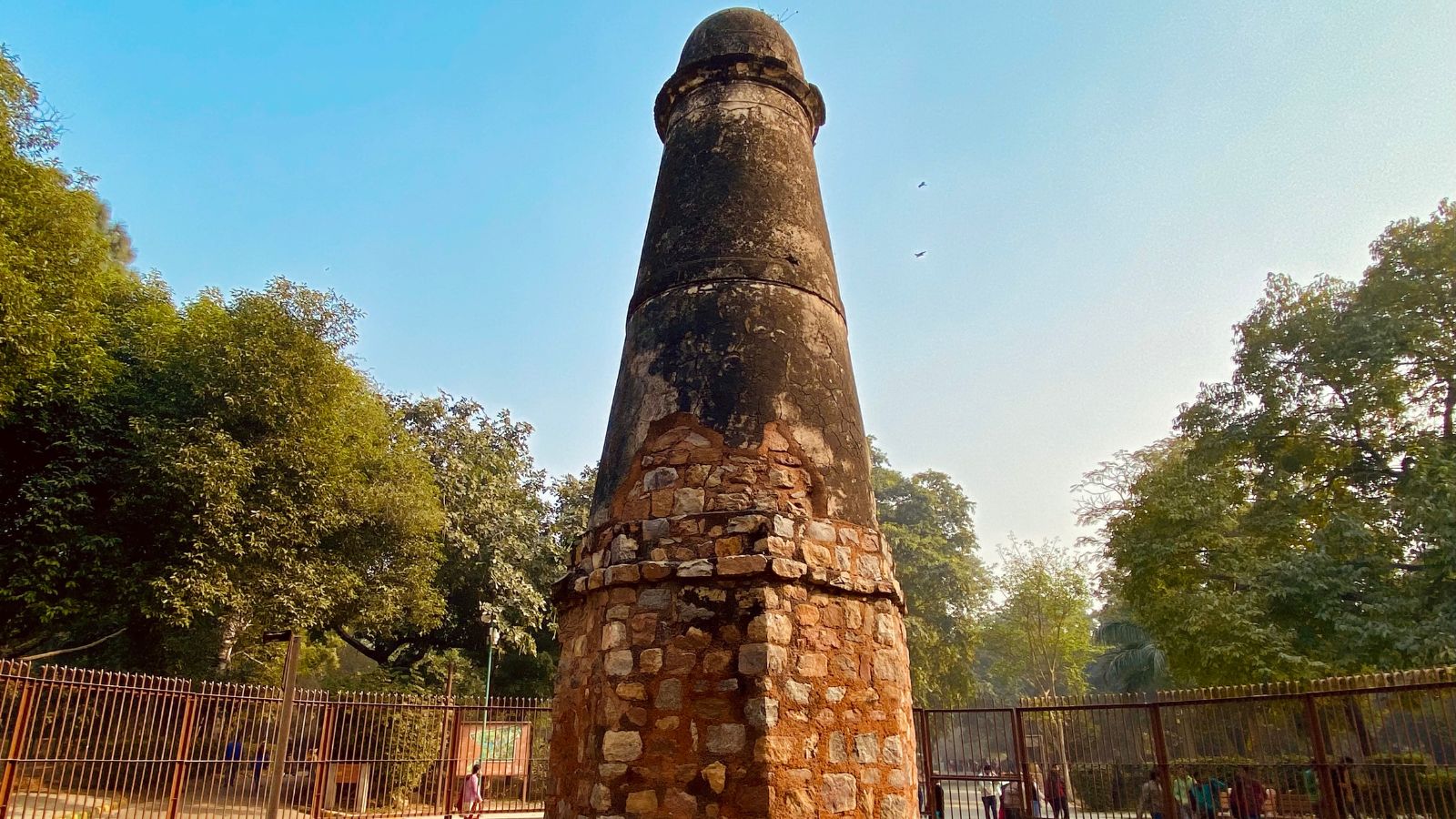
Kos Minars are medieval milestones that once dotted the highways of northern India. The name combines “kos,” a traditional unit of distance (2 miles or roughly 3.22 kilometers), with “minar,” meaning tower or pillar. These solid brick-and-lime structures were first systematically erected in the 16th century by Afghan ruler Sher Shah Suri to mark out every kos and organize his newly unified imperial roadways.
The Mughal emperors such as Akbar, Jahangir, and Shah Jahan later expanded the network, placing Kos Minars at regular intervals along the historic Grand Trunk Road, which stretched from Sonargaon near Dhaka through Kolkata, Patna, Varanasi, Allahabad, Kanpur, Agra, Delhi, Panipat, Karnal, and Ambala, then on to Lahore, Rawalpindi, Peshawar, and finally Kabul.
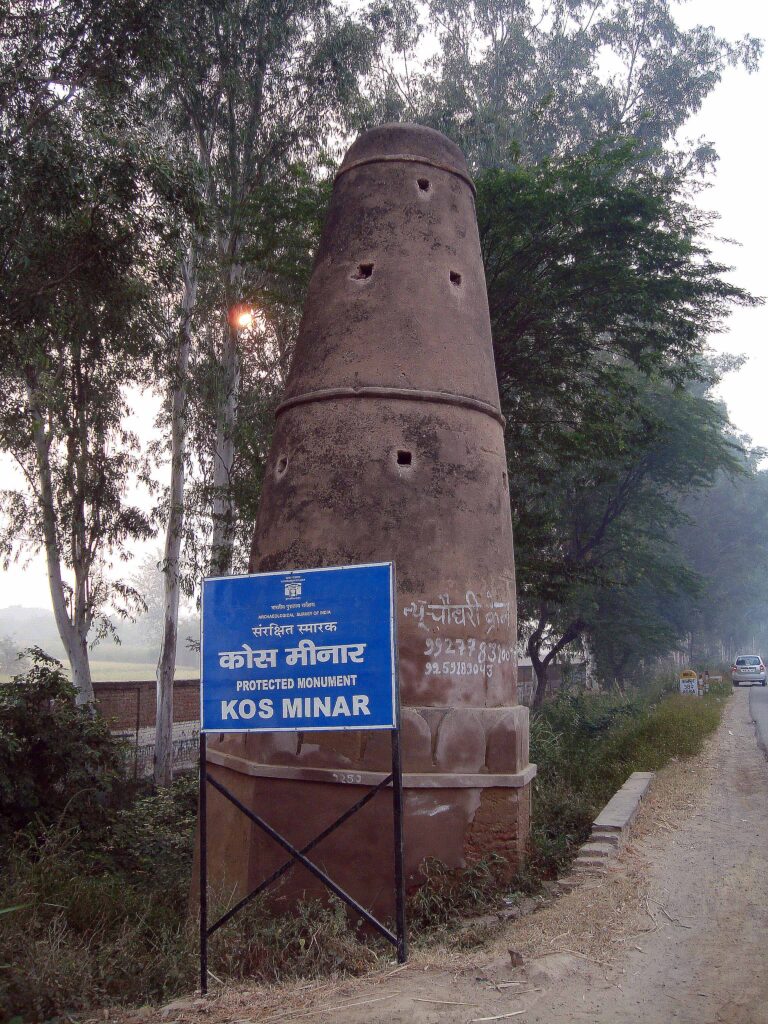
A Kos Minar in Haryana
Originally built to mark distances and guide travelers, Kos Minars soon became more than milestones. At major junctions, many were staffed by messengers, drummers, or guards who could relay royal orders and news. Some were surrounded by inns (sarais), wells, and rest facilities, helping make the Mughal communication and postal system one of the most efficient of its time. Kos Minars reassured travelers, merchants, and pilgrims about the safety and administration of imperial highways.
Today, surviving Kos Minars can still be seen in Haryana, Punjab, Delhi, Uttar Pradesh, and Rajasthan. They are witnesses to the legacy of medieval India’s fusion of infrastructure, governance, and communication. Of the hundreds that once existed, only around 110 remain, many in need of preservation.
Image Credits: Wikimedia Commons