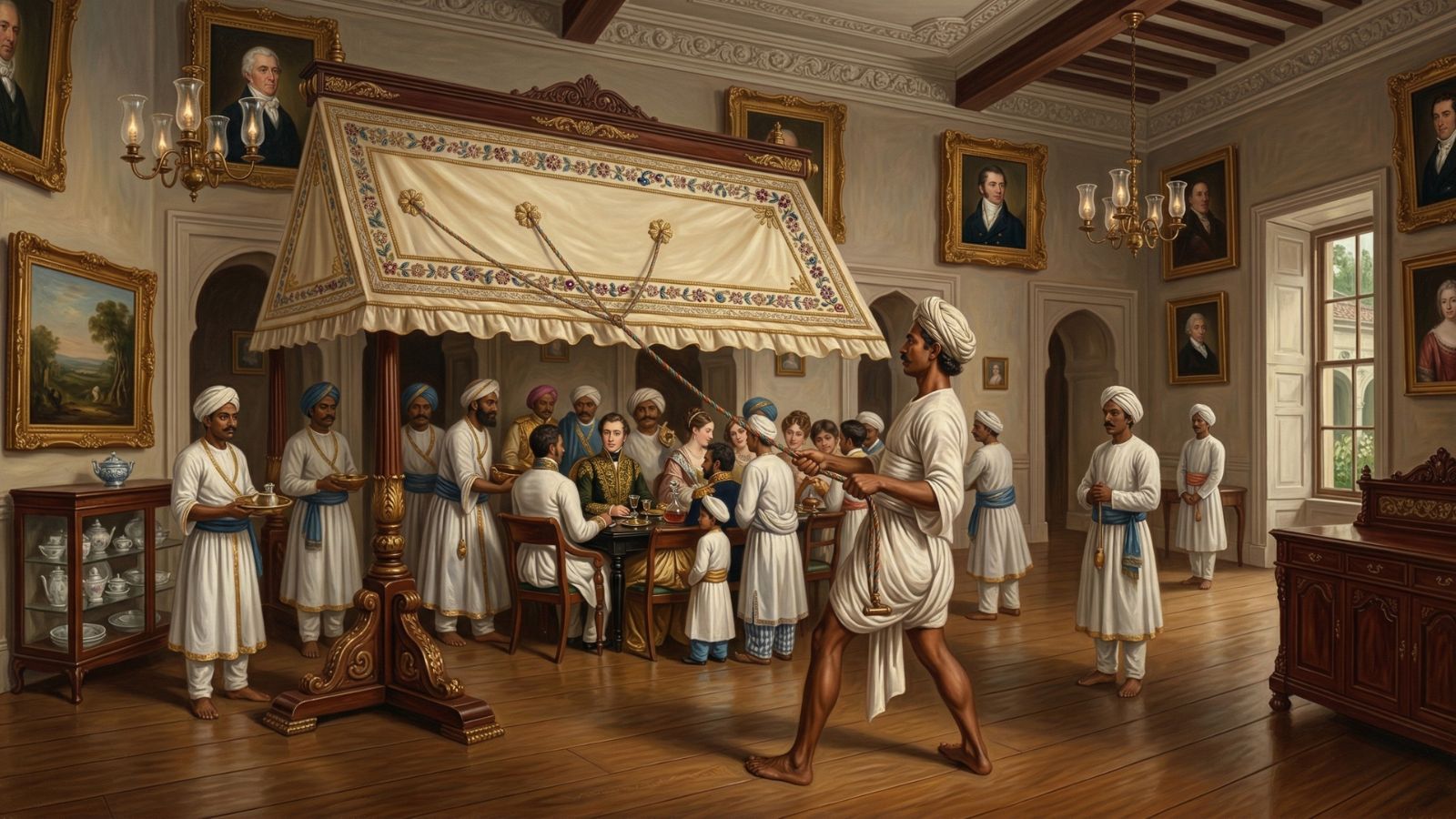
During the British colonial era in India, and long before the hum of air conditioning, coping with the subcontinent’s intense heat required ingenuity and labor. The term Punkah-Wallah emerged to describe those employed to manually operate large, ceiling-suspended cloth fans. The term combines punkah (from the Hindi/Urdu pankhā, meaning fan) and -wallah, denoting a person associated with a particular task.
Design Details
These fans were typically large (about 4.5 metres wide and 1 metre in height), constructed with wooden frames and covered in white calico cloth, often finished with decorative flounces or fringes. Suspended from the ceiling by ropes, they were operated using cords or a pulley system for hours.
The task often lasted for hours, and these “fan-men” operated from a hallway or veranda to keep the cooling breeze consistent without intruding on the room’s privacy. Interestingly, history notes a preference for deaf individuals in this role. This allowed British officials and families to discuss sensitive or confidential matters freely, assuming the attendant could not overhear their conversations.
Pre-Colonial Origins
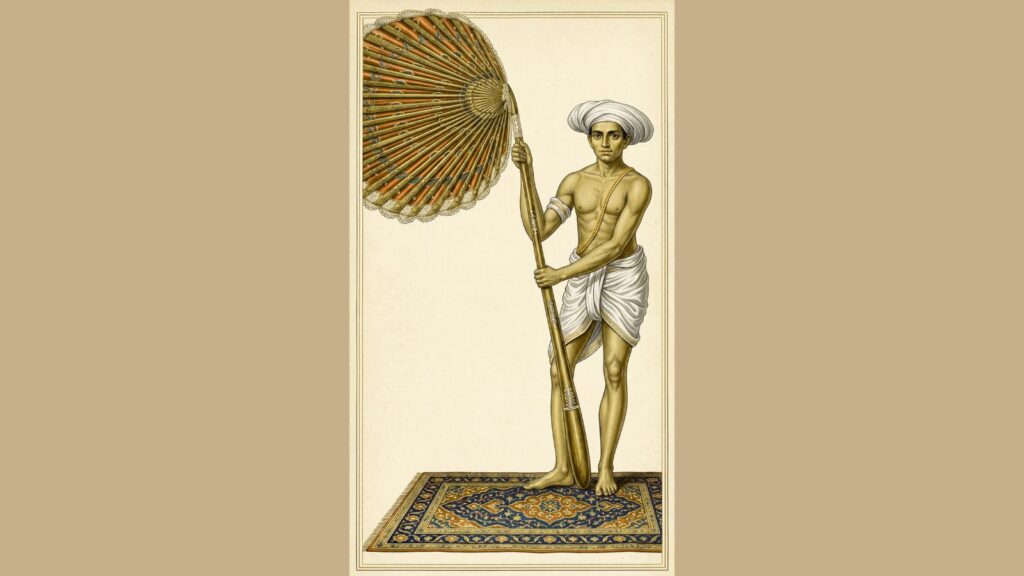
Punkahs predated British rule, originating in the Arab world by the 8th century and appearing in Mughal India, such as at Shah Jahan’s court in the 1630s. Handheld versions from palm or bamboo existed since at least the 3rd century BCE, but the large ceiling-suspended type became prominent under colonial expansion.
With the arrival of electricity and mechanical fans in the late 19th and early 20th centuries, this labor-intensive role gradually became obsolete, leaving behind a telling glimpse into colonial life and its dependence on human-powered comfort.