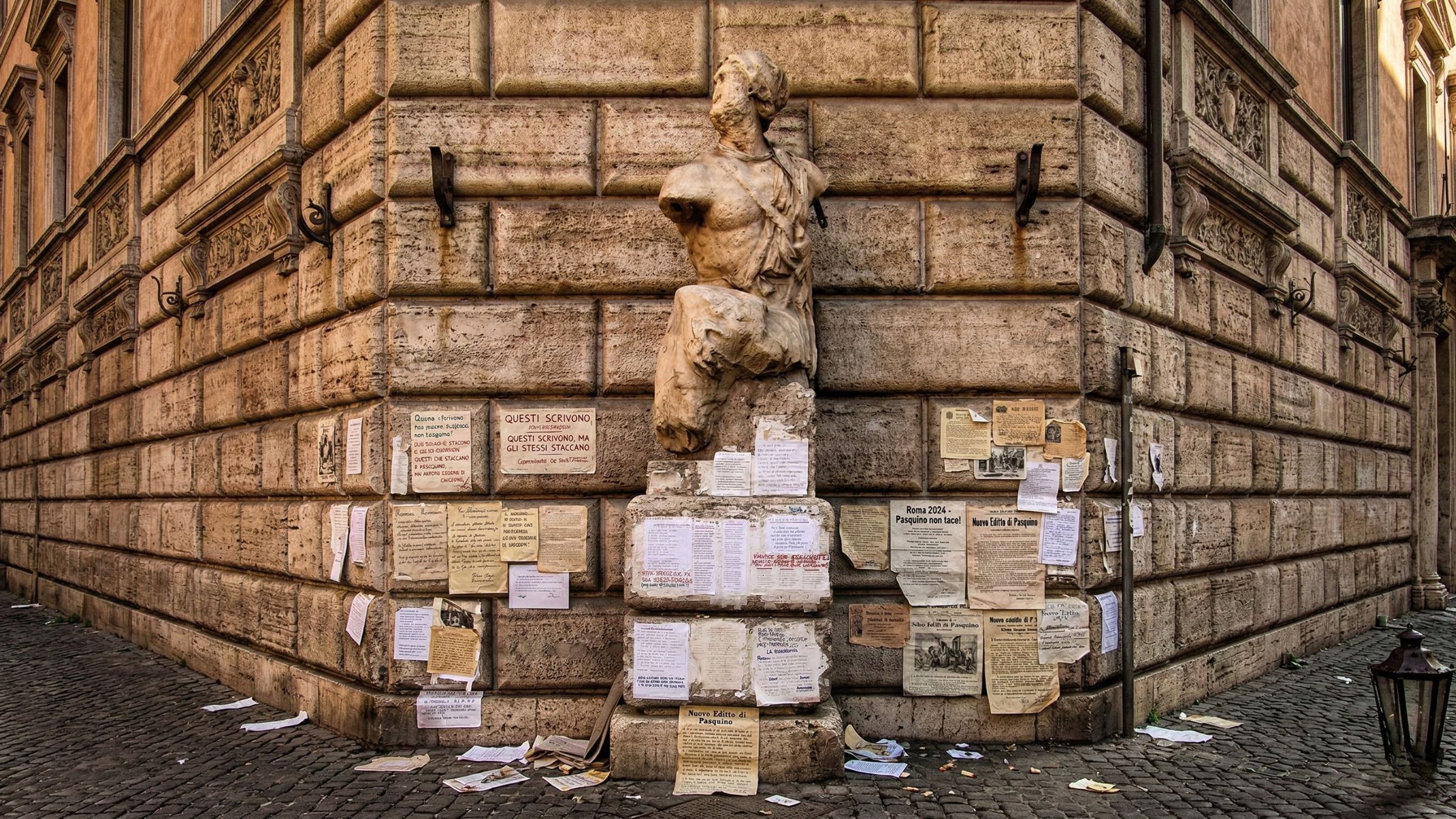
A pasquinade is a satirical piece of writing, a lampoon or public mockery, typically posted or published anonymously and aimed at a specific person or institution.
IN USE
During the election season, anonymous posters appeared overnight, each a biting pasquinade aimed at rival candidates.
His so-called literary critique was nothing more than a pasquinade, motivated by professional envy rather than genuine analysis.
The word traces directly to the Italian pasquinata, itself derived from Pasquino, the popular name given to a battered ancient Roman statue unearthed in Rome around 1501. The statue was placed near the Piazza Navona, and Romans quickly adopted it as a symbolic mouthpiece. Citizens began attaching anonymous verses on it to ridicule powerful figures. These lampoons became so associated with the statue that the practice, and the writings themselves, took its name. Pasquino was eventually joined by several other “talking statues” around Rome, forming a lively, irreverent network of anonymous public commentary that predated the modern political press.
Why Anonymous?
Anonymity was not modesty; it was necessity. In Renaissance Rome, openly mocking a pope, cardinal, or noble could invite imprisonment or worse. By leaving verses unsigned and attributing them to a stone figure, writers placed the words beyond any one person’s ownership. Pasquino took the blame, and the author walked free.
Who was the real Pasquino?
Nobody agrees. The most persistent account names him as a tailor to the Roman court, sharp-tongued enough to become a local celebrity in the Parione district. Other versions cast him as a barber, a cobbler, or a tavern keeper near whose shop the statue was found. The baker theory exists too, though it is the least documented. History, fittingly for a statue devoted to anonymous speech, never settled on a name behind the name.