Located in Uttar Pradesh, near the India–Nepal border, Pilibhit lies in the fertile Terai belt at the foothills of the Himalayas. It is best known for the Pilibhit Tiger Reserve, a key habitat for India’s tiger population.
There are two widely cited explanations for the district’s name. One traces it to Periya Bhit, referring to a mound associated with the Periya clan of Banjaras. The more popular version derives “Pilibhit” from the Hindi words peeli/peela (yellow) and bhit (wall or mound).
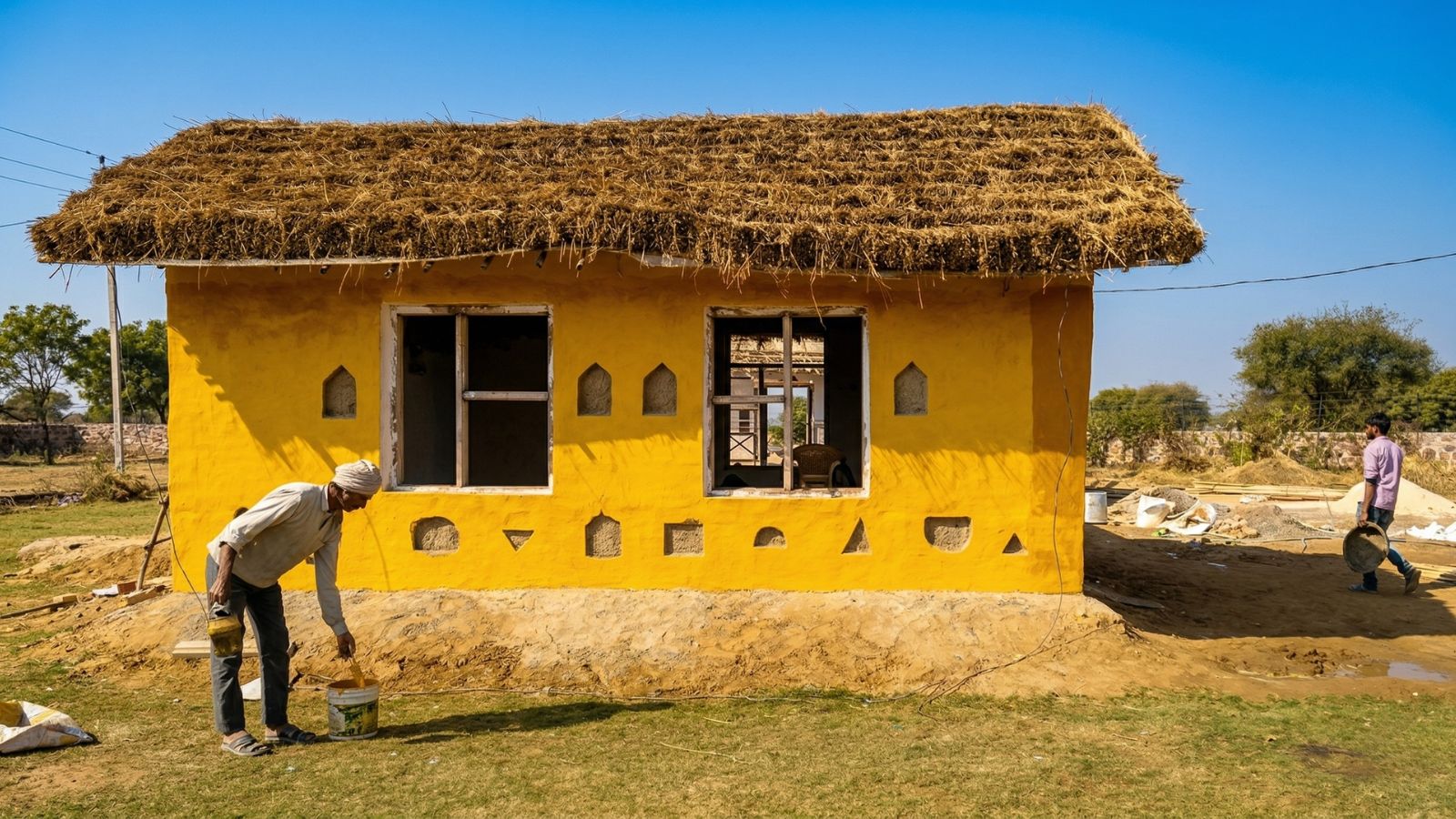
According to local lore, early inhabitants coated their mud huts with yellow clay, believed to repel insects and as the folklore says, even tigers. While the latter claim is unlikely, mud plastering for insulation and durability was common across the region. Over time, these yellow-toned dwellings became a defining visual marker of the area.
The Gomati River, a tributary of the Ganges, originates here at Gomat Taal. Pilibhit is also known as Bansuri Nagari, producing nearly 95% of India’s flutes. Its tiger reserve, spread across about 730 sq km, has earned global recognition for successfully doubling its tiger population under the TX2 initiative – a global conservation goal launched in 2010 to double the number of wild tigers (T = tiger, X2 = times two) by the year 2022.