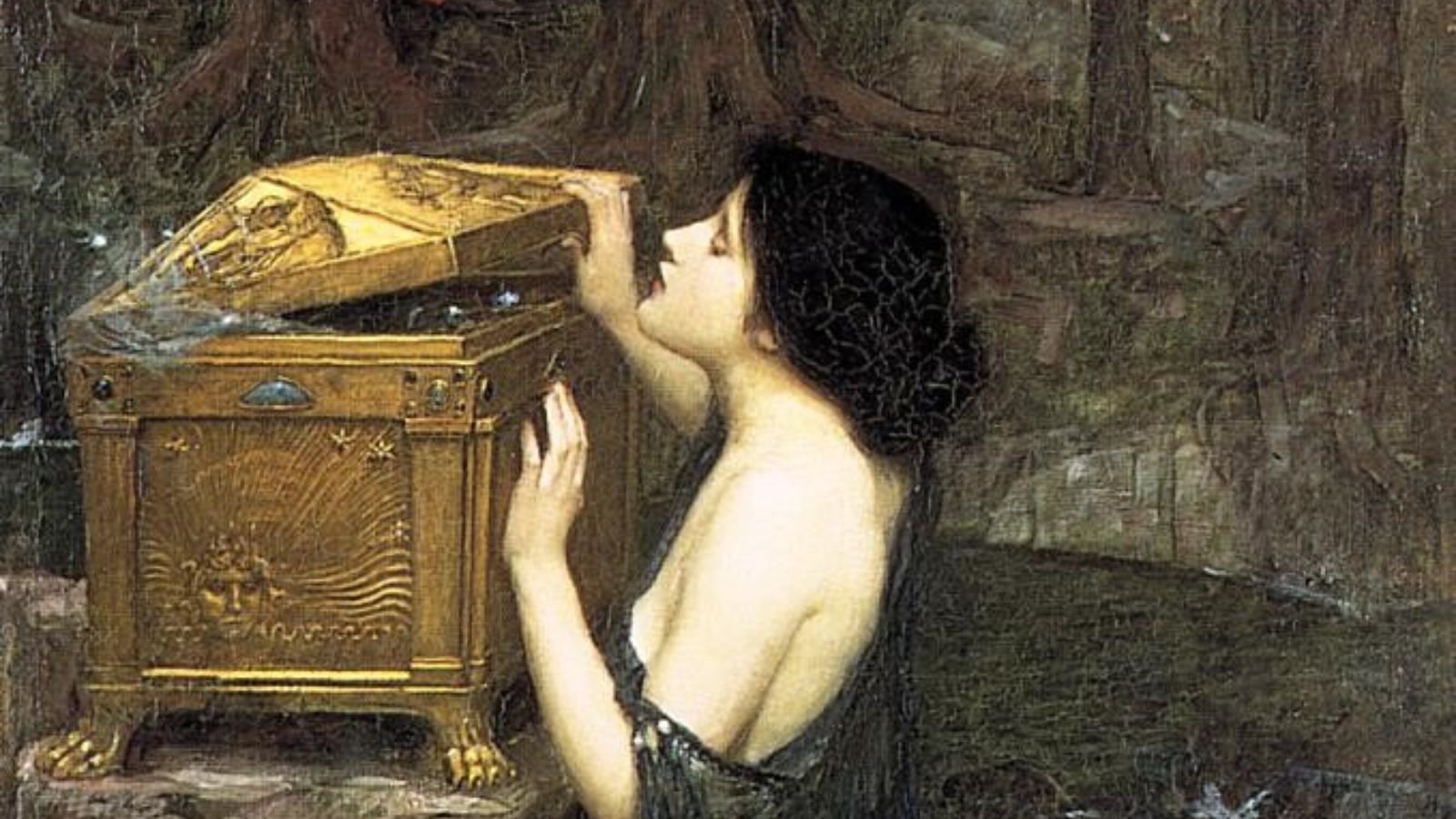
To “open a Pandora’s box” is to do something that seems small or harmless but releases many unforeseen problems. It’s like a “point of no return.” Once the lid is off, you can’t just put the chaos back inside.
Asking his sister about who inherited the family jewelry opened a Pandora’s box of arguments and resentment.
The inventor worried that creating a sentient AI would open a Pandora’s box of ethical dilemmas that humanity wasn’t ready to solve.
Posting someone’s private pictures online without checking permissions can open a Pandora’s box of legal and personal trouble.
In Greek mythology, Pandora was the first woman on earth. Zeus, the King of Gods, gave her a sealed jar (later mistranslated as “box”) as a punishment for humanity after Prometheus stole fire for mankind, with strict instructions never to open it. Driven by curiosity, she opened the box, inadvertently releasing all the evils, sorrows, and diseases into the world. By the time she snapped the lid shut, only “hope” remained at the bottom.
The expression warns that a single action (often curiosity or haste) can unleash many unexpected and difficult consequences. Whether it is a whistle-blower exposing a minor clerical error that reveals a massive corporate conspiracy, or a scientist splitting the atom, opening the box changes the environment permanently.
The beauty of the metaphor lies in its duality. While the “opening” signifies the release of hardship and unforeseen complications, the myth concludes with hope remaining inside. It reminds us that while our curiosity can lead us into complex, messy situations that are impossible to reverse, the human spirit typically retains the one tool necessary to endure the aftermath.