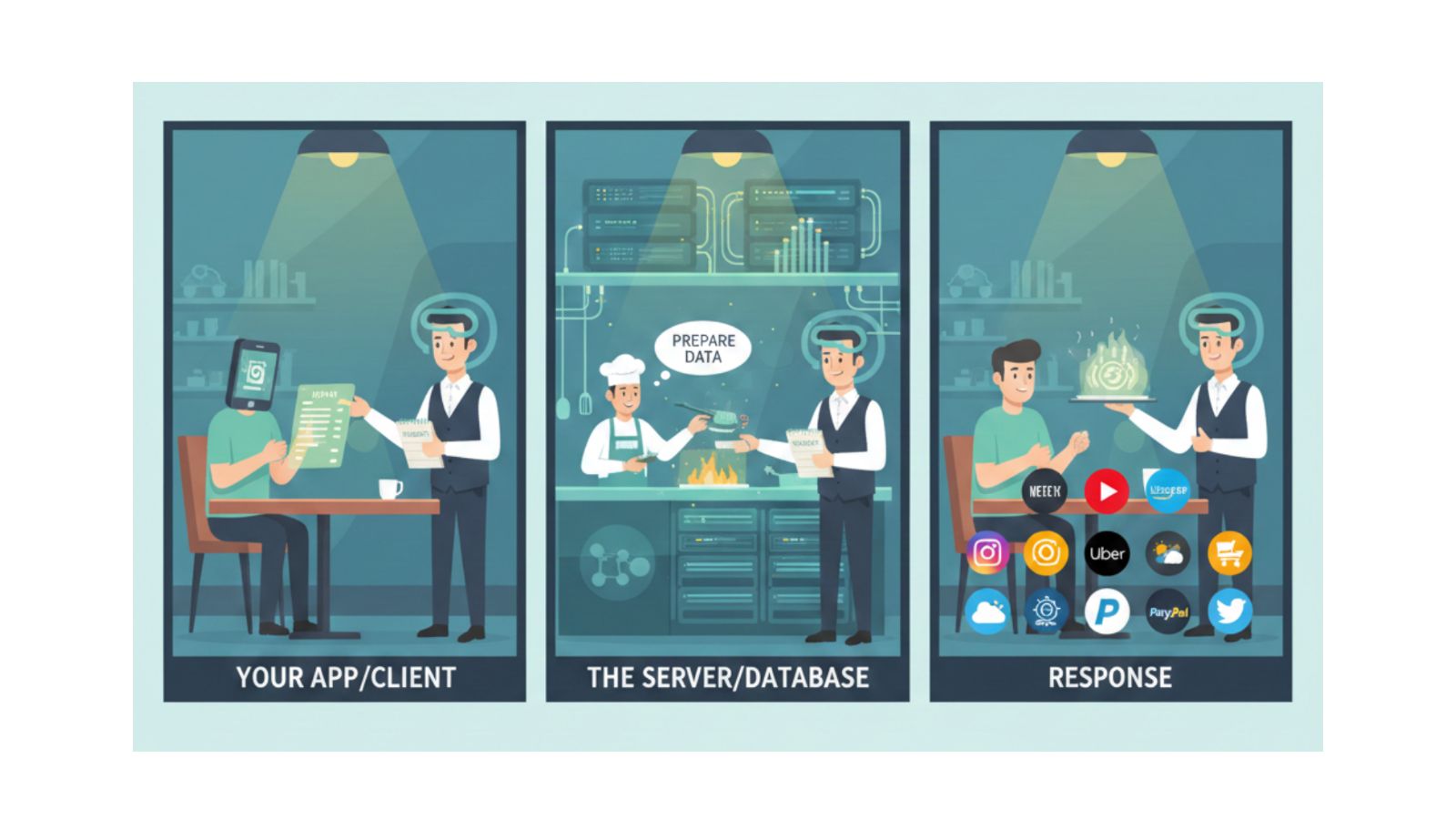
Imagine walking into a restaurant. You don’t enter the kitchen to cook; instead, you speak to a waiter. You place an order (a request), they carry it to the kitchen, and soon return with your food (the response).
In the tech world, a RESTful web service plays that waiter’s role. It lets two systems—like your phone and a weather server—communicate without needing to know how the other “prepares” its data.
REST stands for REpresentational State Transfer, a concept introduced by Roy Fielding. Representational means data is shared in a format both sides understand (like a digital menu). State Transfer means that with every request, the current “state” or information of a resource is sent from the server to you.
Where are they used?
You use REST every day. When you check Instagram, book a ride on Uber, stream on Netflix, shop on Amazon, or log in with Google, RESTful services are working behind the scenes. They fetch data, send requests, and update information seamlessly. REST is the backbone of modern apps because it’s fast, lightweight, and device-agnostic.
Other real-world examples
- Weather apps: Fetch live data from global stations
- PayPal: Send payment details securely between a store and your bank
- Twitter: Let other apps post “tweets” on your behalf
In short, REST is the simple, reliable conversation layer that keeps today’s digital world in sync.