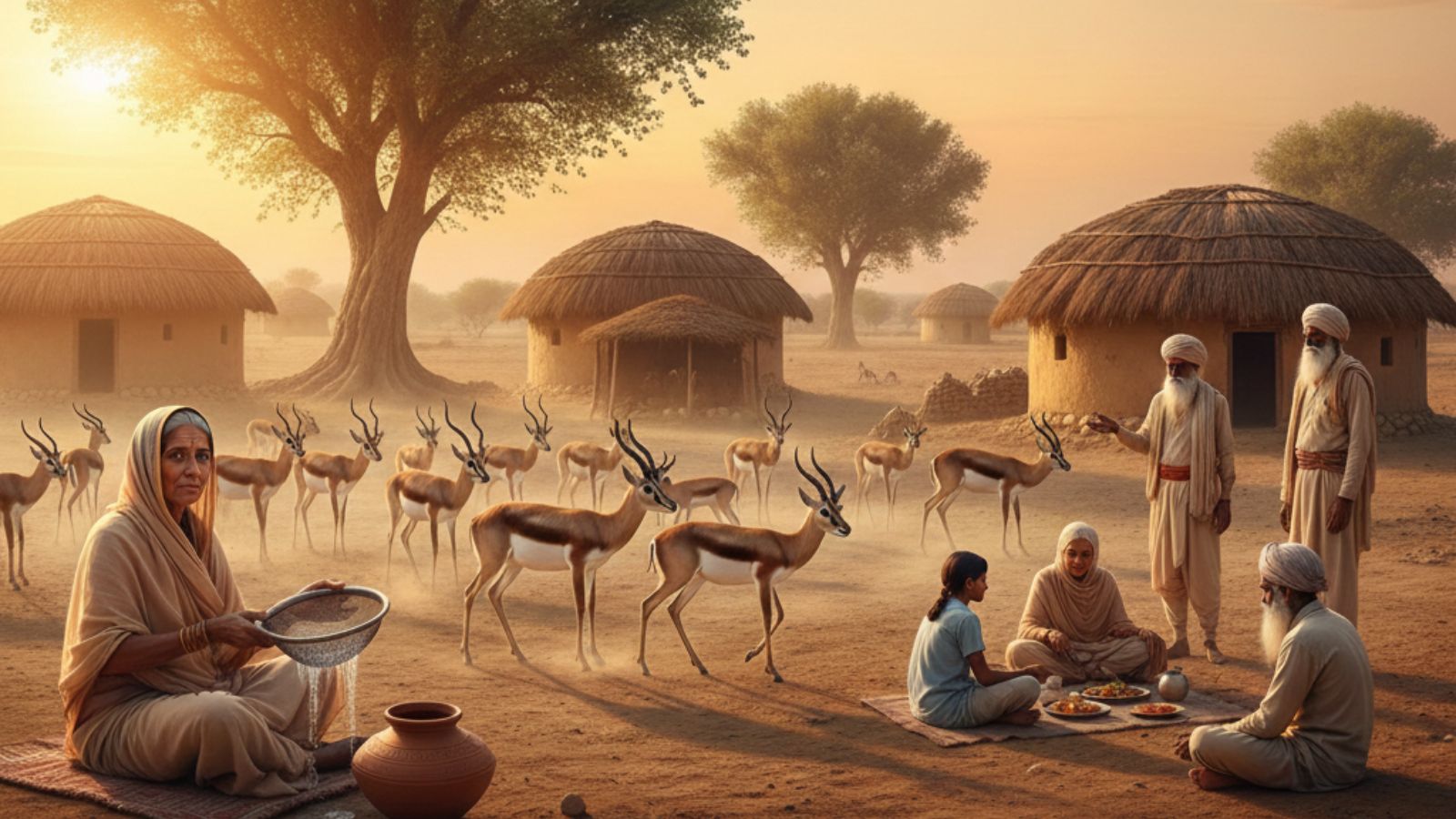
The Bishnois are a Hindu community known for their deep-rooted commitment to environmental protection and ethical living. The sect was founded in the late 15th century by Guru Jambheshwar, also called Jambhoji, in the Marwar region of present-day Rajasthan. He is the proponent of the Bishnoi way of life and preached a disciplined path that blended spiritual devotion with social and ecological responsibility.
The name “Bishnoi” comes from the words bish (twenty) and noi (nine) in the local dialect, referring to the 29 principles laid down by Guru Jambheshwar in 1485 CE. These rules were meant to guide daily conduct and create a harmonious relationship between humans, animals, and nature.
The 29 principles that guide every aspect of life: (1) belief in Lord Vishnu; (2) daily prayer and meditation; (3) purity of body and mind; (4) truthfulness; (5) compassion; (6) forgiveness; (7) simplicity; (8) self-control; (9) modest living; (10) cleanliness; (11) filtering water, milk, and fuel to protect insects; (12) not cutting green trees; (13) using only fallen wood; (14) protecting animals; (15) not killing animals or birds; (16) providing shelter to living beings; (17) avoiding castration of bulls; (18) not wearing blue clothes due to harmful dyes of that era; (19) avoiding intoxicants; (20) following a strict vegetarian diet; (21) observing religious discipline; (22) cremation of the dead; (23) maintaining social harmony; (24) avoiding harmful speech; (25) respecting women; (26) serving guests and the needy; (27) protecting water sources; (28) remaining devoted to the Guru’s teachings and community; and (29) living in accordance with these vows. Through these principles, the Bishnois created one of the earliest organized traditions of conservation, where protecting life is not just moral, but sacred.
A lesser-known fact is that Bishnoi villages traditionally functioned as informal wildlife sanctuaries long before modern conservation laws. Blackbucks and chinkaras often roam freely through their fields, and harming them is treated as a grave moral offense. The community also maintained sacred groves where cutting even dry branches was discouraged, helping preserve local biodiversity in arid regions. Their ecological code influenced later conservation movements in Rajasthan and is often cited as an early example of community-led environmental governance.