Ugadi, derived from the Sanskrit Yuga (era or age) and Adi (beginning),” marks the beginning of a new era. The festival marks the commencement of the Hindu lunar new year and falls on Chaitra Shuddha Padyami, the first day of the bright fortnight in the month of Chaitra, typically in March or early April.
The festival is celebrated primarily in Andhra Pradesh, Telangana, and Karnataka. It represents renewal, coinciding with the onset of spring and the agricultural cycle, and is traditionally associated with the belief that Lord Brahma initiated the creation of the universe on this day.
Traditions and Observances
Homes are cleaned thoroughly, entrances decorated with mango leaf toranas and rangoli (muggulu in Telugu), and families take oil baths (abhyanga snana) before performing puja. A key ritual is Panchanga Sravanam, where priests or elders read the new year’s almanac, offering insights into the year ahead. The day is marked by temple visits, festive meals, and family gatherings that emphasize renewal and reflection.
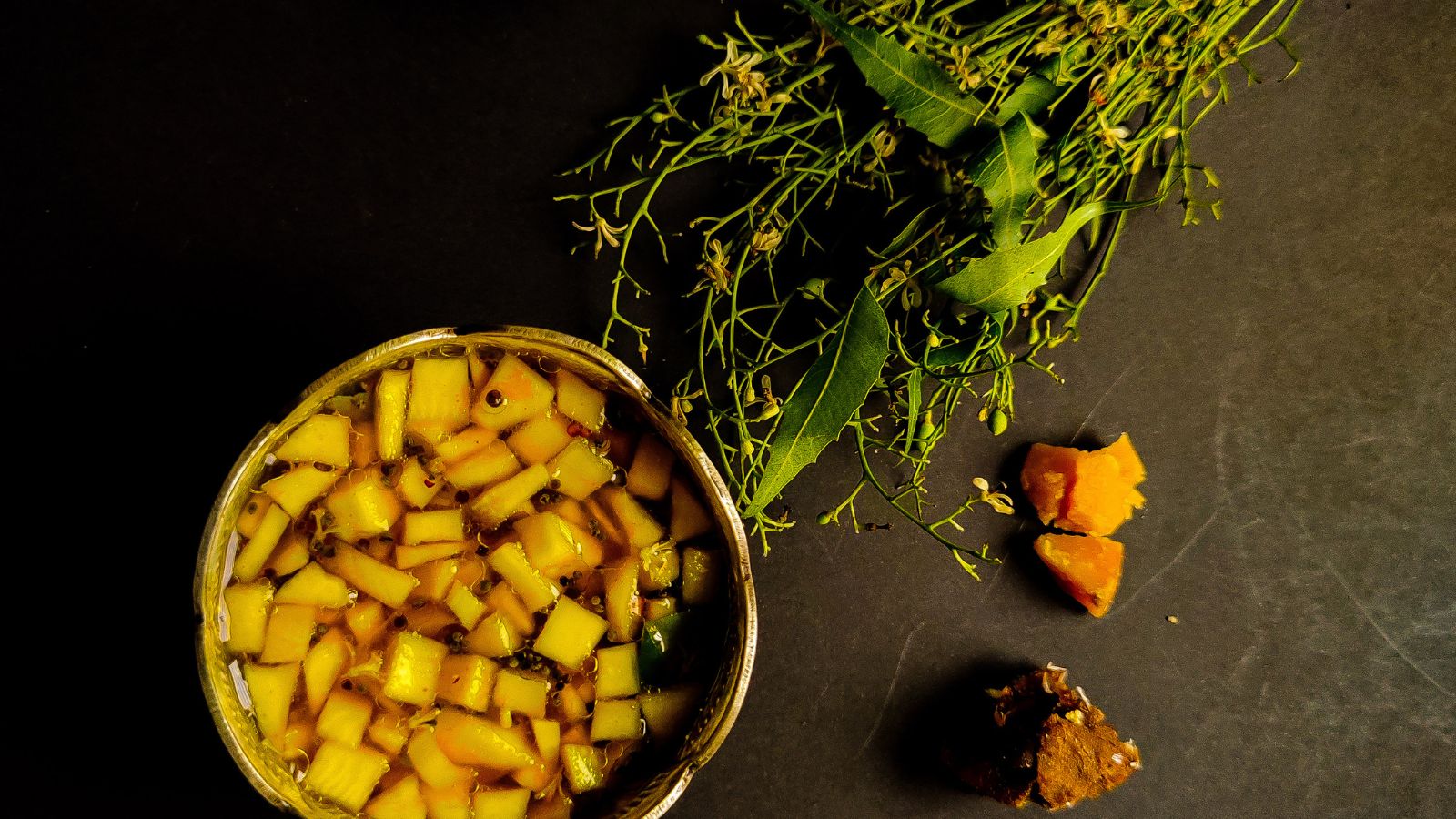
Ugadi Pachadi
At the spiritual and cultural heart of the celebration is Ugadi Pachadi, also known as Shadruchulu or Shadrasopeta Pachadi. This unique chutney incorporates six distinct flavors, each representing a specific human emotion:
- Neem Flowers (Bitter): Symbolizes the difficulties and sadness in life
- Jaggery (Sweet): Represents happiness and joy
- Green Chili (Spicy): Signifies moments of anger or irritation
- Salt (Salty): Reflects the interest and fear of the unknown
- Tamarind (Sour): Denotes the challenges that require patience
- Raw Mango (Tangy): Represents surprise and new experiences
Eaten as the first thing on the day, it reminds people to accept both triumph and trial with equanimity throughout the coming year.