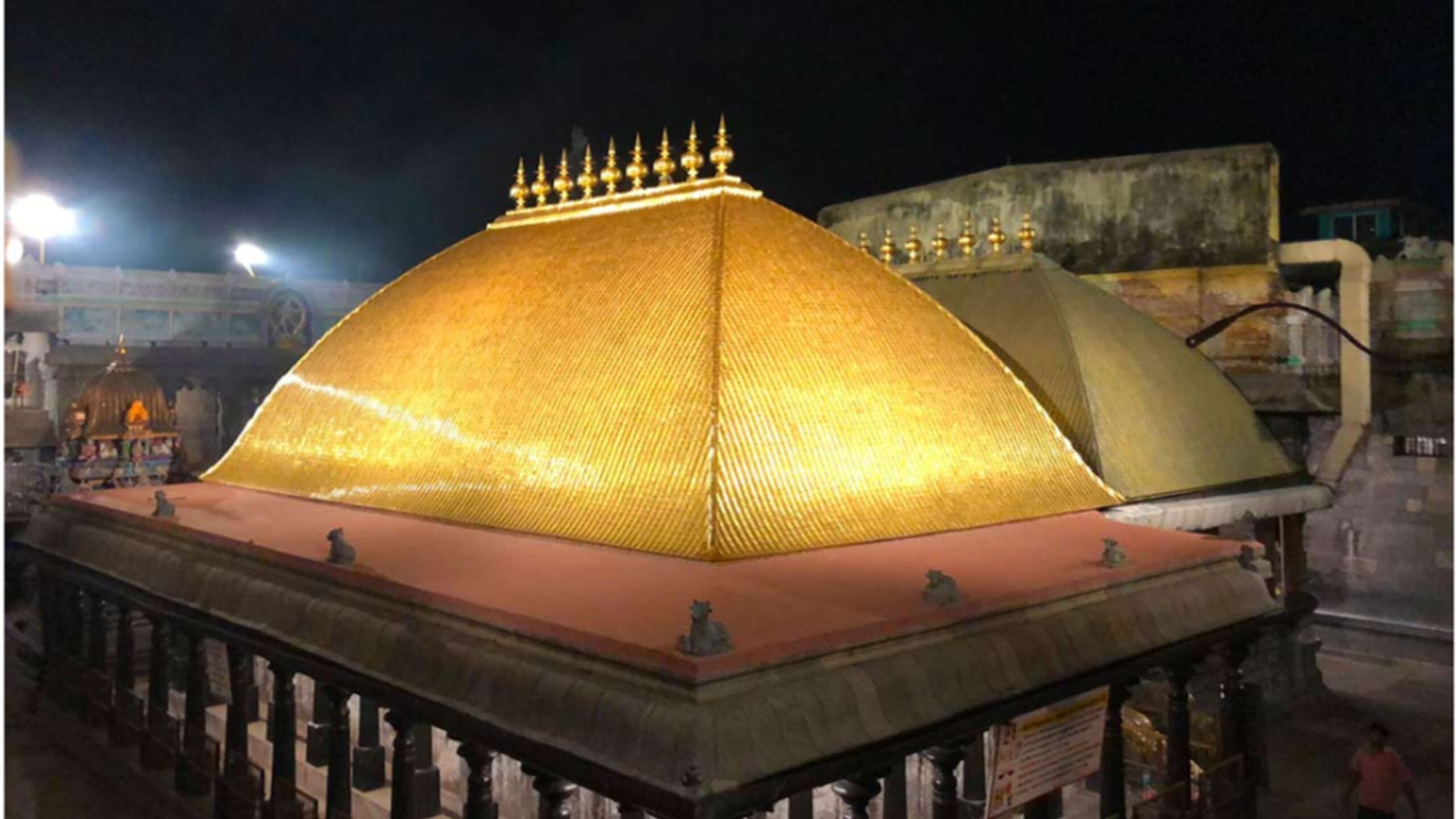
Chidambara Rahasyam, literally meaning “the secret of Chidambaram,” refers to a profound theological idea in Shaivism that the ultimate truth is subtle, formless, and present within every individual. The concept is deeply associated with the Chidambaram Nataraja Temple in Tamil Nadu. The temple is one of the most important shrines dedicated to Lord Shiva.
In the temple’s inner sanctum, an empty space is set apart behind a curtain to symbolize Shiva’s presence in an unseen, non-material form. This void is covered by a curtain that is black on the outside (symbolizing ignorance) and red on the inside (symbolizing wisdom and bliss). When the curtain is briefly drawn aside by the priest, devotees do not see an idol but witness strands of golden bilva leaves hanging in front of a dark wooden board, representing the cosmos and the formless divine presence.

The bilva leaves themselves are highly symbolic in Shaivism, with their trifoliate structure representing various trinities such as creation, preservation, and destruction, or the three syllables of AUM, or the three gunas (qualities) of sattva (purity and harmony), rajas (activity and desire), and tamas (inertia and ignorance). This act of unveiling is a moment of spiritual revelation, emphasizing that divinity is both visible and invisible and that true understanding requires looking beyond physical form.
The Chidambara Rahasyam has become a broader cultural metaphor for hidden truths revealed through insight, emphasizing the idea that the greatest spiritual truths are often intangible and experienced through inner awakening rather than external observation.