Among the many rituals associated with the worship of Lord Shiva, the offering of Bilva (Bel) leaves holds deep significance. It is associated with a timeless legend of devotion, remembered especially on Maha Shivaratri.
The Puranas tell the story of Lubdhaka, a poor tribal man who once ventured deep into the forest to gather firewood. As night fell, he lost his way. Surrounded by darkness and the terrifying sounds of wild animals, he climbed the nearest Bilva tree to save himself. Fearful that sleep would betray him, Lubdhaka stayed awake by plucking one Bilva leaf after another and letting them fall to the ground below, all the while chanting “Om Namah Shivaya” for protection. He did this throughout the night, unaware of what lay beneath the tree.
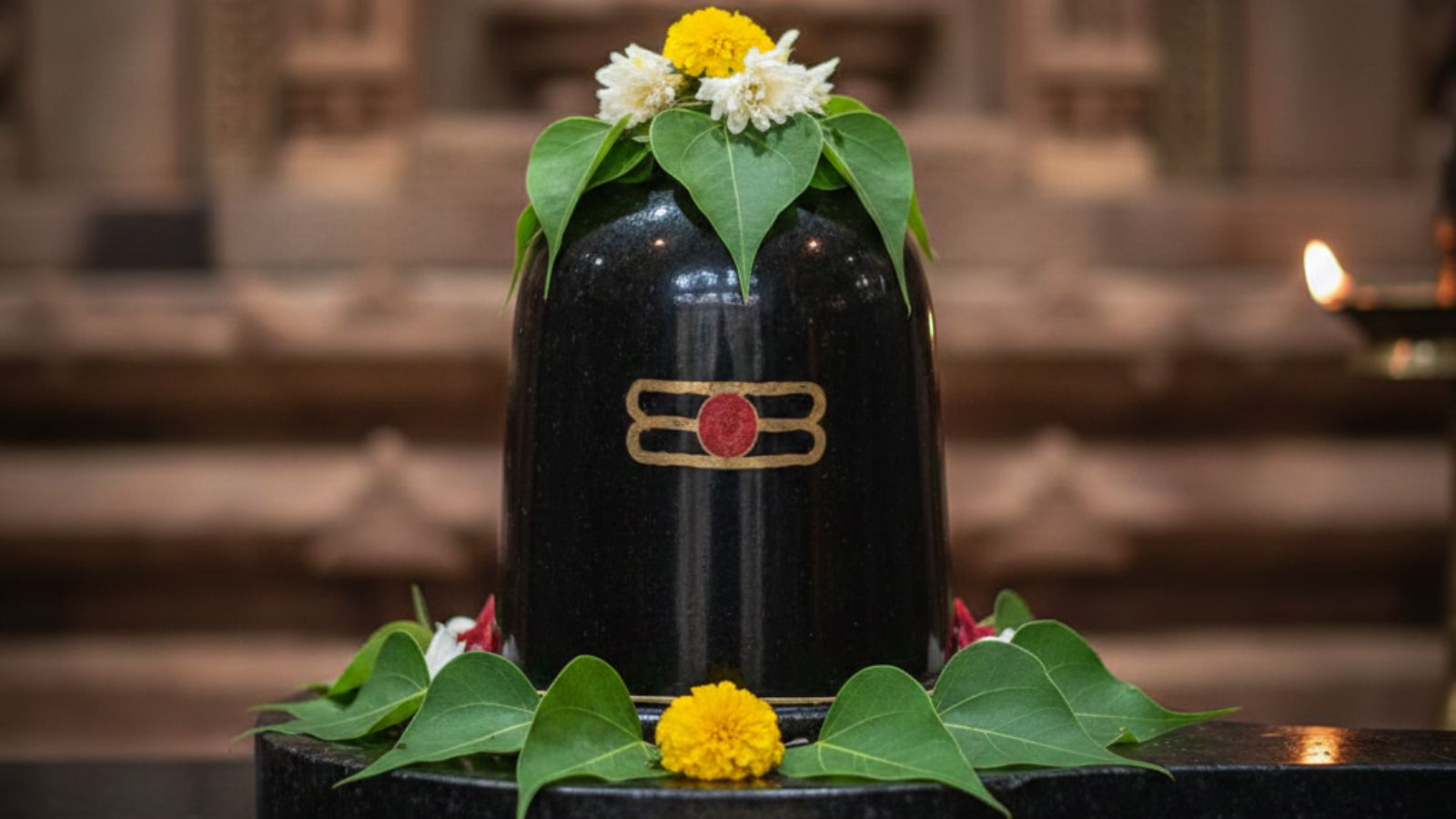
When dawn finally broke, Lubdhaka looked down and discovered that a Shiva Linga stood beneath the tree. Over the course of the night, his desperate act of survival had unknowingly transformed into an all-night worship. Moved by this pure, uncalculated surrender, Lord Shiva granted him divine bliss and liberation.
This sacred event is remembered every year on Maha Shivaratri. Devotees offer Bilva leaves to the Shiva Linga, just as Lubdhaka unknowingly did, seeking Shiva’s blessings, protection, and spiritual awakening.
The Bilva leaf is believed to pacify Shiva’s intense energy due to its cooling properties and symbolizes purity, humility, and complete surrender. Its trifoliate shape is often linked to Shiva’s three eyes or the three gunas. Traditionally, it is also valued in Ayurveda for its natural purifying, healing, and medicinal properties.
The legend of Lubdhaka teaches us that pure devotion, even when unintentional, never goes unnoticed.