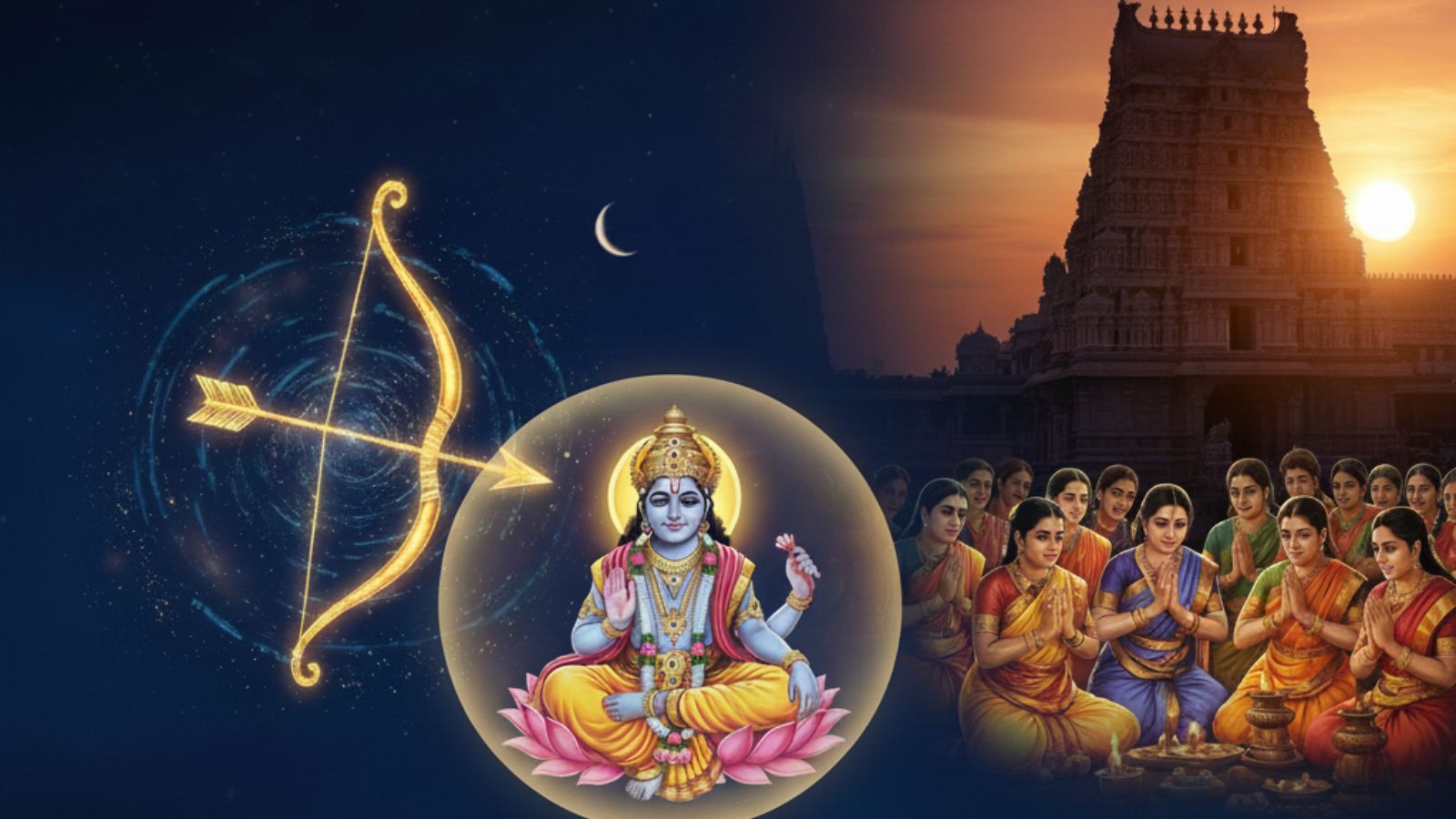
Dhanurmasam is a sacred month in the Hindu calendar that spans mid-December to mid-January, when the Sun transits the zodiac sign Dhanus (Sagittarius). The name comes directly from this solar movement. Unlike many ritual periods defined by lunar days, Dhanurmasam is solar in nature and carries a distinct theological meaning drawn from the Vaishnava tradition.
The Vishnu Purana and Bhagavata Purana describe a profound inversion of time during this month. What humans experience as early dawn is said to be Brahma-muhurta for the devas, the most auspicious time for worship. As Lord Vishnu is the inner ruler of cosmic time (Kala), this period is considered very dear to him. The Puranas emphasize that worship offered in these pre-dawn hours during Dhanurmasam yields manifold spiritual merit, especially when accompanied by restraint, simplicity, and devotion.
This cosmic perspective explains why Suprabhatam is not recited at the Lord Venkateswara Temple in Tirumala during Dhanurmasam. Suprabhatam is a ceremonial awakening of the Lord, appropriate when the deity is symbolically at rest. During Dhanurmasam, however, Vishnu is believed to be already awake and engaged in divine communion. Waking him would be ritually inconsistent with the theology of the month.
In its place, Tiruppavai is sung. Composed by Andal and revered in the Divya Prabandham, Tiruppavai consists of thirty verses aligned with the thirty days of Dhanurmasam. These verses depict young devotees rising before dawn, bathing, observing vows, and seeking Krishna’s grace. The Srimad Bhagavatam extols this spirit, praising early-morning devotion and surrender as the highest form of bhakti. This tradition is prominent at Tirumala and other Sri Vaishnavite temples, and is also associated with the celebration of Vaikuntha Ekadasi, which marks the opening of the Vaikuntha Dvara and symbolizes the spiritual ascent of devotees toward Vishnu’s divine abode
Dhanurmasam is not merely a calendrical interval. It is a month where cosmic time, scriptural injunction, and lived ritual converge into a disciplined rhythm of devotion centered on Lord Vishnu, expressed through pre-dawn worship, sacred recitation, and deliberate spiritual restraint.