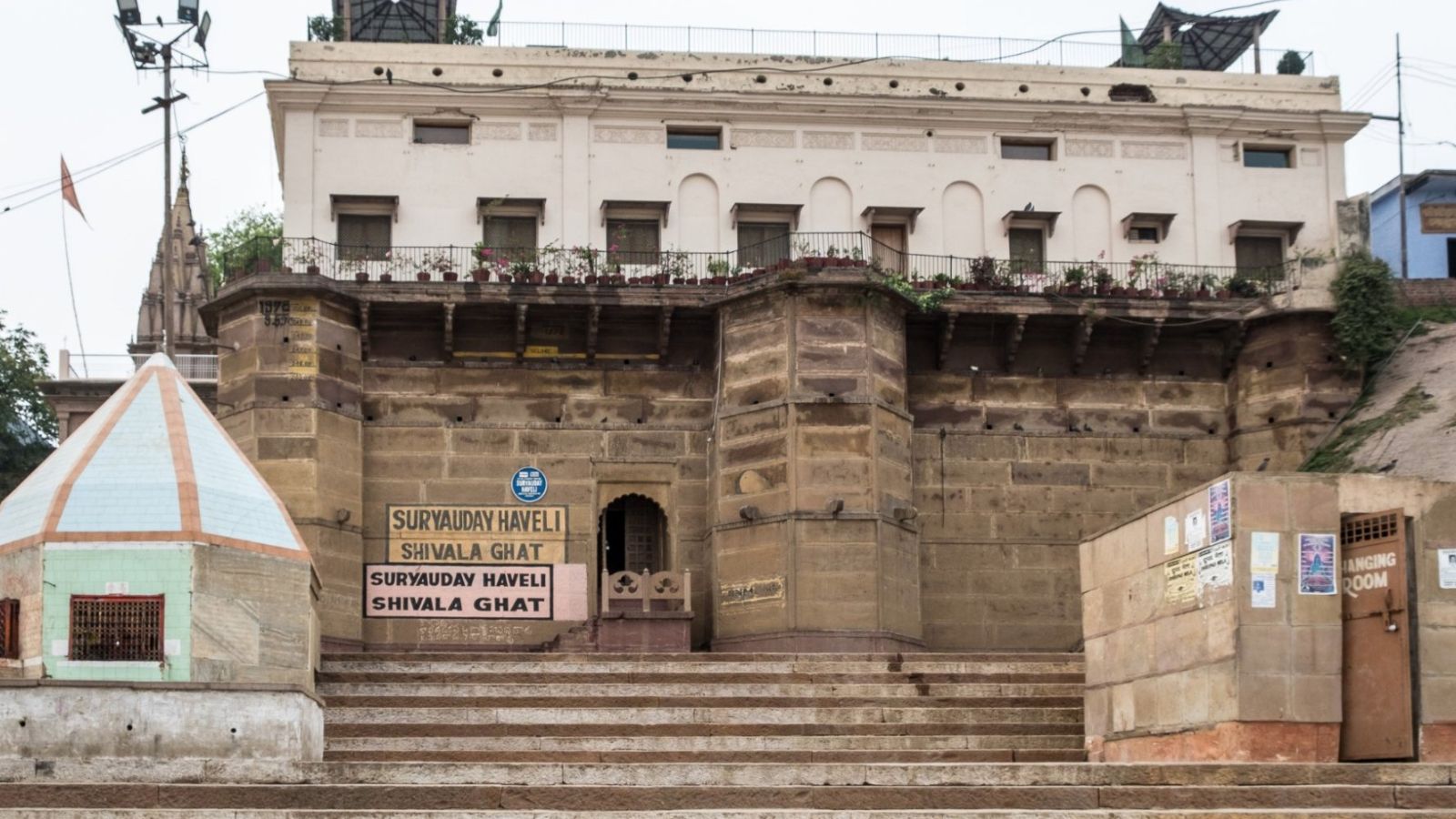
Shivala Ghat is one of the historically significant riverfront steps along the Ganga in Varanasi. Located south of the more crowded central ghats, this ghat is known for its calm stretch of river, old temples, and palatial structures built by royal patrons. The name “Shivala” comes from “Shiva Alaya,” meaning the abode of Shiva. This reflects both the city’s devotion to the deity and the cluster of Shaivite temples that once dominated the area.
The ghat gained prominence during the eighteenth century when King Balwant Singh of Banaras constructed the nearby Shivala Palace. Other rulers from Nepal and Bengal also built residences and temples here, turning it into an elite riverside neighborhood. Among the ghat’s notable landmarks is the Nepalese Temple, or “Kathwala Temple,” an ornate wooden structure created in the traditional pagoda style and modeled after Kathmandu’s Pashupatinath temple. This temple reflects the spiritual bonds uniting India and Nepal.
Unlike the nearby crowded ghats where grand rituals are performed daily, Shivala Ghat is quieter. Devotees perform their morning ablutions, students gather for yoga practice, and the local community sustains traditional ways of life. The ghat is also historically linked with centers of Sanskrit learning and small ashrams, which have contributed to its intellectual atmosphere. Its palatial facades, some weathered and others restored, offer architectural insights into Varanasi’s royal and aristocratic eras.