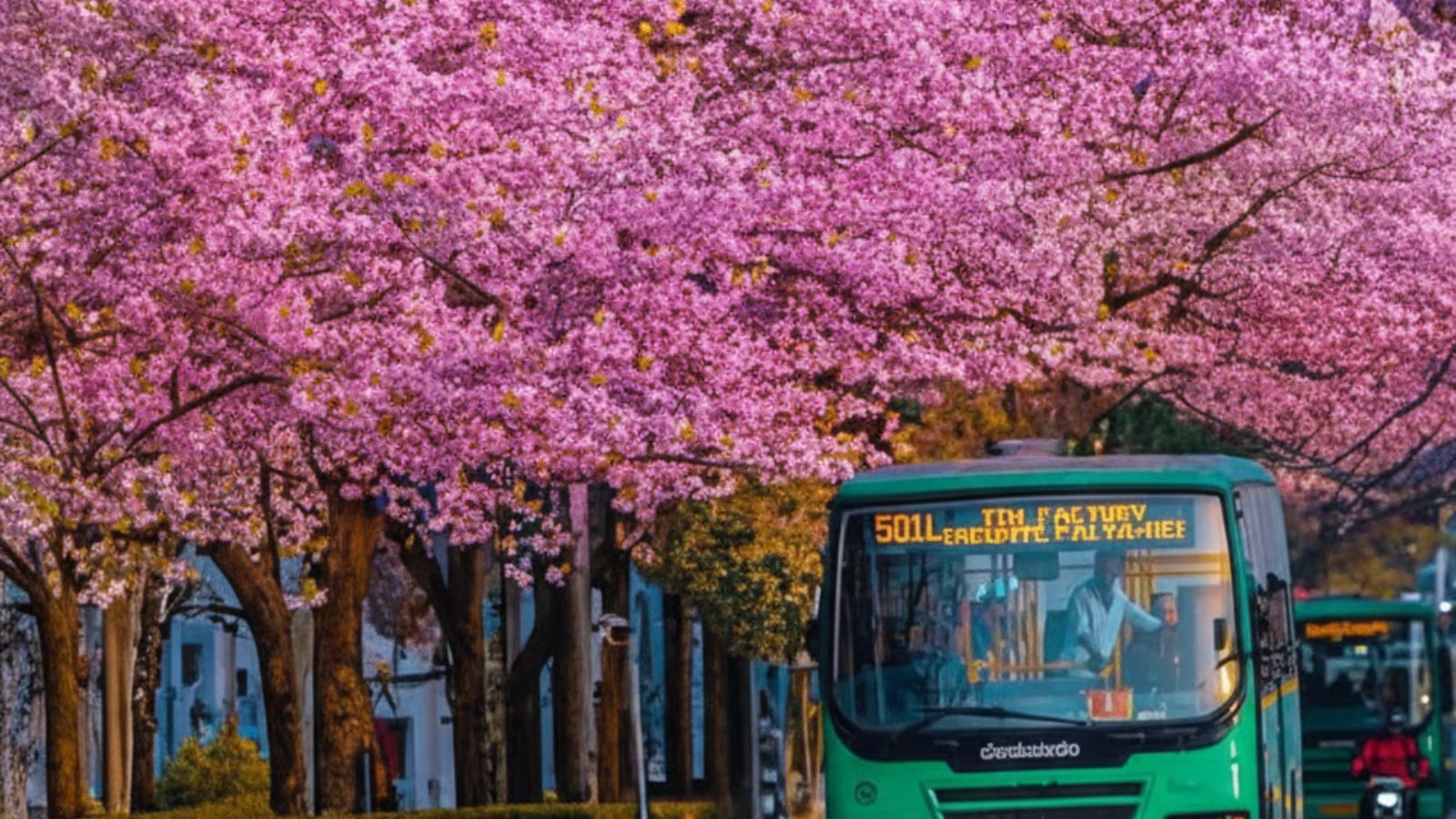
Every year, a month before Ugadi, Bengaluru sheds its concrete cloak and blushes pink. Streets turn into dreamy canopies of trumpet-shaped flowers as Tabebuia rosea—the Pink Trumpet Tree—bursts into full bloom, carpeting roads in delicate shades of rose and magenta. Locals and visitors alike chase this fleeting spectacle, often likening it to a desi version of cherry blossoms.
The credit belongs to legendary IFS officer Sethuram Gopalrao Neginhal (1929–2021). From 1982 to 1987, as Deputy Conservator of Forests under chief minister M R. Gundu Rao, he launched a massive urban forestry drive. Neginhal and volunteers went road-to-road and door-to-door, asking residents which saplings they wanted in front of their homes. Among 150 species, Tabebuia rosea (along with its pink and golden cousins) was a runaway favorite for its beauty.

Sethuram Gopalrao Neginhal
Over 1.5 million saplings were planted across the city, guarded with bamboo to protect them from cattle. Though introduced by the British in the 19th century, Neginhal scaled them as avenue trees. These drought-tolerant natives of tropical America thrive in Bengaluru’s climate, shedding leaves in late February–March to reveal spectacular pink clouds—just in time for the Kannada New Year, Ugadi.
Neginhal’s community-powered vision earned Bengaluru its “Garden City” reputation and left a living legacy. Every spring, the pink spectacle reminds us that thoughtful greening can transform a city forever.
Image Credits: Karnataka Tourism