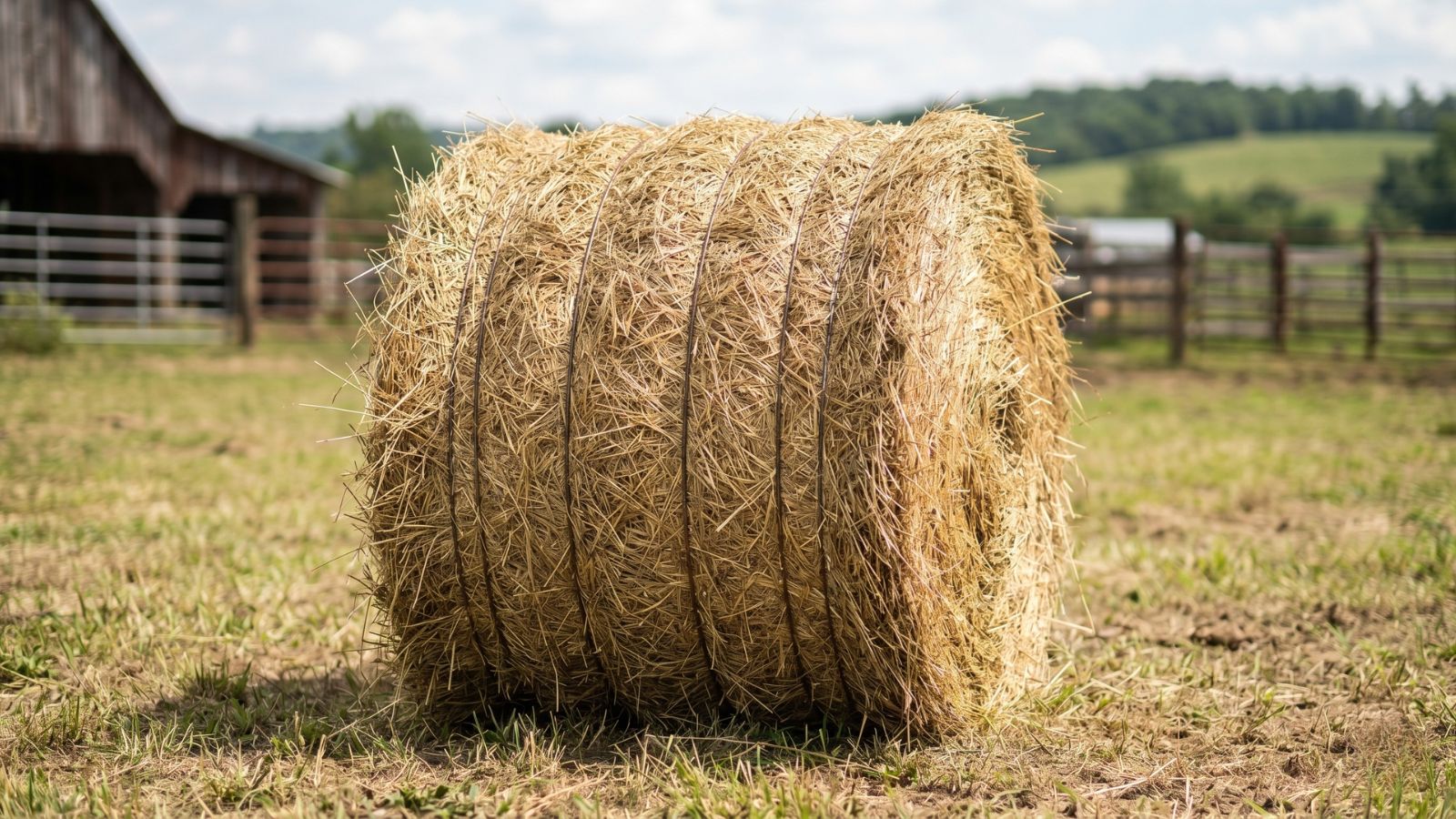
What do malfunctioning computers and nineteenth-century hay bales have in common? More than you might think.
Before hydraulic balers and modern packaging, American farms relied on hay wire, the thin but sturdy metal wire used to bind hay bales. Useful as it was, it had a dangerous side. Once a bale was cut open, the tightly wound wire could spring loose violently, slashing hands or arms, or collapse into tangled heaps across barn floors. Livestock often wandered into the mess, their legs snaring in the coils. Small wonder haywire became associated with disorder and erratic behavior.
This reputation for unpredictability helped haywire move into figurative speech in the early twentieth century. It first described something makeshift, poorly organized, or unreliable, much like the improvised repairs farmers made with discarded wire. Soon, gone haywire came to describe anything that had spun out of control. A haywire outfit meant a poorly run, makeshift operation. A plan gone haywire meant something spiraling beyond control, unraveling fast.
Today, whether a computer crashes, a project collapses, or a carefully laid plan falls apart, gone haywire remains a vivid reminder of a chaotic problem with roots in the American farmyard.