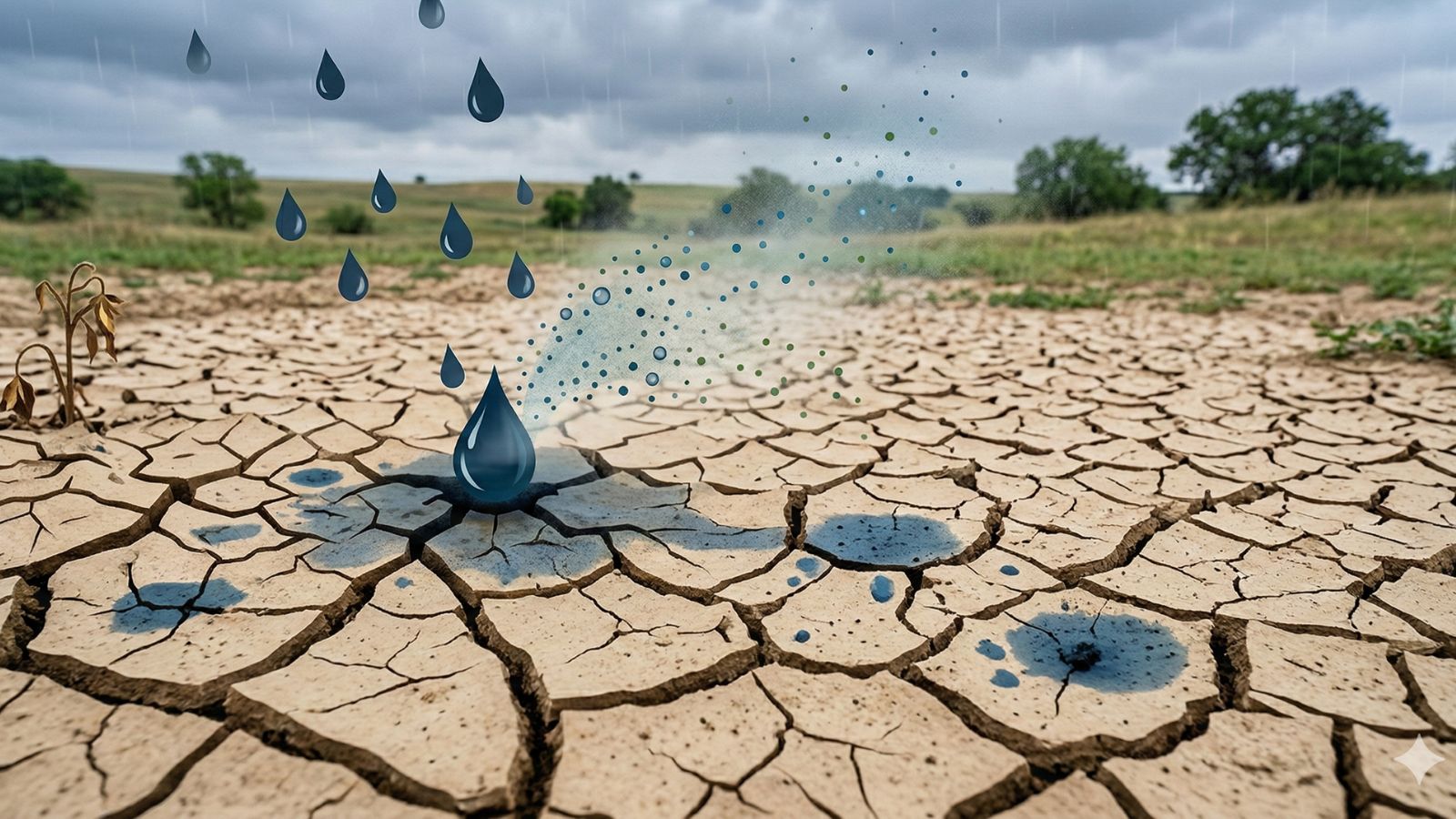
Petrichor is the distinctive scent produced when rain falls on dry soil. The word was coined in 1964 by Australian scientists Isabel Joy Bear and R.G. Thomas, combining the Greek petra (stone) and ichor, the fluid said to flow through the veins of the gods. It was a fitting name for something so elemental yet almost impossible to describe.
The scent itself is earthy, damp, and faintly sweet. When raindrops strike parched soil, they trap tiny air bubbles that burst upward, releasing plant oils absorbed into the ground during dry periods. Alongside these oils, bacteria in the soil produce a compound called geosmin, which humans can detect at extraordinarily low concentrations (geosmin is so potent that the human nose can detect it at concentrations as low as a few parts per trillion). Together, these compounds create that rich, unmistakable fragrance.
The appeal of petrichor goes beyond nostalgia. Some perfume houses, including Demeter Fragrance and niche brands like Comme des Garçons, have attempted to bottle versions of the scent, blending geosmin analogues with green and mineral notes. It turns out people do not just want to smell rain; they want to carry it with them.