The name Singapore traces its origins to a blend of legend and language. Derived from the Malay words Singa (lion) and Pura (city), the “Lion City” owes its name to a 13th-century legend that blends royal ambition with a bit of zoological mystery.
According to the Sejarah Melayu (Malay Annals), the story begins with Sang Nila Utama, a prince from Palembang. While hunting on the island of Temasek, the prince spotted a magnificent creature with a red body, a black head, and a white breast. Moving with regal speed, the animal vanished into the jungle. His chief minister identified the beast as a lion, an omen of great power. Inspired by this sighting, Sang Nila Utama renamed the island Singapura and established it as a thriving port.
While the legend is foundational to Singaporean identity, modern historians and biologists offer a more grounded perspective. Lions are not native to Southeast Asia; their natural habitats are restricted to Africa and small pockets of India.
So, what did the prince actually see? Experts suggest two likely candidates:
- The Malayan Tiger: Once common in the region, its majestic presence could easily be mistaken for royalty in the animal kingdom.
- The Wild Boar: Though less “regal,” the bearded pigs of the region were frequently sighted by early settlers.
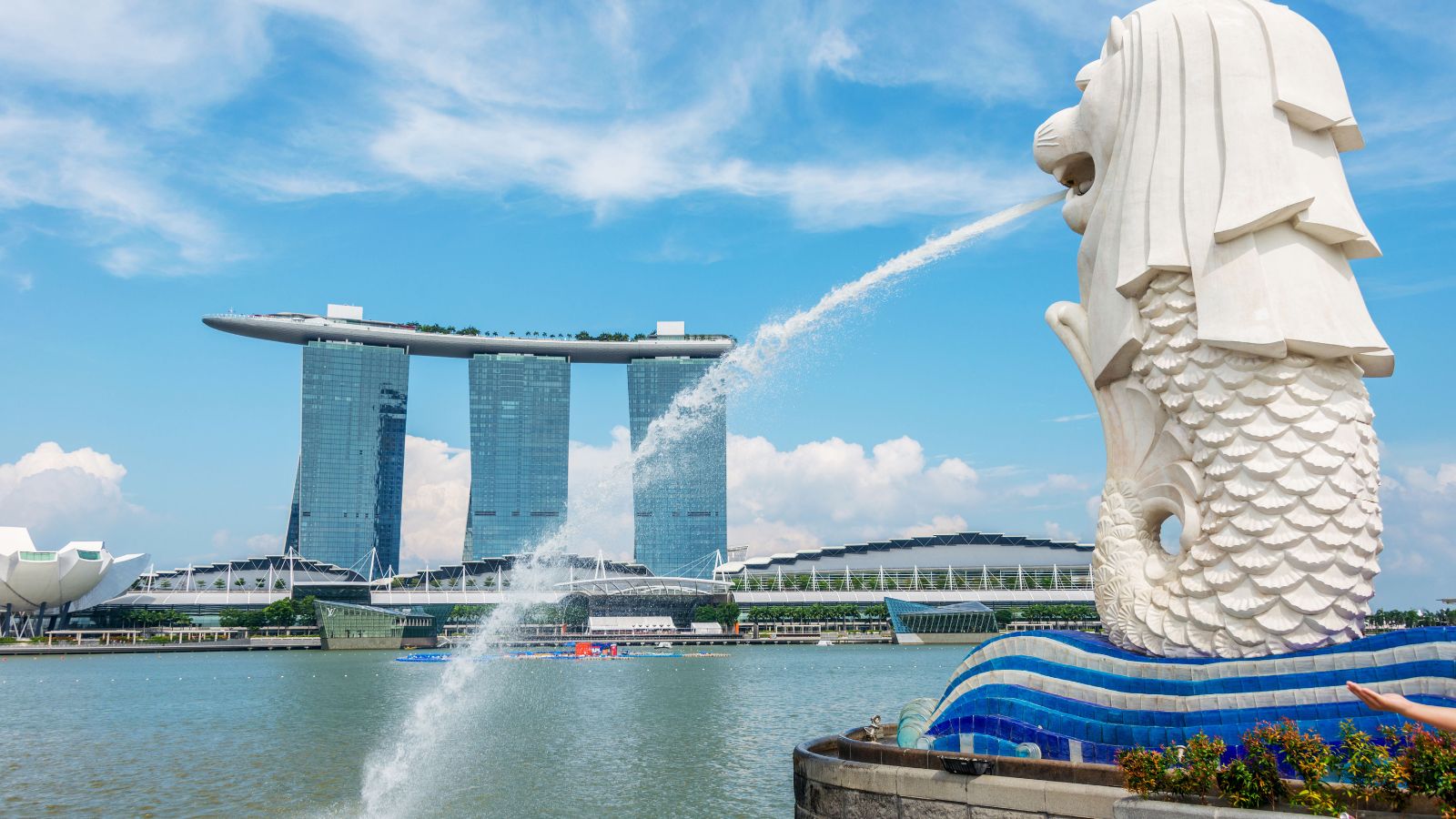
Regardless of whether the encounter involved a true lion or a case of mistaken identity, the name stuck. Today, the Merlion—a mythical creature with a lion’s head and a fish’s body—stands as a permanent tribute to this origin story, symbolizing both the city’s humble beginnings as a fishing village and its bold rise as the Lion City.