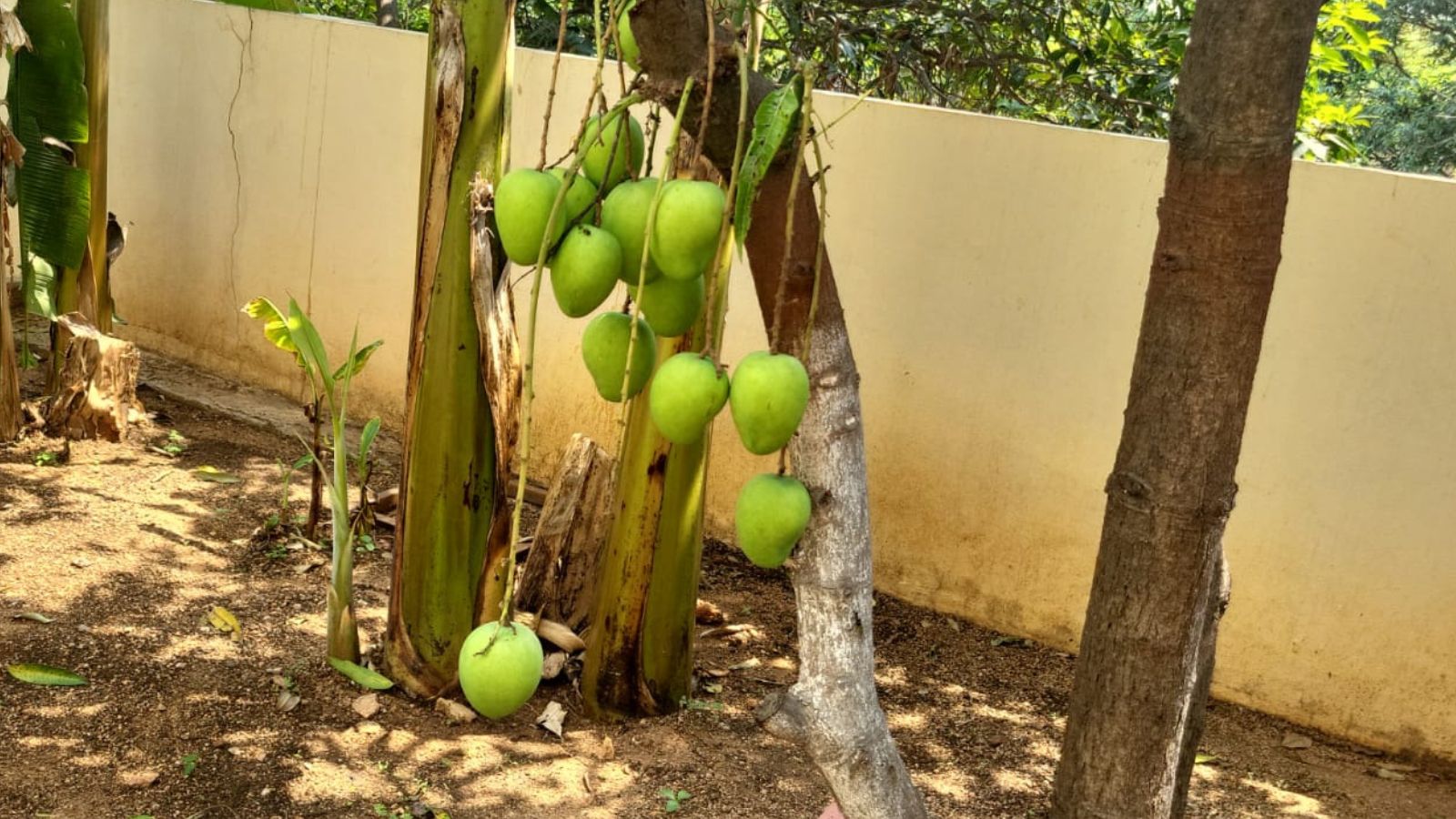
Ever seen a tree where flowers and fruits sprout directly from the thick trunk or woody branches instead of leafy twigs? This fascinating botanical phenomenon, called cauliflory (literally “stem-flowering” from Latin caulis and flos), is an evolutionary adaptation prevalent in trees such as jackfruit, figs, papaya, and occasionally mango.
By blooming on the lower trunk below the dense canopy, these trees access ground-dwelling pollinators like beetles, ants, midges, and bats, bypassing competition from overhead flowers. It also supports heavy fruits that would snap slender branches, partitioning resources effectively.
In mango trees, cauliflory is rare but occurs when epicormic buds (tiny dormant buds under the bark) get activated and start growing when the tree is stressed or damaged as a survival response. With no upper foliage to feed, the tree pushes its stored energy into these dormant buds to ensure survival through reproduction.
Next time you spot blossoms hugging a tree trunk, marvel at nature’s ingenious survival hack.