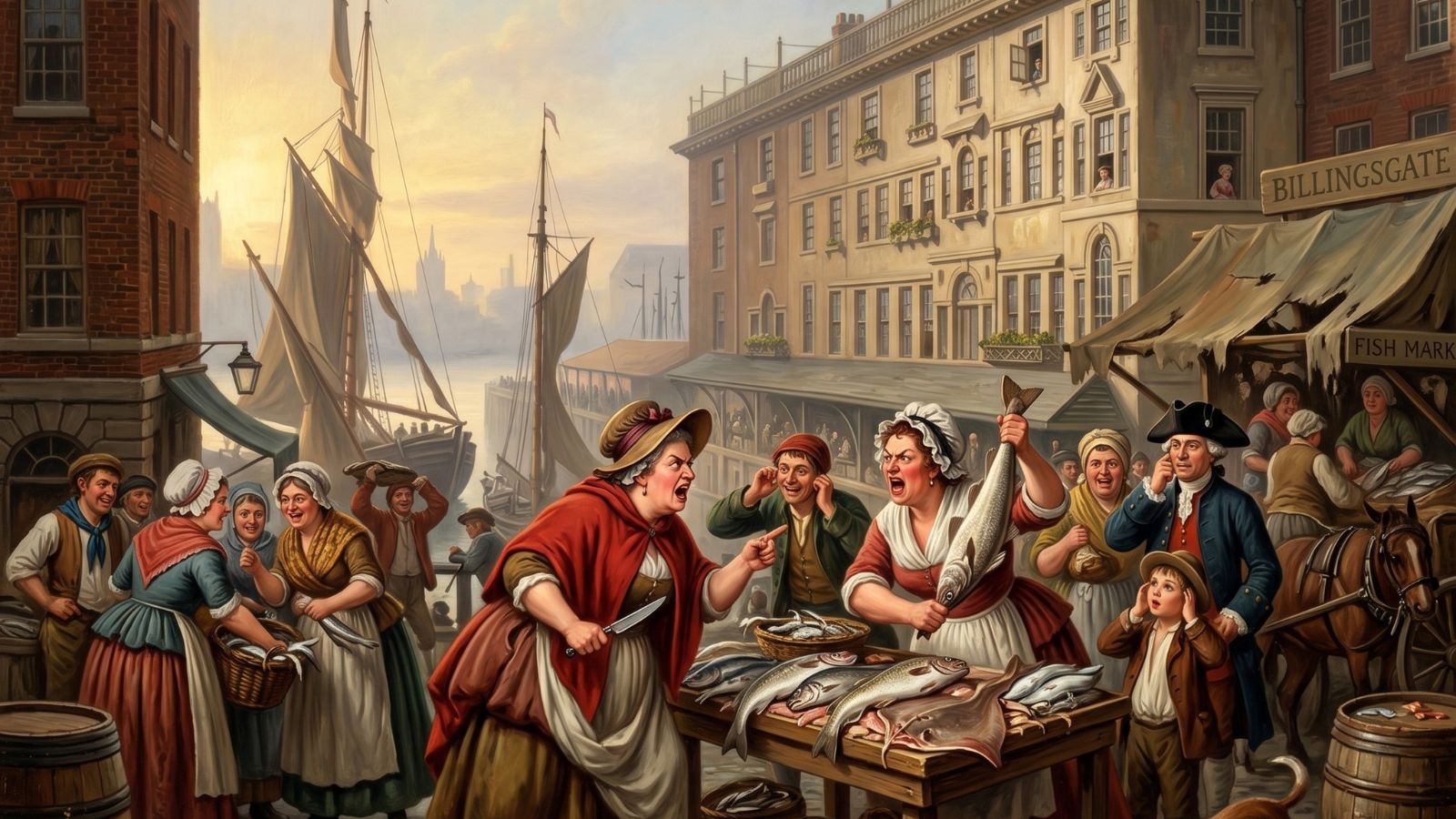
Billingsgate (noun) means vulgar, coarse, and violently abusive language — the kind laced with insults and harsh words, typically hurled in anger or dispute.
In use
- The courtroom fell silent when the defendant’s outburst of pure billingsgate shocked even the seasoned judge.
- What started as a small debate on social media dissolved into billingsgate within minutes.
- The politician’s speech, rather than addressing the issues, descended into billingsgate that embarrassed his own party.
- No serious discussion survives when billingsgate replaces evidence.
Background and etymology
The word comes from Billingsgate, a historic fish market in London, located on the north bank of the River Thames. From the 17th century onward, the market acquired a reputation for the loud, aggressive, and often foul‑mouthed language associated with its traders, particularly the fishwives. As a result, the name became a byword for profane verbal abuse.
The name of the place itself is much older. The element “gate” here likely derives from Old Norse gata, meaning “street” or “way,” not a hinged gate, while “Billings” may refer to a personal or tribal name; the precise early origin remains uncertain. By the mid-17th century, the word had entered the English language as a common noun. Thus, a specific London marketplace gave English a vivid term for verbal aggression, illustrating how geography, commerce, and social perception can permanently shape vocabulary.