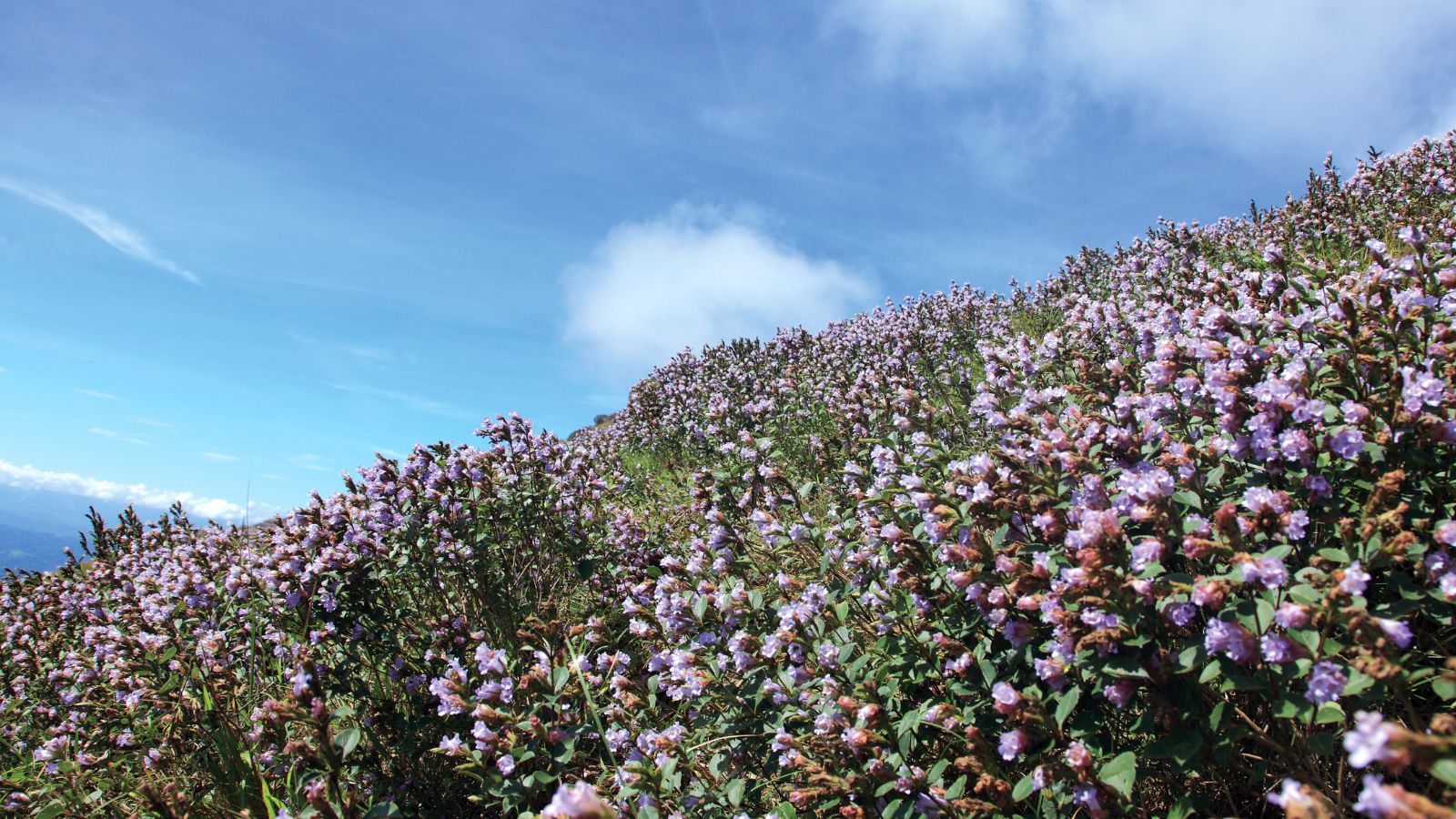
The Neelakurinji (Strobilanthes kunthiana) is one of India’s most extraordinary flowering plants, found mainly in the high-altitude shola grasslands of the Western Ghats. What makes this flower unique is its rare blooming cycle: it flowers en masse only once every 12 years. During this brief spectacle, entire hillsides are transformed into a stunning carpet of bluish-purple blossoms, attracting nature lovers from around the world. The last mass flowering occurred in 2018, and the next spectacular bloom is expected in 2030.
This phenomenon occurs because Neelakurinji follows a biological strategy known as gregarious flowering, in which all plants of the same generation bloom simultaneously, set seed, and then die. This synchronized blooming improves pollination success and overwhelms seed-eating predators, increasing the chances of survival for future generations.
The flower has a deep connection with the Nilgiri Hills, a mountain range spanning parts of Tamil Nadu, Kerala, and Karnataka. The name “Nilgiri” is derived from the Tamil words neela (blue) and giri (mountain), meaning “Blue Mountains.” According to popular belief, the hills earned this name because they appeared blue when blanketed by blooming Neelakurinji flowers.
Neelakurinji is a symbol of nature’s patience and precision, reminding us that some of Earth’s most breathtaking events are worth waiting for. The Paliyan tribal people of Tamil Nadu have long used the flower’s twelve-year blooming cycle as a living calendar to estimate age and mark the passage of time.
Note: Shola grasslands are a unique high-altitude ecosystem of rolling grasslands found in the upper reaches of the Western Ghats, especially in the Nilgiri Hills, Anamalai Hills, and Palani Hills.