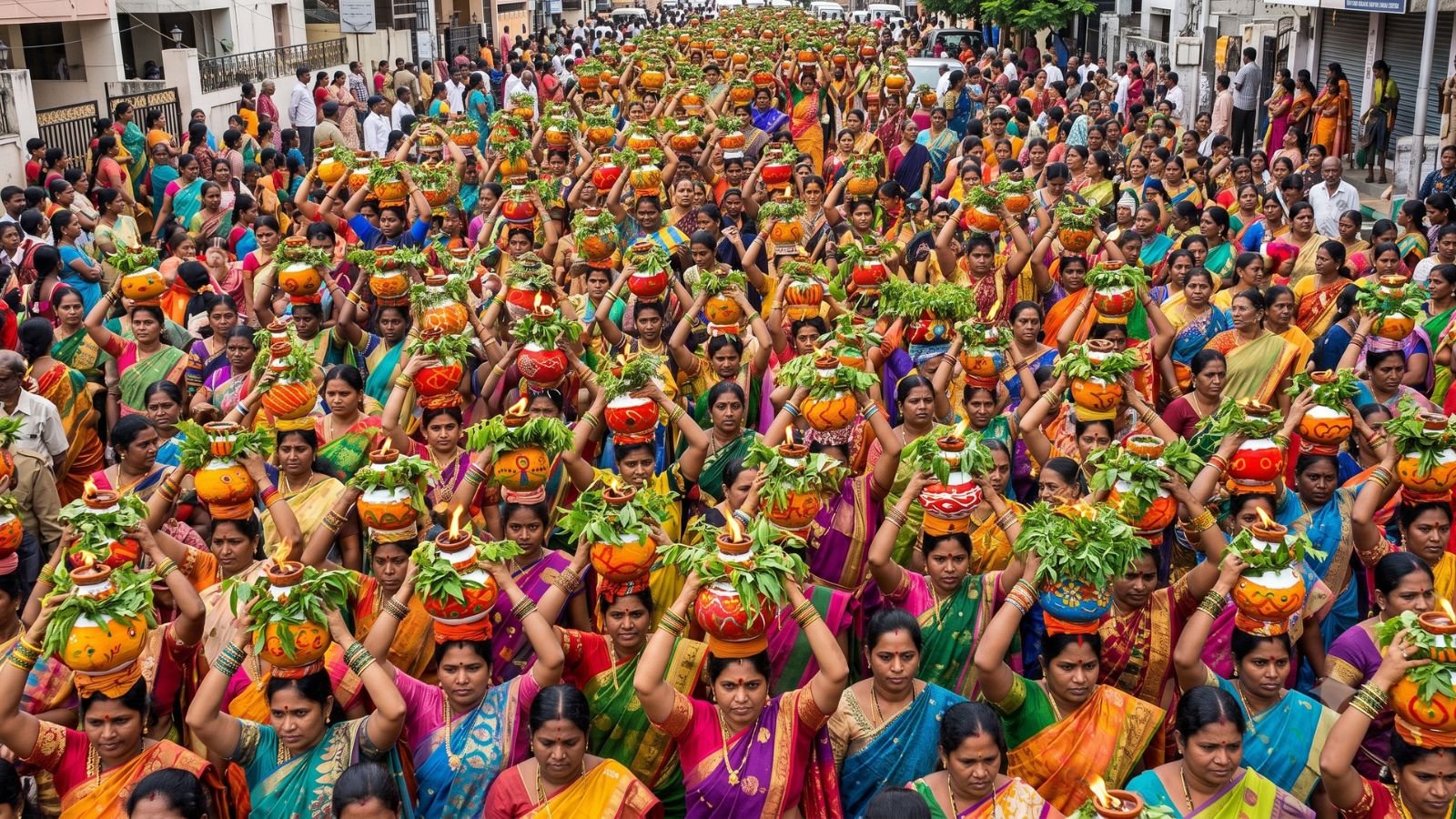
Every year during the month of Ashada (July-August), lakhs of devotees converge at the Sri Ujjaini Mahakali Temple in Secunderabad to celebrate Bonalu, one of Telangana’s most revered festivals. Women carry beautifully decorated pots filled with cooked rice, jaggery, curd, and turmeric, known as Bonam, meaning “meal” or “offering,” as an expression of gratitude to Goddess Mahakali for protecting families and communities from disease, hardship, and misfortune.
The history of the temple begins with an extraordinary act of faith. In 1813, Suriti Appaiah, a doli (palanquin) bearer serving with a military battalion stationed in Secunderabad, was transferred to Ujjain in present-day Madhya Pradesh. During this period, a devastating cholera epidemic claimed thousands of lives. Appaiah and his fellow soldiers prayed to Goddess Mahakali at the Ujjain shrine, promising that if the epidemic subsided and they returned safely, they would establish the Goddess in Secunderabad. They fulfilled that promise in July 1815 by installing a wooden idol of Sri Ujjaini Mahakali. That act marked the beginning of what has grown into one of Telangana’s most significant places of worship.
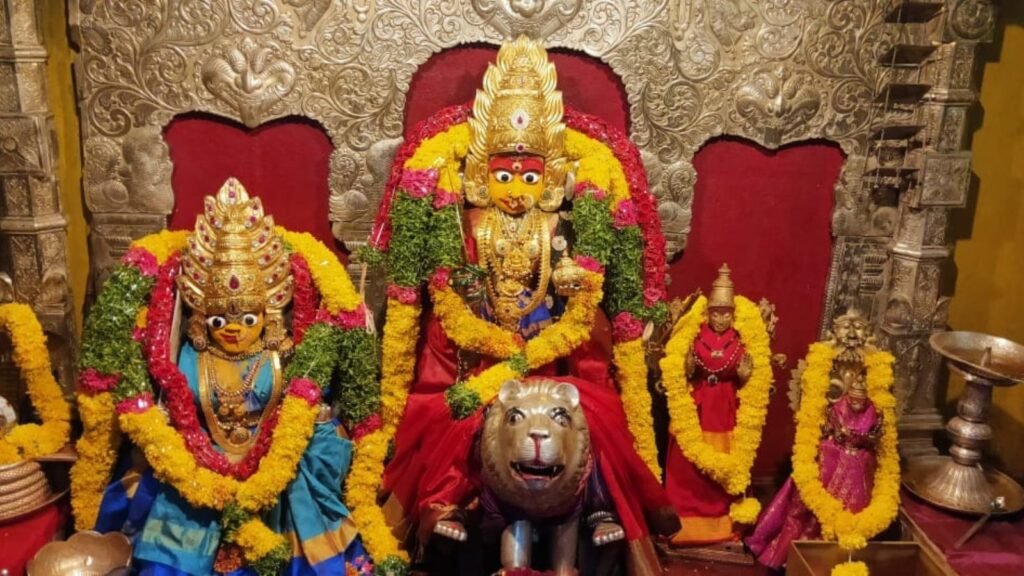
The temple expanded over the following decades. During the construction of the sanctum, a stone idol of Goddess Manikyalamma was discovered and consecrated alongside Mahakali. In 1964, the original wooden idol was replaced with the present stone idol of Sri Mahakali. The temple later came under the administration of the Endowments Department. Secunderabad Bonalu is popularly known as Lashkar Bonalu. The word Lashkar, derived from Persian, means “army” or “military camp,” reflecting Secunderabad’s origins as a military cantonment.
Recognized as the State Festival of Telangana, Bonalu is a celebration of faith, gratitude, and collective spirit. The vibrant processions, Pothuraju performances, Ghatam processions, and the traditional Rangam ceremony attract devotees from across the country. At the heart of these celebrations is the lesser-known legacy of Suriti Appaiah, whose simple vow during a time of crisis gave rise to a tradition that has united generations of devotees for more than two centuries.