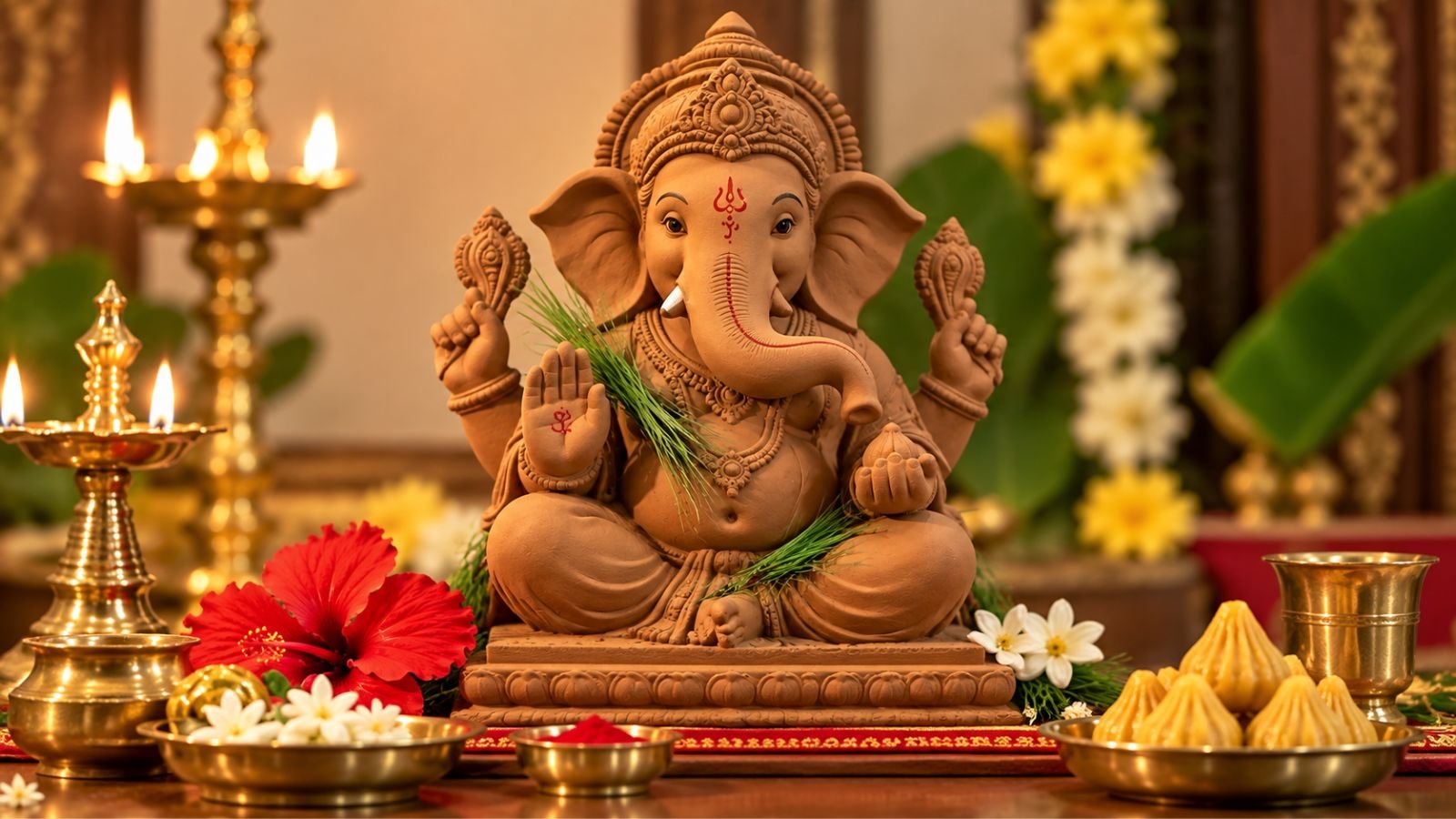
Among the many offerings made to Lord Ganesha, durva grass holds a special place. Its association comes from the story of Analasura, an asura whose name is derived from anala, a Sanskrit word associated with fire. According to traditions found in texts associated with the Ganesha Purana, Analasura possessed tremendous fiery power and caused widespread distress. His body radiated intense heat, and his destructive presence became so formidable that the gods and sages sought Ganesha’s intervention.
Ganesha confronted Analasura and ultimately swallowed him, bringing the demon’s destruction to an end. However, the victory came at a price. The fire associated with Analasura continued to burn within Ganesha, causing an unbearable sensation of heat. Various attempts were made to cool him, but relief came when durva grass was offered to him. Tradition holds that consuming 21 blades or shoots of durva finally soothed the burning sensation. This episode is regarded as the origin of the enduring practice of offering 21 durva shoots during Ganesha worship.
Durva is the grass botanically identified as Cynodon dactylon, commonly called Bermuda grass or doob grass. It is widespread across India, survives heat and repeated cutting. Its Indian names reveal how deeply familiar it is: Doob or Durba in Hindi and Bengali, Garika in Telugu, Garike in Kannada, Arugampullu in Tamil, Karuka in Malayalam and Harali in Marathi. Regional names vary, but they generally refer to the same grass. Durva also has a long history in traditional Indian medicine.
The story gives an ordinary plant an extraordinary place in Hindu worship. Analasura represents destructive fire, while durva represents cooling and relief. Every small bunch offered to Ganesha therefore recalls a story of destruction overcome not by grandeur, but by something humble. The next time you see durva placed before Ganesha, remember those simple green blades carry with them a story that connects mythology, nature and centuries-old devotional practice.