The word echo refers to the repetition or reflection of sound when sound waves bounce off a surface and return to the listener. Interestingly, the word has its roots in ancient Greek mythology, in a tragic love story involving two characters, Echo and Narcissus.
The word comes from the Latin echo, which was borrowed from the ancient Greek ēkhō (ἠχώ), meaning sound or reverberating sound.
In Greek mythology, Echo was a beautiful mountain nymph who was cursed by the goddess Hera for helping Zeus conceal his affairs with other nymphs by keeping Hera distracted with lengthy conversations. Angered by her deception, Hera took away Echo’s ability to speak freely, leaving her able only to repeat the last words spoken by someone else.
Echo eventually fell in love with Narcissus, a handsome young man renowned for his looks. However, Narcissus did not return her affection. Instead, he became infatuated with his own reflection after catching sight of himself in a pool of water.
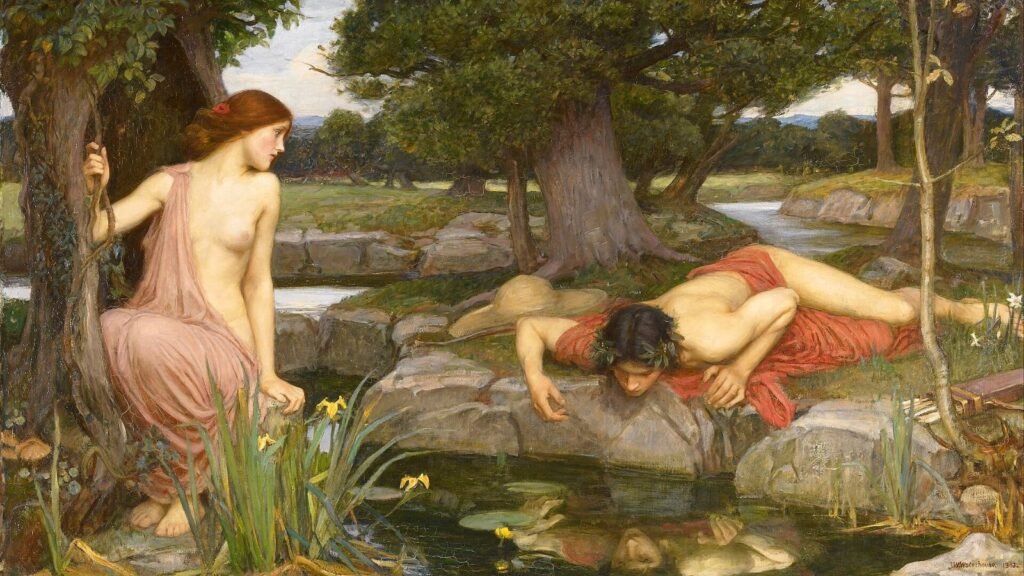
The English painter John William Waterhouse, in his 1903 painting Echo and Narcissus, beautifully captures this tragic moment. Echo is seen sitting beside a tree, gazing longingly at Narcissus, who is leaning over a pool, captivated by his own reflection. While Echo longs for his attention, Narcissus remains oblivious to her presence.
Heartbroken by Narcissus’s rejection, Echo gradually fades away until nothing remains of her but her voice. Narcissus, meanwhile, is made by the goddess Nemesis to fall in love with his own reflection in a pool of water. Unable to possess the beautiful image he sees, he cannot tear himself away from it and eventually wastes away and dies beside the pool. According to the myth, a flower later grows in the spot where he dies, bearing his name—the narcissus.
The next time you hear an echo in a valley, remember the Greek nymph whose voice, according to mythology, survived even after she disappeared. It is fascinating how a tragic tale of unrequited love gave us a word we use in everyday life!
Echo and Narcissus Painting Credits: Wikipedia