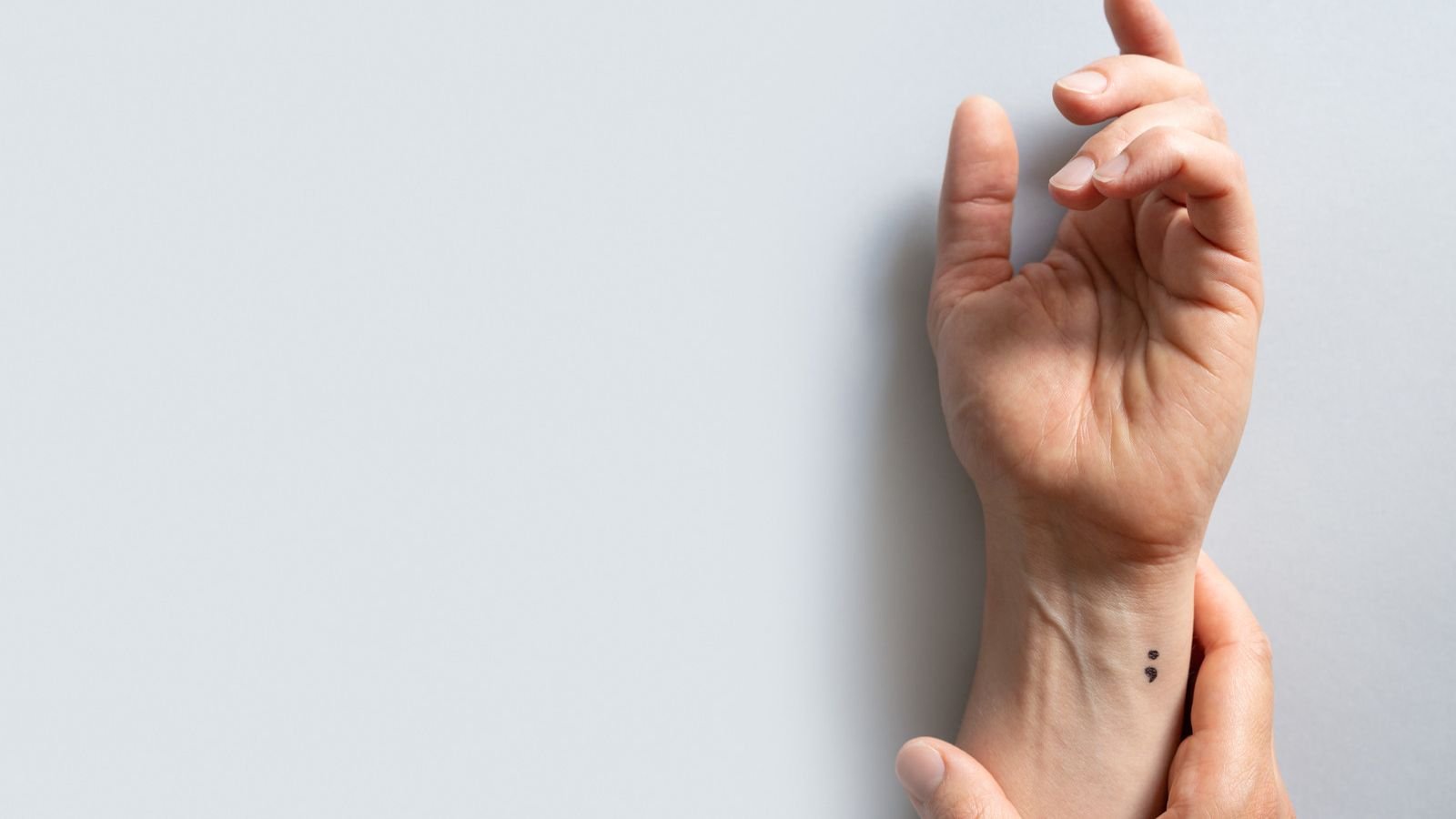
A small punctuation mark has become a powerful symbol of hope, and the decision to keep living. It is the semicolon (;), a familiar mark in written language that has acquired a much deeper meaning when inked onto someone’s skin.
People around the world get semicolon tattoos on their wrists, thumbs, fingers, and other visible parts of their bodies. For many, it is not merely a fashion statement but a personal reminder of struggles with depression, mental health challenges, or suicidal thoughts—and of their determination to carry on.
The symbolism comes from the semicolon’s grammatical function. It connects two closely related independent clauses instead of ending a sentence. This has inspired a powerful metaphor for life: when a person could have ended their story, they chose to continue writing it.
Project Semicolon began in 2013 as a grassroots initiative founded by Amy Bleuel, an American mental health advocate. Bleuel created the project partly to honor her father, whom she lost to suicide, and partly to share her own experiences with depression and suicidal thoughts. She wanted to encourage people to speak openly about mental health, overcome stigma, and find hope.
The initiative encouraged people to draw semicolons on their wrists and share photographs as a sign of solidarity. As the movement gained attention online, many people chose to make the symbol permanent through tattoos.
For some, the semicolon represents their personal journey through difficult times; for others, it honors someone lost to suicide or expresses support for people facing mental health challenges. Not everyone with a semicolon tattoo has experienced suicidal thoughts. Its meaning is deeply personal and varies from individual to individual.
Ultimately, this tiny punctuation mark carries a message much bigger than its size. It reminds us that a difficult chapter need not be the end of a story.
A period ends a sentence. A semicolon lets it continue. Sometimes, that is all the reminder someone needs.