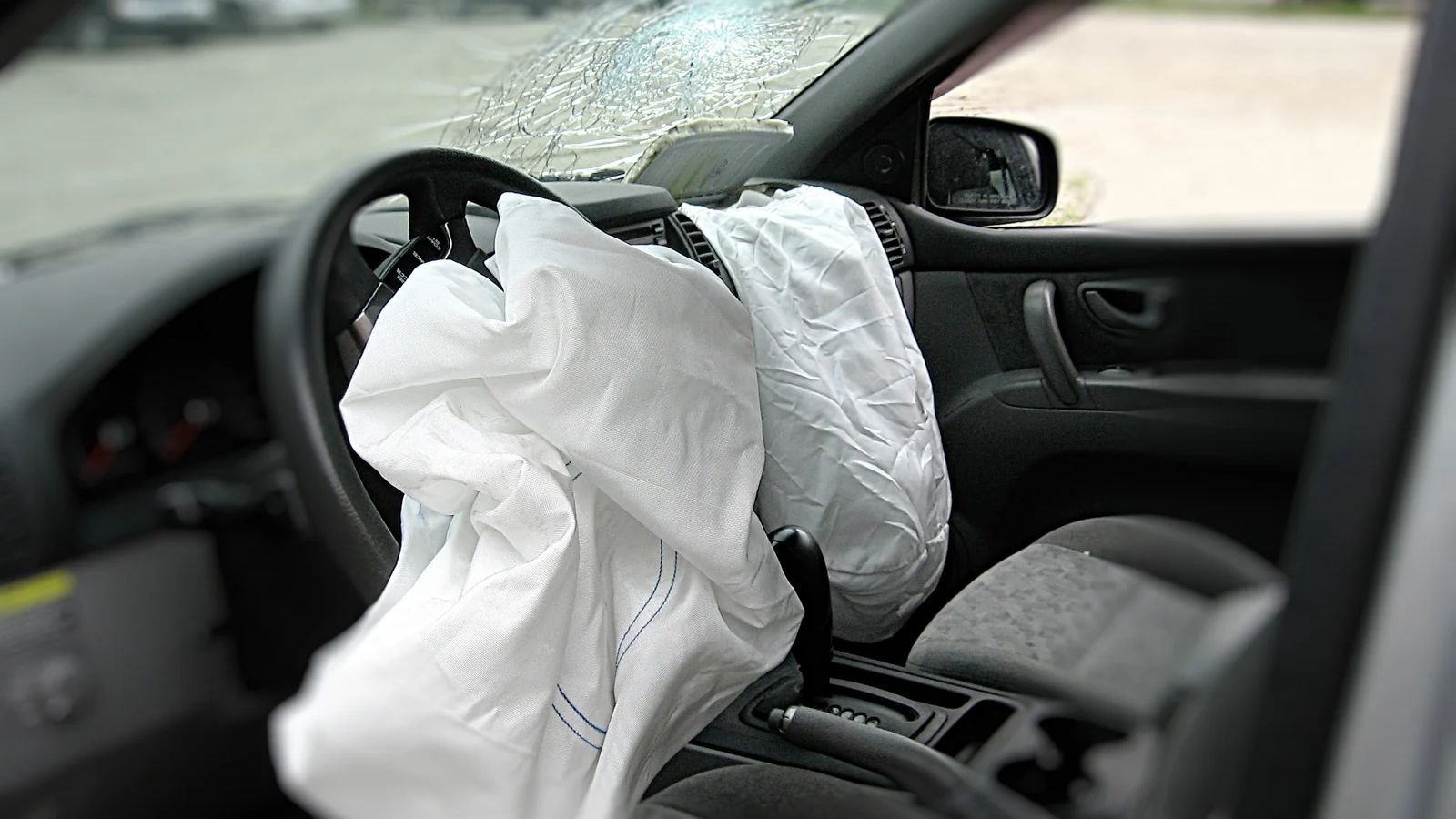
Airbags protect occupants by inflating in a fraction of a second during a serious crash. The system does not react to speed alone; it detects a sudden, severe change in the vehicle’s motion and then triggers a rapid chemical gas-generating process.
Detecting the Crash
Accelerometers and crash sensors placed around the vehicle continuously measure deceleration and impact forces. When an impact occurs, an electronic control unit evaluates signals from several sensors to determine whether the event is a genuine moderate-to-severe crash rather than a pothole, hard braking, or a minor collision.
Triggering the Airbag
If the control unit confirms that deployment is necessary, it sends an electrical signal to an igniter, called a squib, inside the airbag inflator. The igniter heats almost instantly, initiating a exothermic chemical reaction with solid propellants (traditionally sodium azide or modern guanidine nitrate). This reaction rapidly produces nitrogen gas, which flows through heat filters into the folded airbag.
Inflation and Cushioning
The gas rapidly fills a woven nylon airbag, forcing open the module seam in the steering wheel, dashboard, seat, or roof rail. Front airbags deploy in 20 to 30 milliseconds (faster than an eye blink) while curtain airbags deploy even faster. As the occupant strikes the bag, engineered vent holes immediately release the gas. This controlled deflation absorbs kinetic energy, cushions impact, and prevents the occupant from rebounding violently.
Main Components
- Crash sensors and accelerometers: Detect impact severity, direction, and rapid deceleration.
- Electronic Control Unit (ACU): Analyzes sensor data, evaluates threshold limits, and commands deployment.
- Inflator, igniter, and propellant: Rapidly generate harmless nitrogen gas.
- Nylon airbag and module cover: Store, protect, and guide the expanding cushion.
- Vent holes: Release gas upon impact to absorb force safely.
Airbags are supplemental restraint systems, meaning they are designed to work with seat belts rather than replace them. Modern vehicles may use multi-stage inflators, which adjust inflation force according to crash severity and occupant conditions.