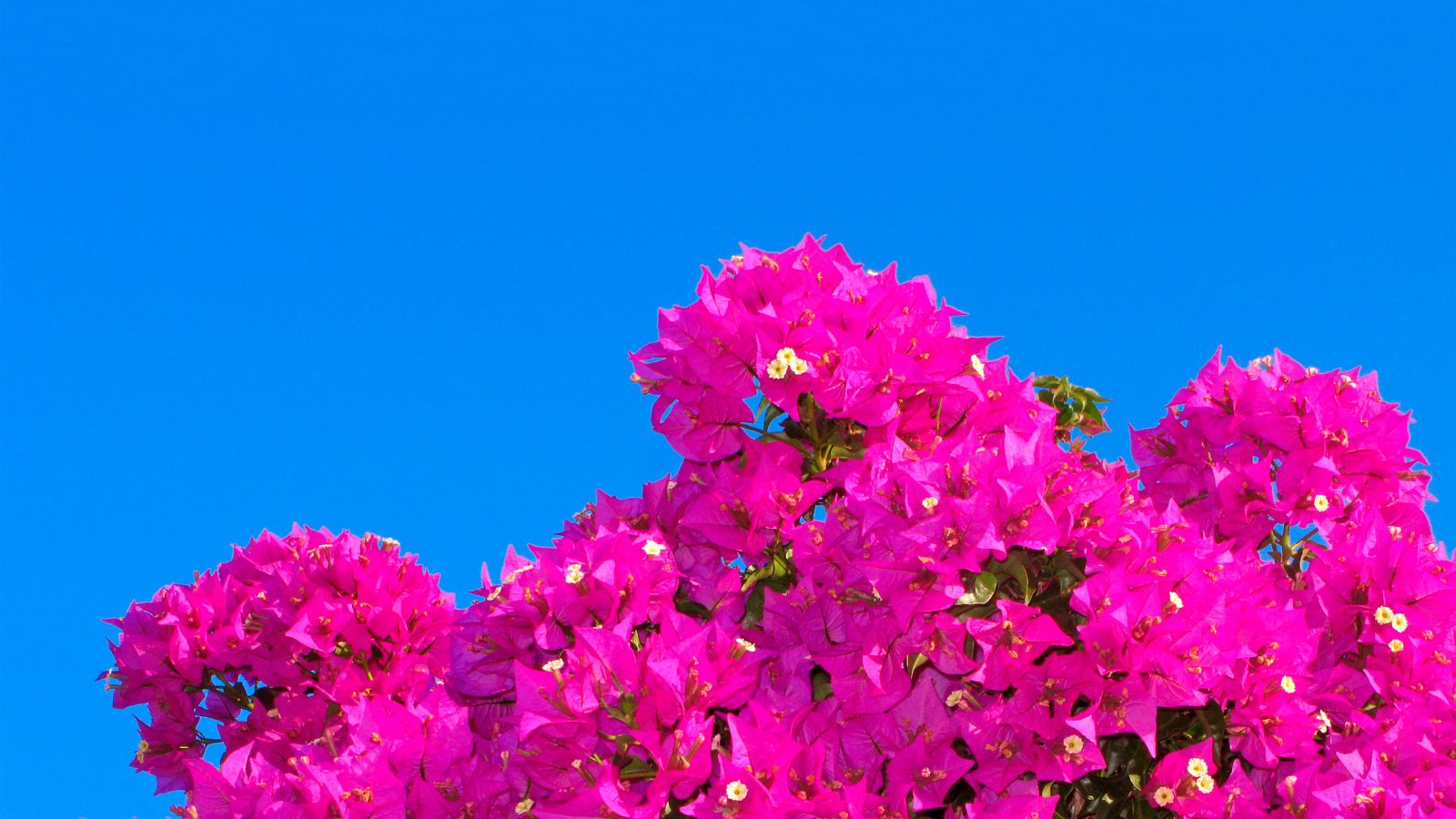
Walk past a bougainvillea in full bloom and you might assume those vivid, papery bursts of pink, purple, orange, or red are its flowers. They are not. What draws the eye so forcefully is actually a set of modified leaves called bracts, and understanding that distinction is what makes this plant genuinely fascinating from a botanical standpoint.
Bougainvillea is native to South America, with Brazil considered its primary homeland. It grows wild across tropical and subtropical regions, thriving in warm climates where it can climb, sprawl, and eventually dominate entire walls and fences.
The plant carries the name of Louis Antoine de Bougainville, an 18th-century French explorer and naval officer who led one of the earliest French expeditions to circumnavigate the globe. During that voyage, which began in 1766, the French botanist Philibert Commerçon encountered the plant in Brazil and collected specimens. It was Commerçon who formally described and documented it, and he named the genus Bougainvillea in honor of his expedition commander, recognizing Bougainville’s considerable contributions to exploration and geographic discovery.

Louis Antoine de Bougainville
The plant’s most distinctive feature, those brilliantly colored bracts, are technically modified leaves. In botanical terms, bracts differ from regular foliage in their size, shape, and pigmentation. They serve a specific purpose: surrounding and drawing attention to the plant’s actual flowers, which are small, tubular, and comparatively unremarkable, sitting quietly at the center of each bract cluster. The bracts do the visual work that the flowers cannot.
This arrangement is not unique to bougainvillea. Poinsettias, the popular red-leafed plants widely associated with the Christmas season, work on the same principle: their large, colorful bracts are routinely mistaken for petals, while the actual flowers remain small and yellow at the center. But few plants exploit this strategy quite as dramatically or as vividly as bougainvillea does, which is likely why it has spread from its South American origins to gardens, roadsides, and courtyards across nearly every warm region of the world.
Interestingly, those spectacular bursts of color are not a sign of a well-watered, pampered plant. Bougainvillea is a bloom-on-stress plant. A controlled period of dryness actually signals it to produce more bracts, while overwatering tends to suppress them. Allowing the soil to dry out moderately between waterings, rather than keeping it constantly moist, is what coaxes the most vivid displays. It is, in that sense, a plant that genuinely rewards a degree of neglect.