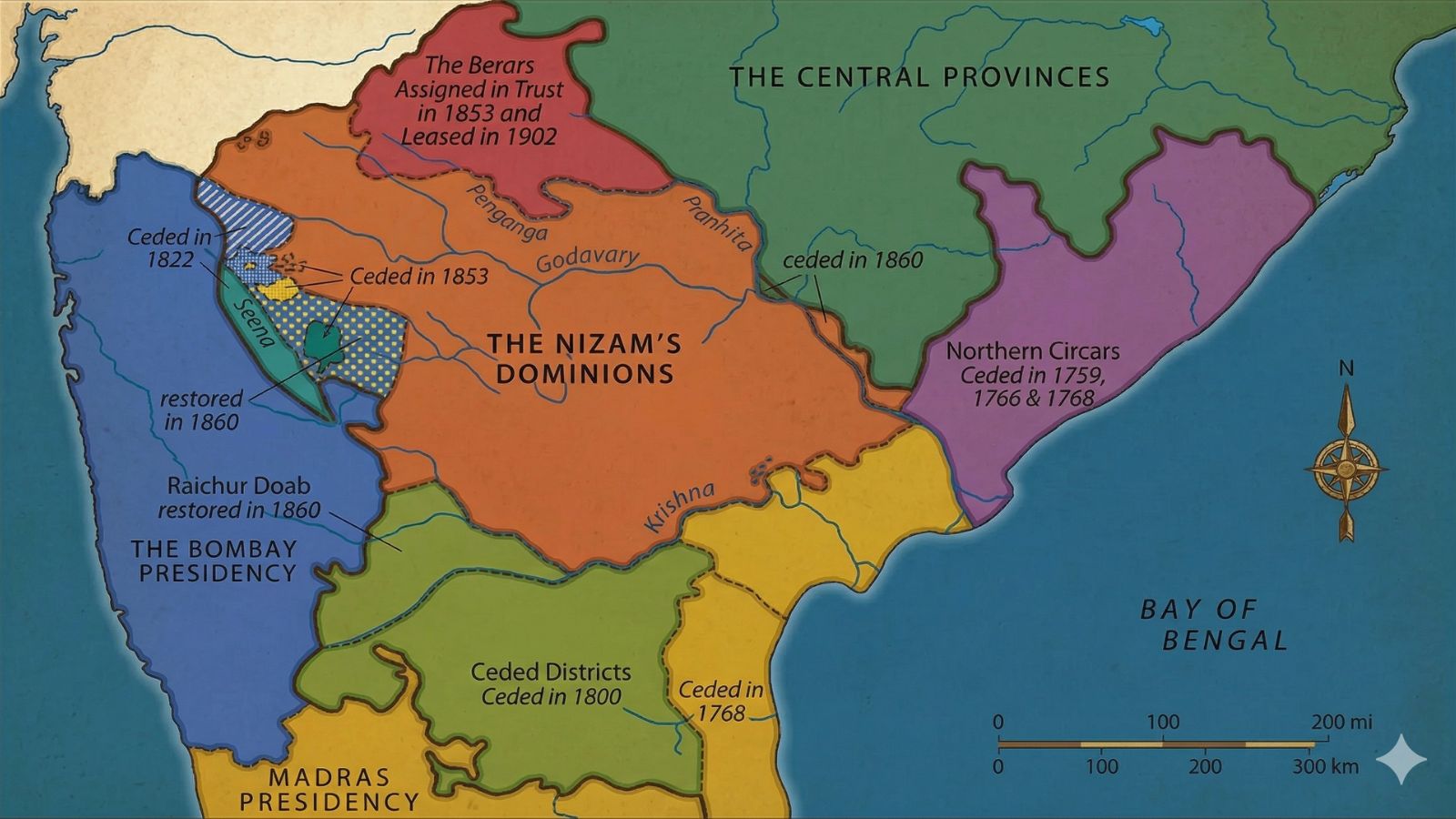
The “Ceded Districts” in Andhra Pradesh refers to a group of territories that were ceded (formally handed over) by the Nizam of Hyderabad, Mir Nizam Ali Khan – Asaf Jah II, to the British East India Company in the late 18th and early 19th centuries.
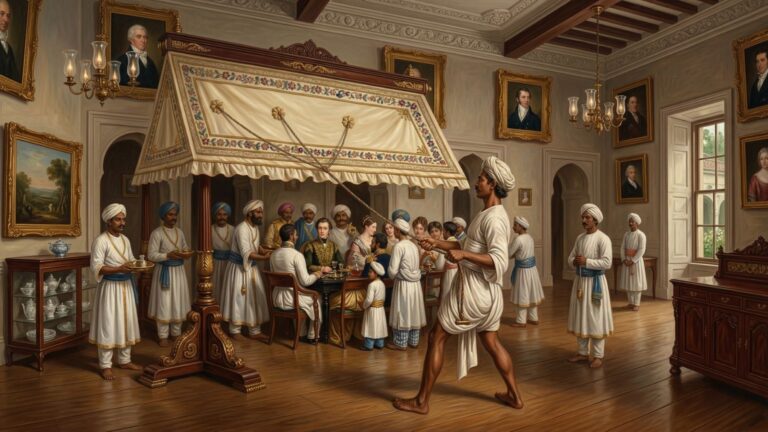
The sequence of events traces back to the Treaty of Seringapatam (1792), following the Third Anglo-Mysore War, wherein Tipu Sultan was compelled to surrender his northern territories between the Krishna and Penner rivers to the Nizam of Hyderabad. However, facing continued pressure from the Marathas and Mysore, the Nizam sought British military protection under Lord Wellesley’s Subsidiary Alliance (1798). This meant accepting British troops for protection and paying for their upkeep, either in cash or by giving up territory. However, unable to bear the financial burden of maintaining British troops comprising eight battalions of sepoys and two cavalry regiments, the Nizam ceded these territories to the Company in lieu of payment.
These transferred lands came to be known as the “Ceded Districts” and were incorporated into the Madras Presidency. Historically, the Ceded Districts included present-day Kadapa, Kurnool, Anantapur, parts of Bellary, and certain Kannada‑speaking taluks such as Harapanahalli in present‑day Davanagere district.
In 1928, journalist Gadicherla Harisarvothama Rao coined the term Rayalaseema (meaning “Raya’s Borderland”) to replace the colonial label “Ceded Districts” and instill a sense of regional pride. The name Rayalaseema pays homage to Sri Krishnadevaraya, the great ruler of the Vijayanagara Empire, under whom this region flourished culturally and politically.