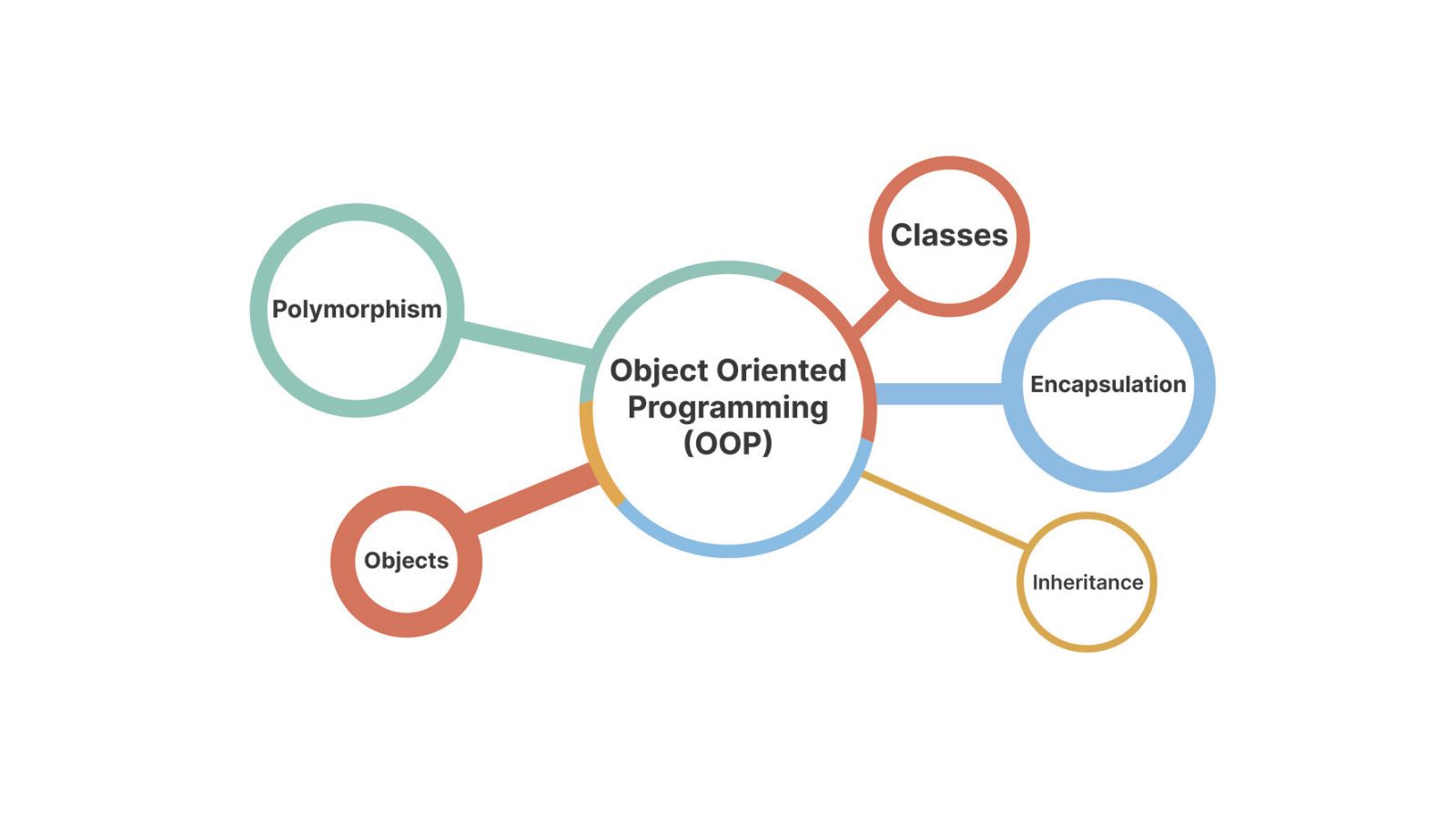
Think of Object-Oriented Programming (OOP) as a way of organizing code like a set of LEGO bricks. Instead of a long list of instructions, you create “Objects” (like a ‘Car’ or a ‘User’) that hold both data and the actions they can perform.
Core Concepts
- Encapsulation: Keeping data safe inside an object, like a pill capsule. You don’t need to know the chemistry; you just swallow the pill.
- Inheritance: A ‘Sports Car’ inherits traits from a generic ‘Vehicle’—saving time by not reinventing the wheel.
- Abstraction: Hiding complexity. You press a “Start” button on a microwave without needing to understand high-voltage transformers.
- Polymorphism: One interface, many forms. A “Play” button works for a song, a video, or a podcast.
Design Patterns
Patterns are “proven blueprints” for common problems. For example, the Singleton Pattern ensures only one instance of a class exists (like a single ‘Settings’ menu for an app), while the Observer Pattern notifies users when something changes (like a YouTube notification). The Factory Pattern creates objects without specifying exact classes (e.g., generating UI buttons dynamically).
Where You See It
OOP is the backbone of modern tech. Java and Python use it to build everything from Instagram’s feed to banking systems, making software easier to fix, scale, and understand