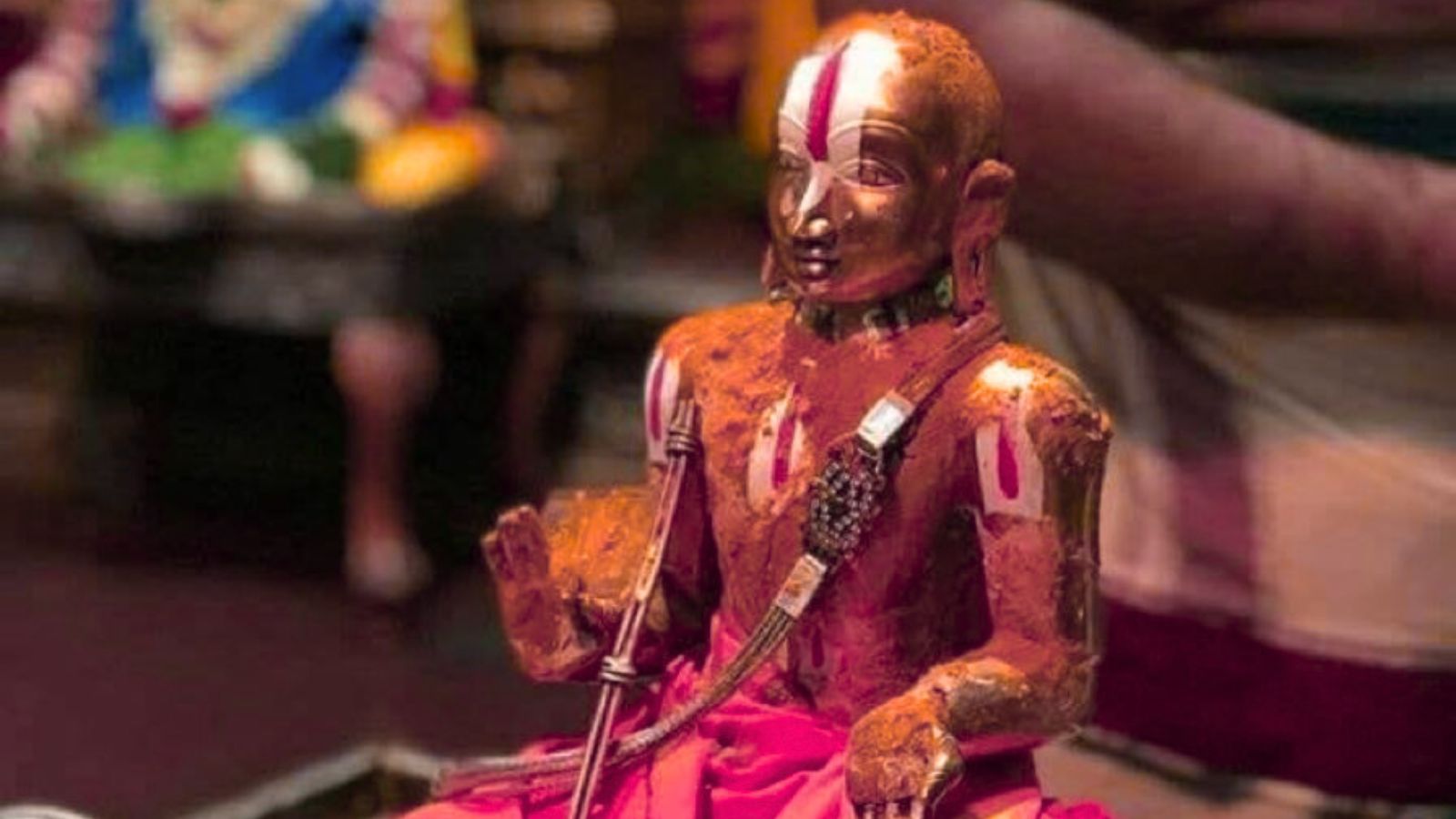
In prominent Sri Vaishnava temples such as Tirumala Tirupati, devotees can see a Bhasyakarala Sannidhi – a shrine dedicated to honoring Ramanuja, whom devotees honor as Bhasyakara. The term Bhasyakara translates to “author of a bhashya,” referring to Ramanuja’s monumental work Sri Bhashya, a detailed commentary on the Brahma Sutras that systematized Vishishtadvaita philosophy.
Bhasyakars, in this context, are acharyas who articulated and defended Vedantic doctrine through authoritative commentaries while integrating philosophy firmly in devotion to Lord Vishnu as the Supreme Reality. Ramanuja presented that Vishnu, identified with Narayana, as the indwelling soul of all beings and the merciful deity who bestows moksha via complete surrender (prapatti).
The Bhasyakarala Sannidhi (literally the “seat of Bhasyakars”) located near the main deity’s sanctum in Tirumala’s temple complex, affirms the acharya as the vital link between devotee and divine. Sri Vaishnava tradition holds that access to Vishnu is attained through the guidance and grace of the acharya.
Ramanuja is credited with reforming the practices at the Tirumala temple around 1119 CE, standardizing daily worship (archana), festivals, and food offerings per Vishishtadvaita, which holds God as one with souls and matter as dependent attributes. He established the Tirupati Jeeyar Mutt to oversee rituals, elevated Alvars’ hymns via the Nalayira Divya Prabandham, and advanced social inclusivity in worship.
The Bhasyakaarla Sannidhi serves as a reminder that knowledge, discipline, and devotion guide devotees to Vishnu.