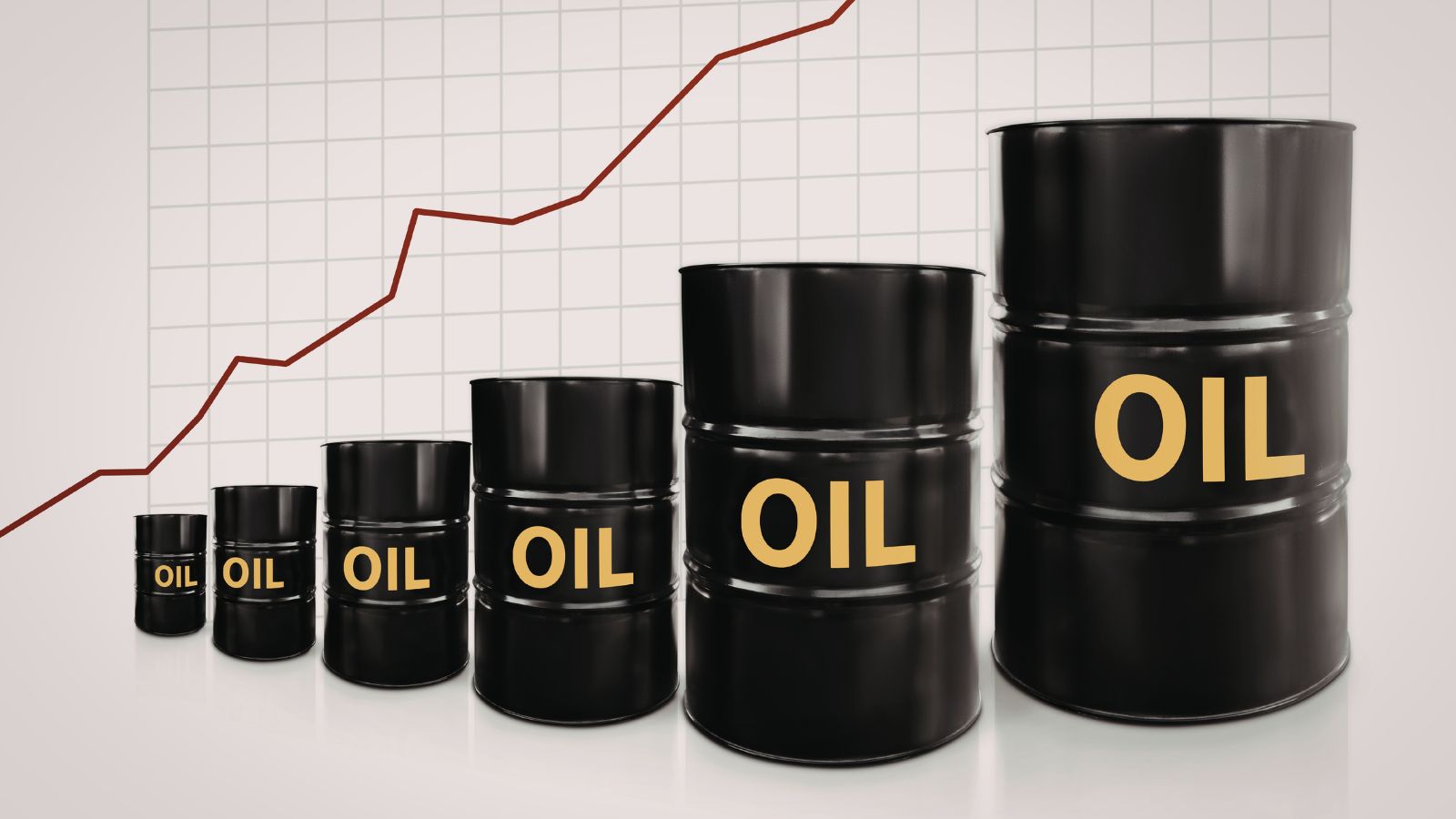
Crude oil, often called “black gold,” is the lifeblood of modern civilization. It is a naturally occurring liquid hydrocarbon found deep beneath the Earth’s surface and the seabed. Far from being a simple fuel, it is a complex cocktail of thousands of organic compounds—mostly hydrocarbons of varying chain lengths—along with trace amounts of nitrogen, sulfur, and oxygen.
Before it powers your car, becomes the plastic casing of your phone, or surfaces the highways, crude oil must undergo a radical transformation through molecular separation.
Where does crude oil come from?
Crude oil is a natural fuel that formed deep inside the Earth over millions of years. It began as tiny sea creatures such as algae and plankton that lived in ancient oceans. When these organisms died, they sank to the ocean floor and were buried under layers of mud and sand.
Over a very long time, the heat from deep inside the Earth and the heavy pressure from the layers above slowly changed this buried organic material into crude oil, a thick liquid made mostly of hydrocarbons.
The oil then moved through underground rock until it became trapped beneath hard layers of rock that prevent it from escaping. Today, engineers locate these underground reserves using seismic surveys, which study how sound waves travel through the Earth. Once found, wells are drilled to bring the oil to the surface, sometimes using pumps or injected gas to keep the oil flowing steadily.
Refining Crude Oil: The Process
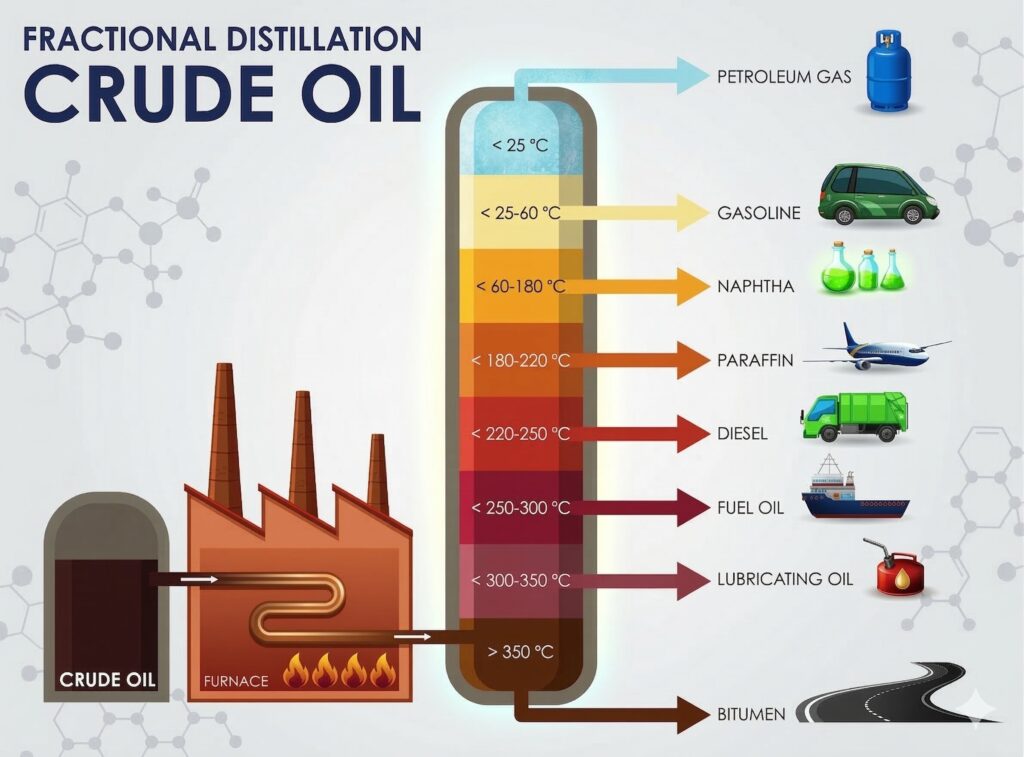
Crude in its raw form is virtually unusable. To unlock its value, it is sent to a refinery. The primary technique used is fractional distillation — a process that separates a mixture of liquids into different components based on their boiling points.
The oil is heated in a furnace to approximately 350°C–400°C and fed into a tall fractionating tower. Because different hydrocarbon molecules have different boiling points, they condense at different heights:
- Lighter (shorter-chain) fractions rise to the cooler top.
- Heavier (longer-chain) fractions settle toward the hot bottom.
1. Refinery Gas
These are the lightest hydrocarbons, including methane, ethane, propane, and butane. Methane is typically used within the refinery as fuel, while propane and butane are liquefied to form Liquefied Petroleum Gas (LPG) used for cooking and heating.
2. Gasoline / Petrol
Gasoline is one of the most commercially valuable fractions. It is a light, highly flammable fuel used primarily in internal combustion engines powering cars and motorcycles.
3. Naphtha
Naphtha overlaps with gasoline but serves a different purpose. This volatile liquid serves as a key feedstock for the petrochemical industry. Through processes such as steam cracking and catalytic reforming, it is converted into chemicals used to manufacture plastics, synthetic fibers, dyes, and pharmaceuticals.
4. Kerosene / Paraffin/ Jet Fuel
This fraction produces kerosene, commonly known as paraffin oil in many countries. It has historically been used in lamps and heaters. When further refined to strict aviation standards, the same fraction becomes jet fuel (such as Jet A-1), which remains stable and fluid at the extremely low temperatures encountered at high altitudes.
5. Diesel / Gas Oil
Diesel is a heavier “middle distillate” with higher energy density than gasoline. It powers trucks, buses, agricultural equipment, construction machinery, and many electrical generators.
6. Fuel Oil
Also called bunker fuel, this dense, heavy oil powers large cargo ships, industrial boilers, and some power plants. Because of its viscosity, it often requires heating before it can be pumped or burned.
7. Lubricating Oil
These thick fractions are further processed to produce motor oils, greases, and hydraulic fluids that reduce friction and protect engines and industrial machinery from wear.
8. Bitumen / Asphalt
The heaviest material left after distillation is bitumen, a sticky, tar-like substance. Since it does not vaporize easily, it is often processed in a vacuum distillation unit. Bitumen is widely used in road construction and waterproofing.
A Barrel of Crude Oil: What Comes Out?
To put all of the above in perspective, here is how a typical 42-gallon (159-litre) barrel of crude oil is refined in a modern refinery (approximate averages; actual yields vary by crude type and refinery configuration):
- Gasoline/Petrol: ~19.4 gallons (46%)
- Diesel / Distillate fuel: ~11.5 gallons (27%)
- Jet Fuel: ~4.3 gallons (10%)
- Heavy Fuel Oil: ~2.3 gallons (6%)
- Liquefied Petroleum Gas (LPG): ~1.8 gallons (4%)
- Naphtha and feedstocks: ~1.3 gallons (3%)
- Lubricating oils, waxes, bitumen, and other: remaining ~4%
From the gas that cooks our food to the asphalt under our tires, crude oil is a masterclass in chemistry. By simply using heat to sort molecules by size, we turn a thick, black sludge into the diverse range of materials that sustain the modern world.