Have you ever been offered a choice that wasn’t actually a choice at all? That is a Hobson’s choice—a situation in which there appears to be a choice, but in reality, only one option is available: take it or leave it.
In use
Facing Hobson’s choice, the job seeker reluctantly accepted the low-paying position rather than remaining unemployed.
When the airline canceled all other flights, accepting the late-night departure became a Hobson’s choice.
The company offered employees a Hobson’s choice: relocate immediately or resign.
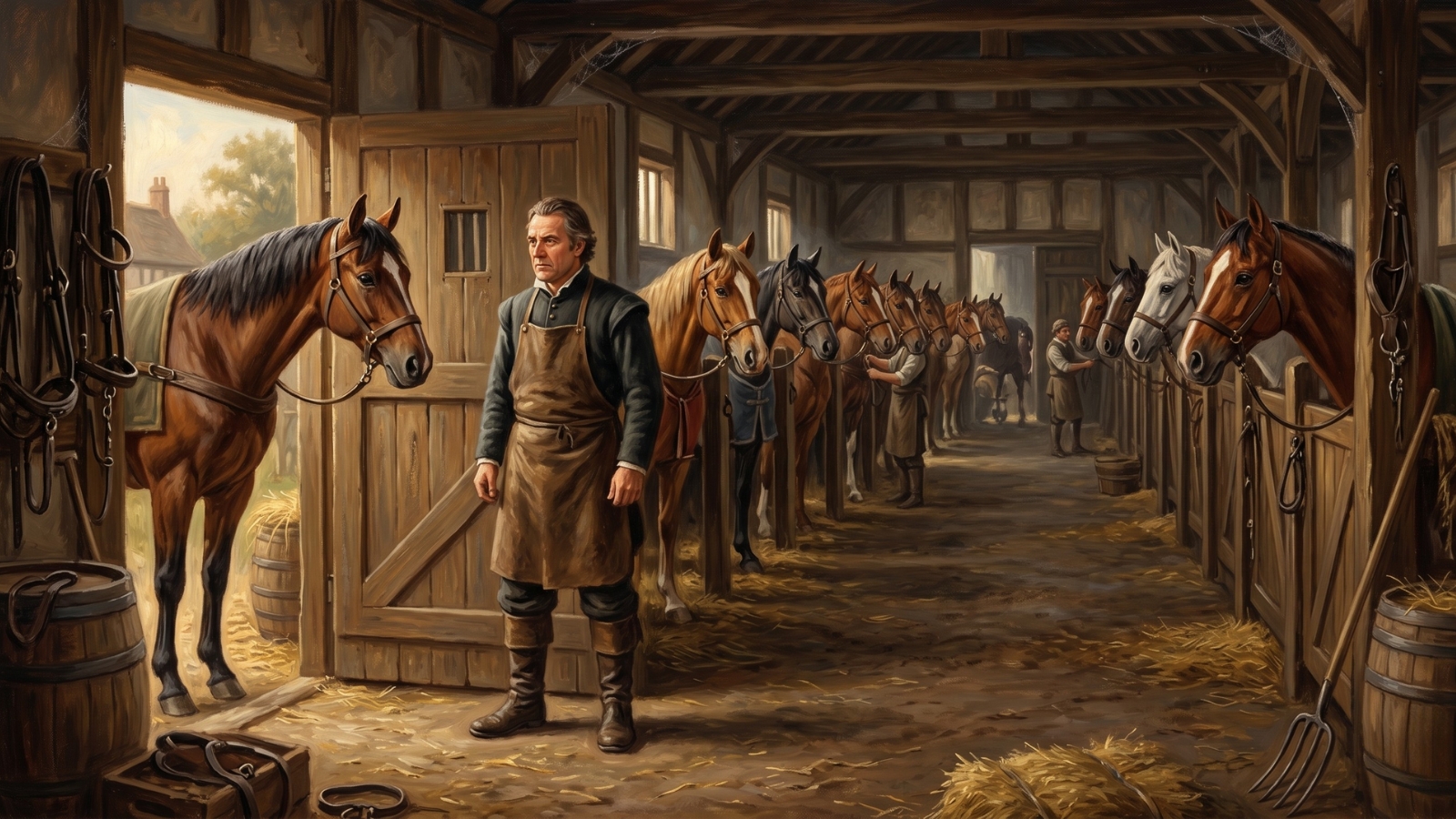
The expression comes from Thomas Hobson (1544–1631), a livery stable owner in Cambridge, England. Hobson rented horses to students and travelers. He noticed that customers would always pick the fastest, strongest steeds, leaving the others exhausted. To keep his horses healthy, Hobson instituted a strict rule: a customer could either take the horse nearest the stable door or take no horse at all. What looked like freedom of choice was no choice at all. The phrase entered English usage as a metaphor for constrained decision-making
Today, Hobson’s Choice describes any “take it or leave it” scenario masquerading as freedom. From software licenses with no negotiation room to limited consumer products or political ultimatums, it reminds us how power often hides behind the facade of options. Next time you’re offered a seemingly open menu with only one real dish, remember the Cambridge stableman.