Some names outgrow the people who bore them and become symbols of an idea. Bhagiratha is one such name.
In Indian literature and everyday speech, “Bhagiratha Prayatnam” (Bhagiratha effort) is widely used to describe an undertaking so difficult that only extraordinary perseverance, sacrifice, patience, and determination can see it through. Across Indian languages, especially Telugu and other Sanskrit-influenced traditions, the phrase evokes the image of achieving the seemingly impossible. But who was Bhagiratha, and what did he do to make his name synonymous with extraordinary effort?
The man behind the legend
Bhagiratha was a descendant of King Sagara of the Ikshvaku dynasty, the same royal lineage to which Lord Rama belonged. His story appears prominently in ancient Indian epics such as the Ramayana and the Mahabharata, as well as various Puranas.
According to the legend, King Sagara’s 60,000 sons were reduced to ashes after they disturbed the sage Kapila while searching for a stolen sacrificial horse. Their souls were denied salvation (moksha) because their final rites could not be performed. The only force capable of purifying their ashes and liberating them was the celestial river Ganga, who resided in the heavens.
The monumental task
Generations later, Bhagiratha took upon himself the daunting responsibility of redeeming his ancestors. To grant them salvation, he had to bring the heavenly Ganga down to earth.
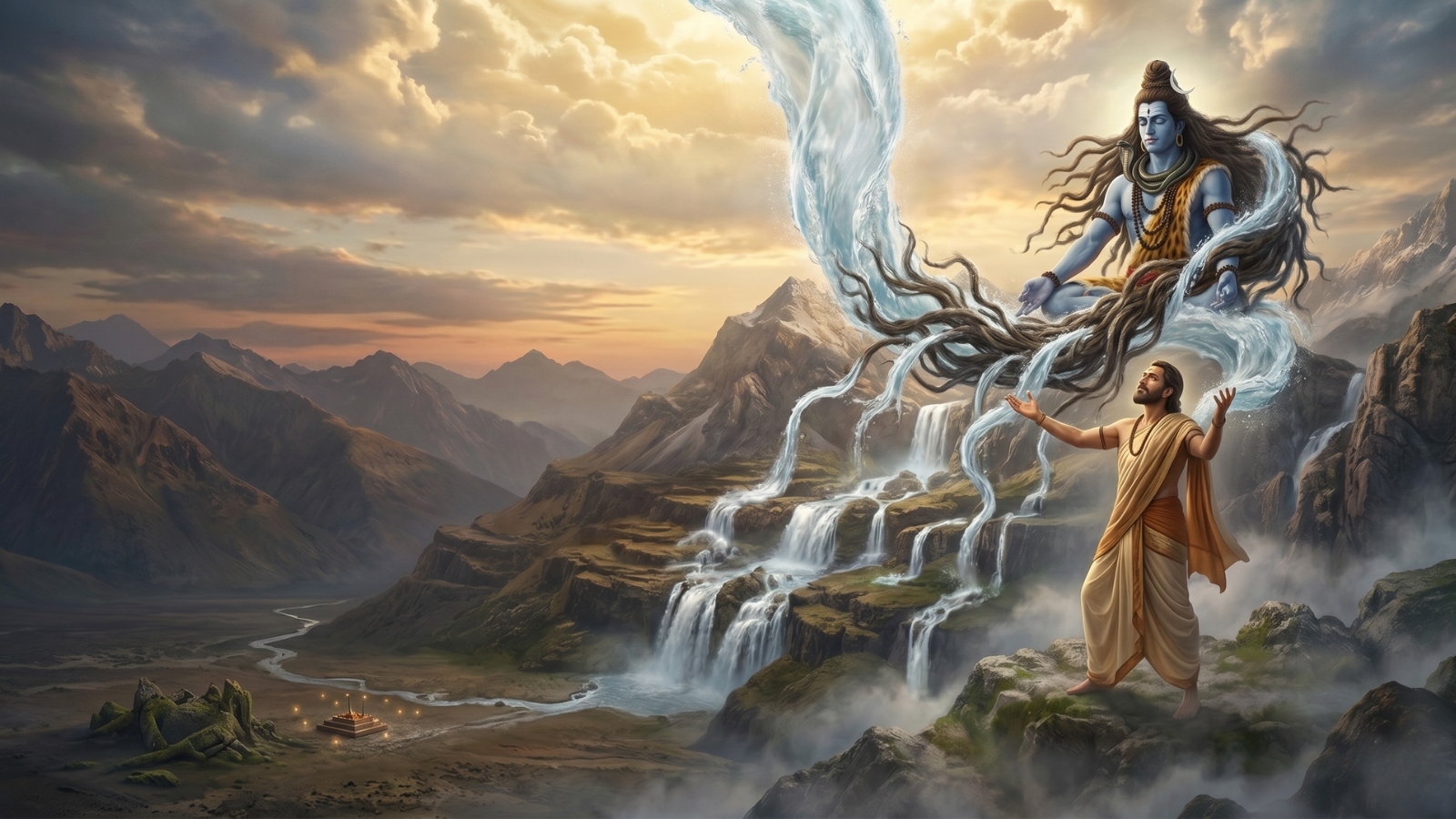
Undeterred by the failures of those before him, Bhagiratha renounced his royal comforts and undertook severe penance (tapasya) to seek Lord Brahma’s intervention. Brahma agreed to allow Ganga to descend, but there was a grave challenge: her immense force would have devastated the earth. Bhagiratha then performed further penance to invoke Lord Shiva, pleading with him to receive the mighty river in his matted locks and release her gently.
Even then, the ordeal was not over. Ganga’s descent involved further obstacles before she finally followed Bhagiratha to the resting place of his ancestors, where her sacred waters granted them liberation.
Today, Bhagiratha Prayatnam remains a powerful metaphor for relentless determination in pursuit of a noble goal. It is often seen as the Indian equivalent of “moving mountains,” honoring a king whose unwavering resolve brought a river from the heavens to earth.
When someone says, “Cleaning up that decades-old institutional mess required a Bhagiratha Prayatnam,” they are invoking the memory of a king whose legendary perseverance helped accomplish the tasks of extraordinary difficulty through sheer persistence.