If you have ever heard someone postpone a journey, delay signing a contract, or avoid beginning an important task because of Rahu Kaal, you have encountered a widely observed Hindu astrological custom. Rahu Kaal, also called Rahu Kalam, is a daily period considered inauspicious for starting new ventures.
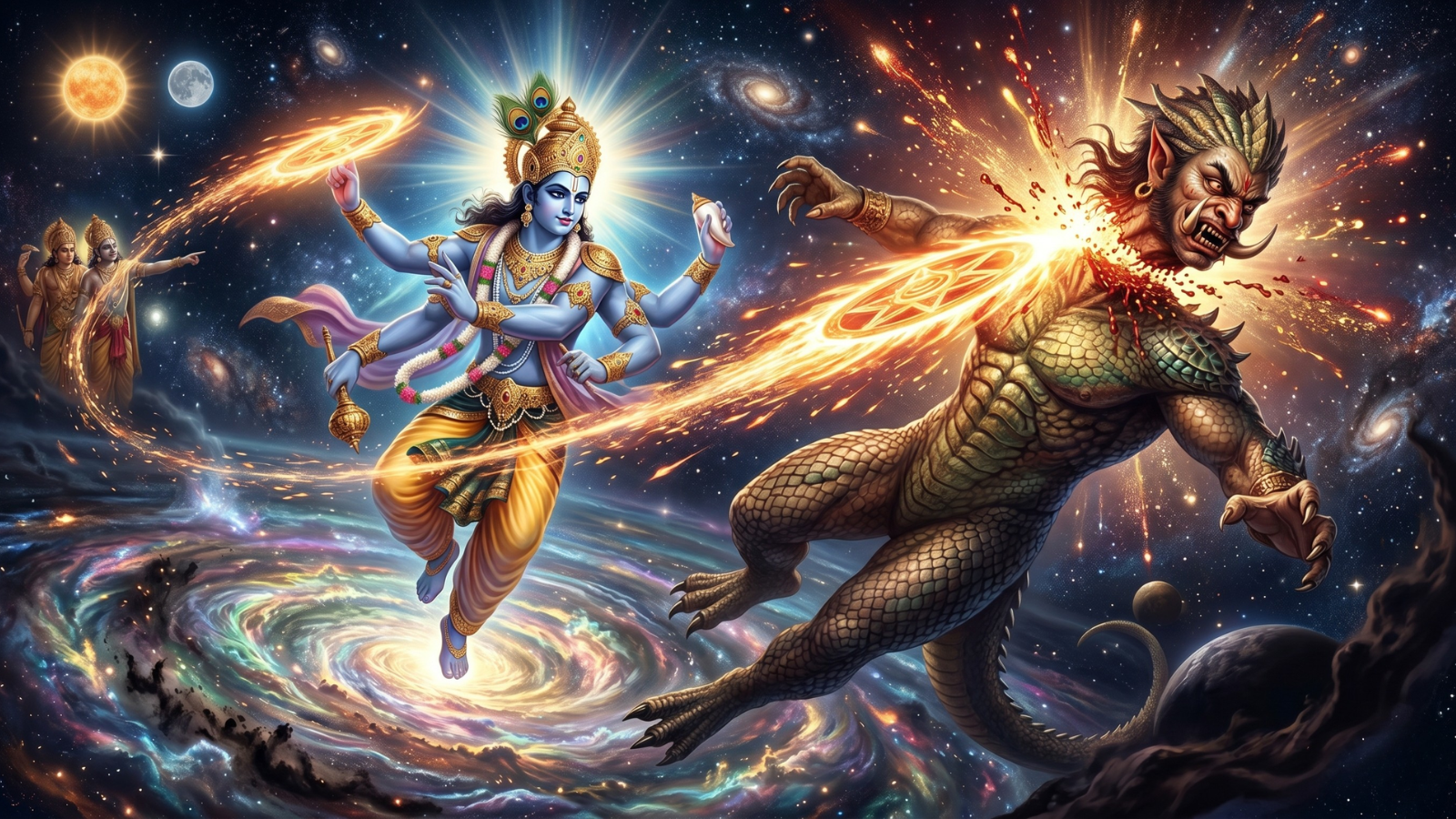
The belief is linked to Hindu mythology, especially the Samudra Manthan, or churning of the cosmic ocean. In the story, the demon Svarbhanu disguised himself to drink amrita, the nectar of immortality. The Sun and Moon exposed him, and Vishnu severed him; his immortal head became Rahu and his body became Ketu, both associated in astrology with eclipses, illusion, disruption, and unexpected obstacles.
For those who observe it, Rahu Kaal is calculated using local sunrise and sunset rather than fixed clock times. The daylight period is divided into eight equal segments, and one segment is assigned to Rahu depending on the weekday. For example, if sunrise is at 6 am and sunset at 6 pm, the 12-hour daylight period is divided by eight, making each segment 90 minutes long.
A simple way to remember the allocation is the traditional sequence 2, 7, 5, 6, 4, 3, 8 — which represents the Rahu Kaal segment from Monday through Sunday. In other words, Rahu Kaal falls in the 2nd segment on Monday, 7th on Tuesday, 5th on Wednesday, 6th on Thursday, 4th on Friday, 3rd on Saturday, and 8th on Sunday. This sequence comes from long-standing Hindu astrological convention and is preserved in panchangams, or almanacs, as a practical mnemonic for followers.
Using the same 6 am to 6 pm example, Rahu Kaal would fall on Monday from 7:30 am to 9 am, Tuesday from 3 pm to 4:30 pm, Wednesday from 12 pm to 1:30 pm, Thursday from 1:30 pm to 3 pm, Friday from 10:30 am to 12 pm, Saturday from 9 am to 10:30 am, and Sunday from 4:30 pm to 6 pm. Since sunrise and sunset vary by location and season, the actual timings change each day.
Many Hindus, especially in South India, avoid initiating activities such as travel, investments, ceremonies, or business launches during this period. Routine work, however, generally continues as usual.
From a scientific perspective, there is no evidence that Rahu Kaal influences outcomes. Even so, its cultural and spiritual significance remains strong: for believers, it is a practical guide steeped in tradition, and for others, it is a vivid example of how mythology shapes daily life.