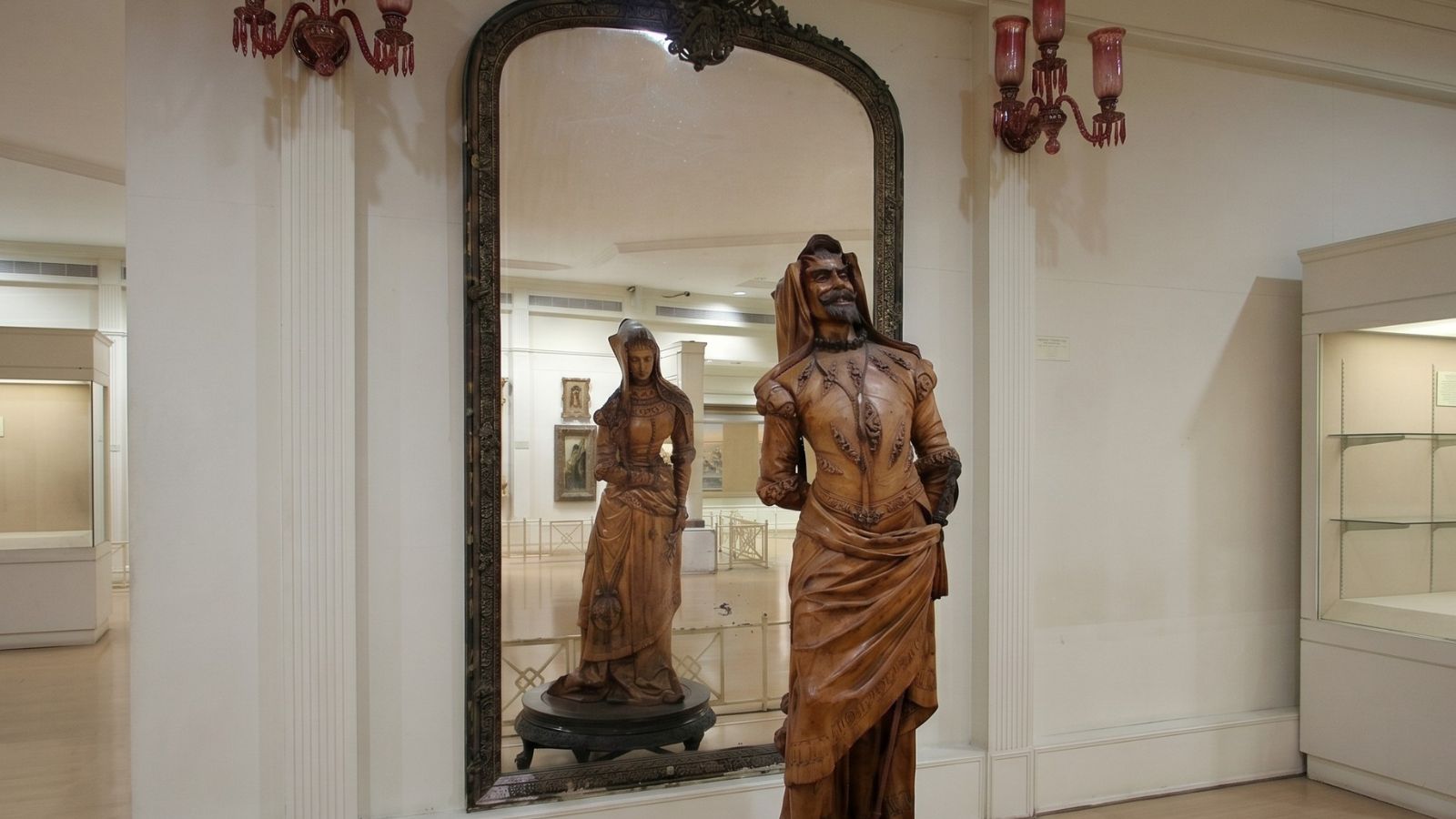
One of the most intriguing masterpieces at Hyderabad’s Salar Jung Museum is the double statue Mephistopheles and Margaretta. Carved from a single block of sycamore wood by an unknown French artist, this 19th century sculpture was acquired by Salar Jung I during his European travels in 1876.
On one side stands the arrogant, smirking Mephistopheles, the devilish tempter from Johann Wolfgang von Goethe’s celebrated German drama Faust. Cunning, cynical, and manipulative, he represents temptation, moral corruption, and the darker impulses of human nature. Turn around, and you encounter the demure, prayerful Margaretta (better known as Gretchen in German versions), a young innocent woman whose purity, faith, and tragic vulnerability make her one of literature’s most poignant characters.
In Goethe’s story, Mephistopheles tempts the dissatisfied scholar Faust with worldly experience and pleasure, and the two then become entangled with Gretchen through a series of manipulations, gifts, and secret meetings that Mephistopheles helps arrange. This ultimately sets in motion Gretchen’s tragic downfall.
The anonymous sculptor created this back-to-back illusion to visually encapsulate Goethe’s core theme: the duality of human nature. By fusing good and evil into a single physical form, the artwork serves as a stark reminder that virtue and vice are closely intertwined, constantly pulling at the human soul. Behind the statue, a massive mirror is strategically placed, allowing amazed visitors to witness both sides of this eternal moral struggle simultaneously.