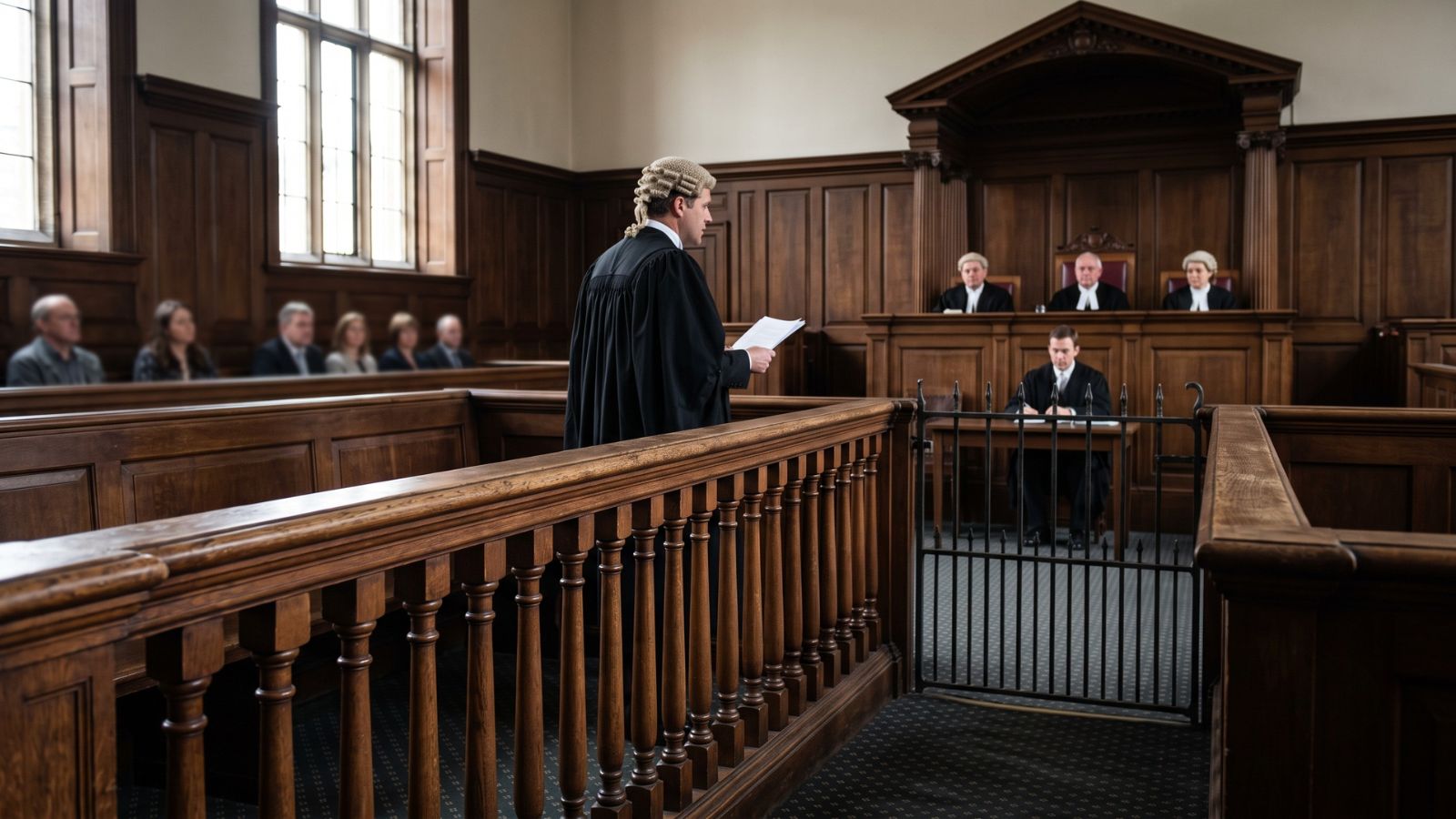
The word “bar” has the same surprising origin in both law and hospitality. It comes from Old French barre, meaning a barrier or rod, which in turn derives from Late Latin barra.
In medieval courtrooms, a low wooden rail separated judges, lawyers, and court officers from the public. When a law student completed training and was authorized to plead, they were admitted to stand inside that rail to present arguments, giving rise to expressions such as “called to the bar” and “passing the bar.” Over time, the physical barrier gave rise to the metonym* “the Bar” for the legal profession.
The same basic idea shaped drinking establishments. Taverns and inns used long wooden counters that formed a barrier between customers and the keeper, protecting casks, bottles, and cash. Patrons ordered and were served across that counter, which gradually became known simply as “the bar.”
Although courts and pubs serve very different purposes, both senses of “bar” trace back to the same simple wooden barrier that defined access.
* A metonym is using the name of one thing to refer to another thing that is closely associated with it.
For example:
- “The White House” = the U.S. government
- “The Crown” = the king or queen
- “The Bar” = the legal profession