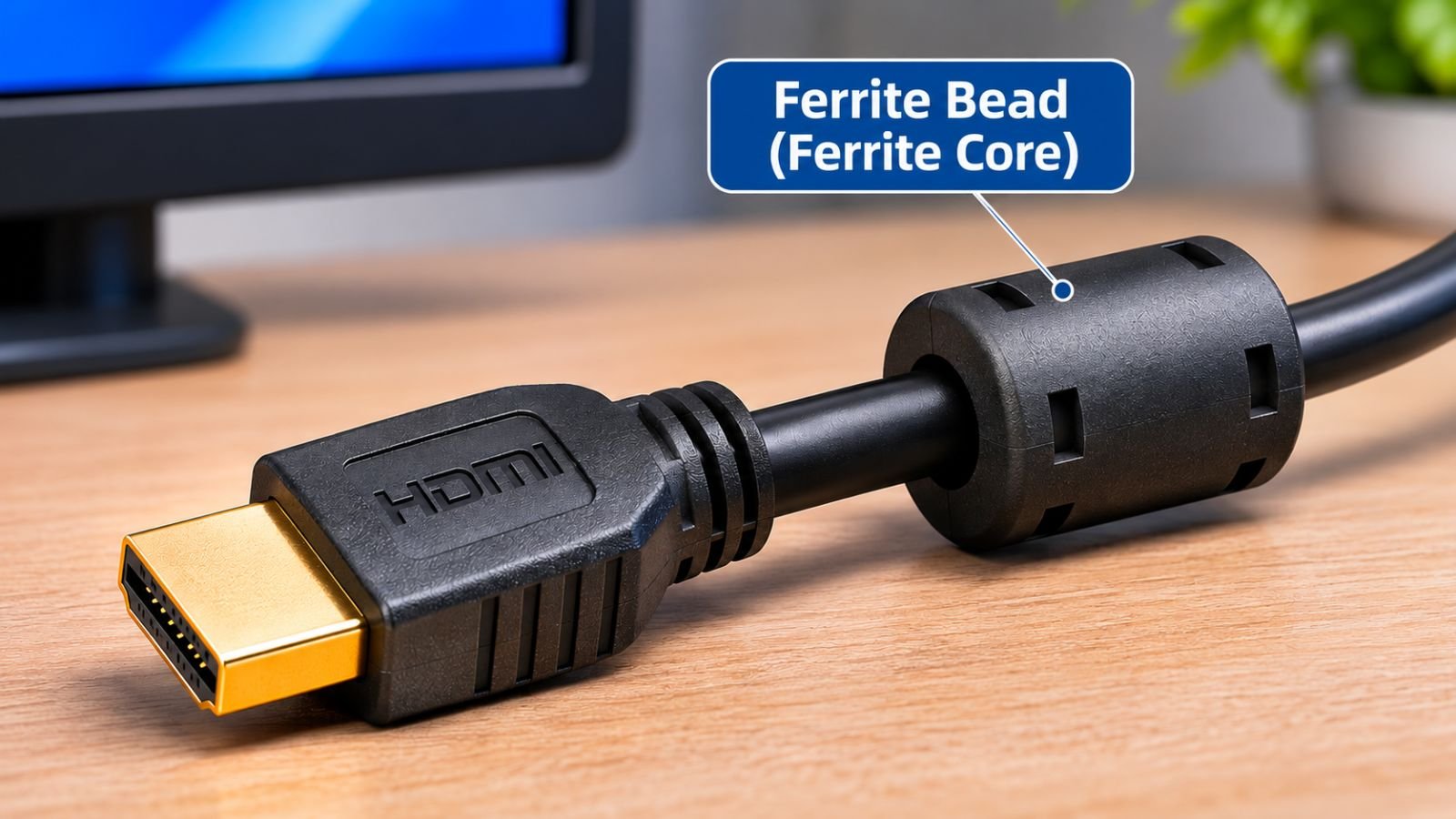
You may have noticed a small cylindrical bulge attached to an HDMI cable, laptop charger or computer power cord? It looks like an insignificant piece of plastic, but this little component serves an important purpose. Known as a ferrite core, it helps suppress unwanted electrical noise and electromagnetic interference.
The name comes from ferrite, a ceramic material made primarily from iron oxide combined with other metal oxides, such as manganese, zinc or nickel oxides. The word is derived from ferrum, the Latin word for iron.
So, what does it actually do?
Whenever electricity flows through a cable, it can generate electromagnetic interference (EMI). High-frequency electrical noise, produced by digital circuits and switching power supplies, can travel along cables and potentially affect nearby electronic equipment. Cables can also behave like antennas, unintentionally transmitting or picking up this interference.
This is where the ferrite core comes in. It acts as a passive noise suppressor. Its magnetic properties increase the cable’s impedance at certain high frequencies, making it harder for unwanted electrical noise to travel along the cable. Some of this unwanted energy is dissipated as a tiny amount of heat.
That is why ferrite cores (also known as ferrite beads or ferrite chokes) are commonly found on HDMI, USB, monitor and power cables. They help reduce interference without disrupting the intended transmission of data or electrical power.
Interestingly, these components require no separate power supply, have no moving parts and need virtually no maintenance. The next time you spot that little cylinder on a cable, remember it is a carefully engineered electromagnetic filter that helps your electronic devices operate reliably.