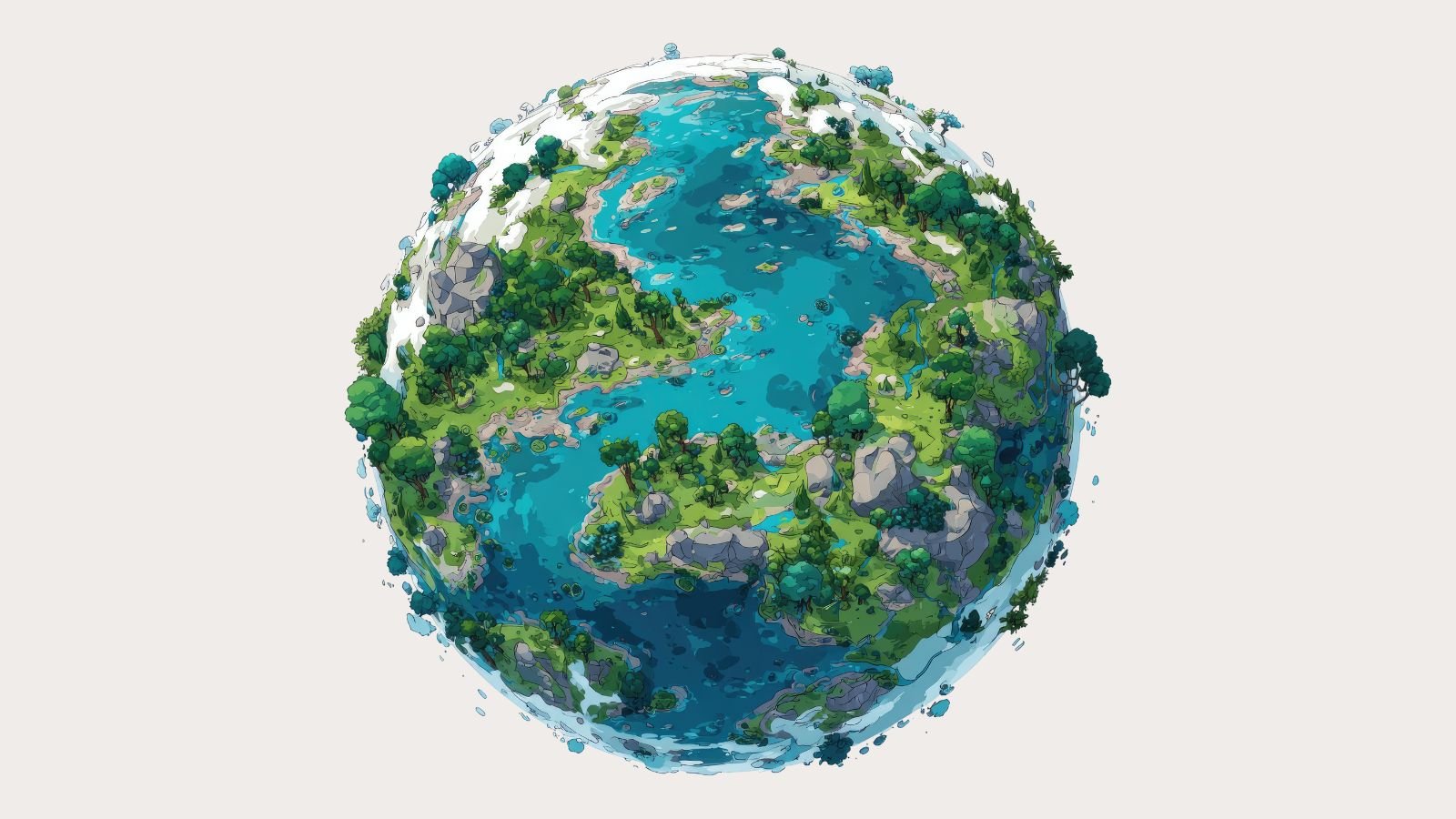
Why do towering trees thrive in some parts of the world, while cacti survive in others? Why are certain regions covered in lush green forests, while others remain frozen for most of the year? The answer lies in the Earth’s biomes, the large natural regions shaped by climate, geography and the organisms that inhabit them.
A biome is a large geographical region characterized by a particular climate and the plants, animals and other organisms adapted to living there. Temperature, rainfall, soil, sunlight and water availability largely determine the kind of life a biome can support. Unlike an ecosystem, which describes interactions among organisms and their surroundings at a particular scale, a biome encompasses many ecosystems sharing broad environmental characteristics.
The word biome was coined in the early 20th century. It combines the Greek word bios, meaning life, with the suffix -ome, used to denote a distinct group or whole. The term essentially refers to a major region of life.
The major biomes of the world
Biomes are broadly classified into two categories: terrestrial (land) and aquatic (water).
1. Terrestrial biomes
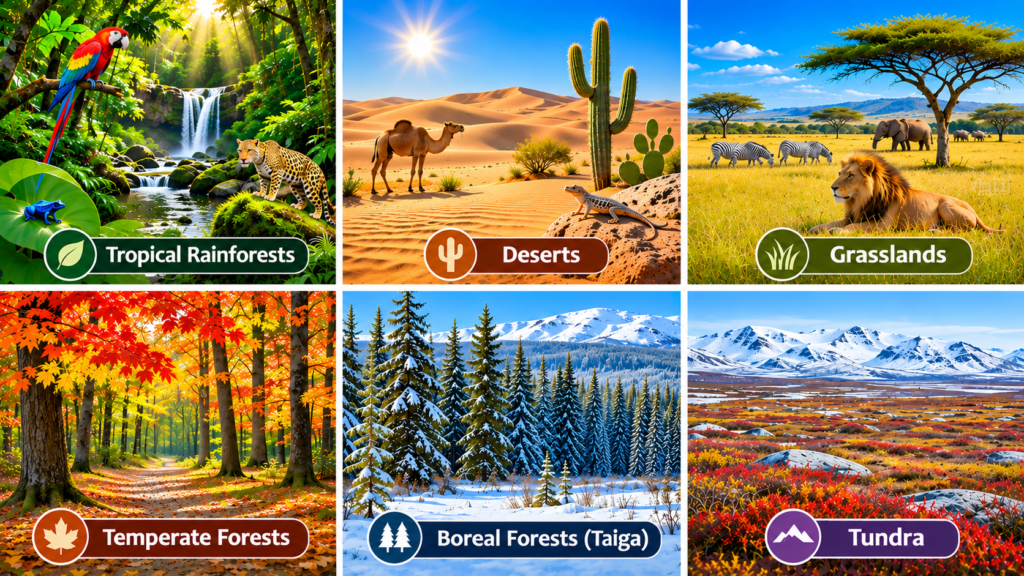
- Tropical rainforests: Found near the equator, these regions receive abundant rainfall and remain warm throughout the year. The Amazon rainforest is a classic example, supporting extraordinary biodiversity.
- Deserts: Characterized by very low rainfall, deserts can be hot or cold. The Sahara and Gobi are prominent examples. Plants and animals here have special adaptations to conserve water.
- Grasslands: Dominated by grasses, these include tropical savannas and temperate prairies. African savannas and the Indian grasslands are examples.
- Temperate forests: Experience distinct seasons and support trees such as oak, maple and beech.
- Boreal forests (Taiga): Found in colder northern regions, these forests are dominated by coniferous trees such as spruce and pine.
- Tundra: Extremely cold, largely treeless landscapes where vegetation includes mosses, lichens and small shrubs. Arctic regions are typical examples.
2. Aquatic biomes
Aquatic biomes cover approximately 75 per cent of Earth’s surface and are broadly divided into:
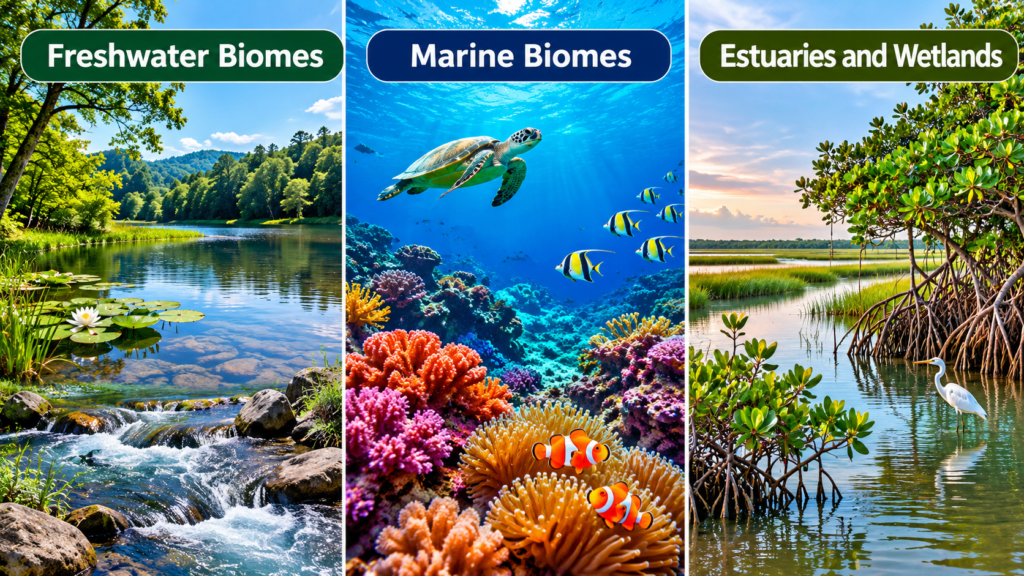
- Freshwater biomes: Include rivers, streams, lakes and ponds, where salt concentrations are low.
- Marine biomes: Include oceans and seas, characterized by saline water. Coral reefs and kelp forests are particularly rich marine ecosystems.
- Estuaries and wetlands: Estuaries are coastal areas where freshwater meets seawater. Wetlands, including marshes, swamps and mangroves, are environments where soil remains permanently or seasonally saturated with water. They provide important habitats and help regulate floods and filter pollutants.
The boundaries between biomes are not always clearly defined, and scientists use different classification systems. Some recognize six broad categories, while others identify several more specialized types.
Studying biomes helps scientists understand patterns of biodiversity, the distribution of species and the impact of environmental changes. As climate change and human activities alter natural habitats, understanding these ecological regions becomes increasingly important for conservation and the sustainable management of Earth’s resources.