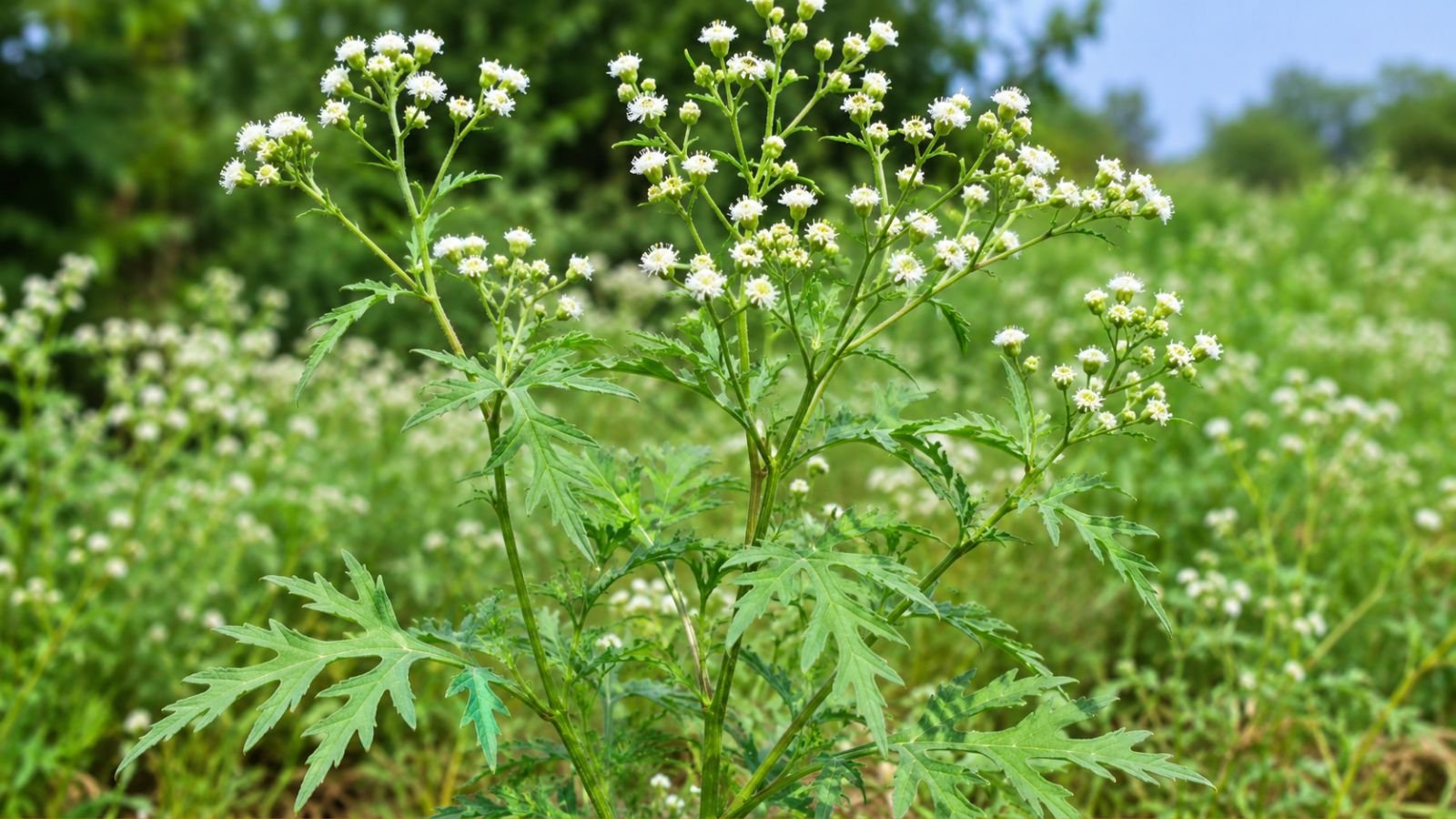
It looks harmless, even attractive, with its delicate green leaves and clusters of tiny white flowers. But beneath its innocent appearance lies one of India’s most troublesome invasive weeds: Congress grass, scientifically known as Parthenium hysterophorus.
Popularly called Vayyari Bhama (వయ్యారి భామ) in Telugu, Gajar Ghas (गाजर घास) or Congress Ghas in Hindi, and carrot weed in English, this plant has become a serious threat to agriculture, biodiversity and human health.
Its arrival in India has an interesting historical connection.
In 1951, newly independent India was struggling with severe food shortages. President Harry S. Truman signed the India Emergency Food Aid Act, authorizing up to $190 million in credit to help India obtain up to two million tons of food grains.
It is widely believed that Parthenium hysterophorus entered India as a contaminant in imported American grain during the 1950s, particularly in accounts linking its spread to later PL 480 wheat shipments. However, botanical records suggest the species may have been present in India much earlier. It was first formally observed near Pune in 1955 and described as a new record for India in 1956.
What followed was an ecological nightmare.
A single Parthenium plant can produce thousands of seeds, spreading rapidly through wind, water, animals and human activity. Worse, it releases chemicals into the surrounding environment that suppress the germination and growth of neighboring plants. This phenomenon, known as allelopathy, makes it a formidable competitor to agricultural crops and native vegetation.
Estimates suggest that approximately 35 million hectares of land in India have been affected by this invasive weed. Crop losses vary widely by crop and level of infestation; reported losses reach 40% in several crops, with higher estimates in particular studies.
Its consequences extend beyond agriculture. Exposure can cause severe skin allergies, dermatitis, hay fever, respiratory problems and asthma. The plant can also harm livestock when consumed with fodder.
Today, the weed can be seen flourishing along roadsides, vacant plots, agricultural fields, grazing lands and even in the Andaman and Nicobar Islands. Despite decades of efforts involving manual removal, herbicides and biological control, India has struggled to contain its spread.
There is a striking irony here. Food assistance intended to help a hungry nation is widely believed to have helped introduce or amplify the spread of a weed that would become a lasting threat to Indian agriculture. While the food grains were consumed decades ago, the unwelcome guest that may have accompanied them continues to thrive.