Yesterday, a visit to a sweet shop during Deepavali set me thinking about one particular sweet. Among the many varieties on display, motichoor laddu seemed to attract an unusual number of customers. Curious about its popularity, I decided to explore its origins, name and significance.
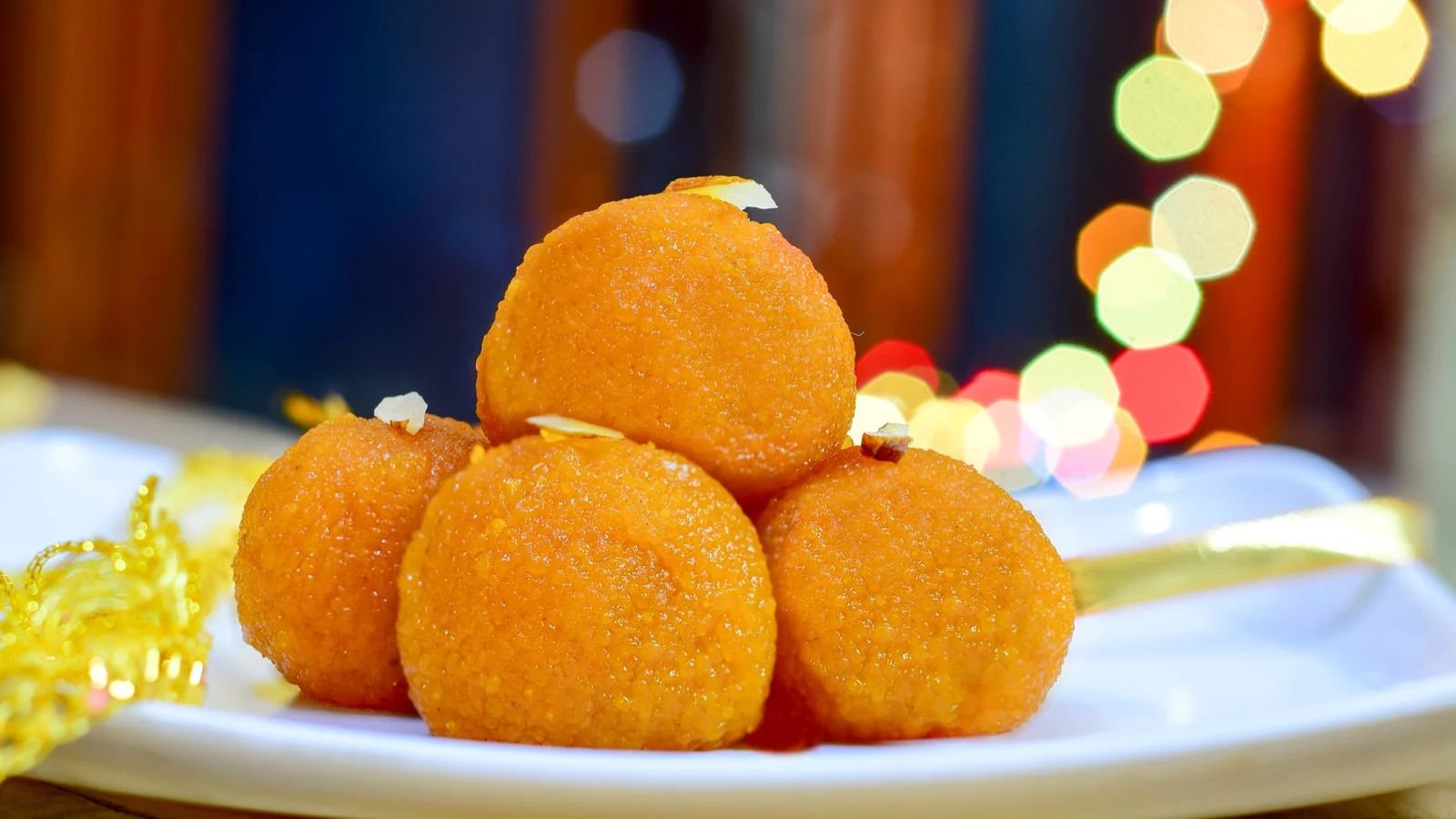
The name itself offers an interesting clue. Motichoor is derived from two Hindi words: moti, meaning pearl, and choor or chur, meaning crushed or crumbled. Together, they translate to “crushed pearls,” an apt description of the tiny, bead-like droplets that make up this sweet.
Motichoor laddu is closely related to the traditional boondi laddu. Both are made from gram flour (besan) batter, passed through a perforated ladle called a jhara into hot ghee or oil. The droplets are fried into boondi, soaked in sugar syrup and shaped into round balls. The difference lies primarily in their size. Motichoor uses very fine boondi, giving it a softer, more delicate, melt-in-the-mouth texture than the larger, grainier boondi laddu. Cardamom, saffron and sometimes rose water add to its flavour.
The exact birthplace and inventor of motichoor laddu remain uncertain. It is generally associated with the culinary traditions of northern Indian states of Rajasthan and Uttar Pradesh. Some popular accounts connect its name to a place called Motichoor in Uttar Pradesh, but this geographical connection is not well documented. The explanation based on its pearl-like appearance is more widely supported.
Laddu-like sweets have a long history in India, although the precise age of motichoor laddu itself is uncertain. Food historian K. T. Achaya, in A Historical Dictionary of Indian Food, traces related preparations in historical Indian culinary literature. However, the earliest appearance of motichoor in its modern form is difficult to establish with certainty.
Today, motichoor laddu holds a special place in Indian celebrations, from Deepavali and weddings to religious ceremonies and family occasions. Laddus are also commonly offered as prasad to deities such as Lord Ganesha. Sharing sweets is deeply embedded in Indian culture, symbolizing happiness, goodwill and auspicious beginnings. The expression mooh meetha karna (to sweeten one’s mouth) captures this sentiment beautifully.