Long before keyboards and screens, every printed word was assembled by hand — one tiny metal block at a time.
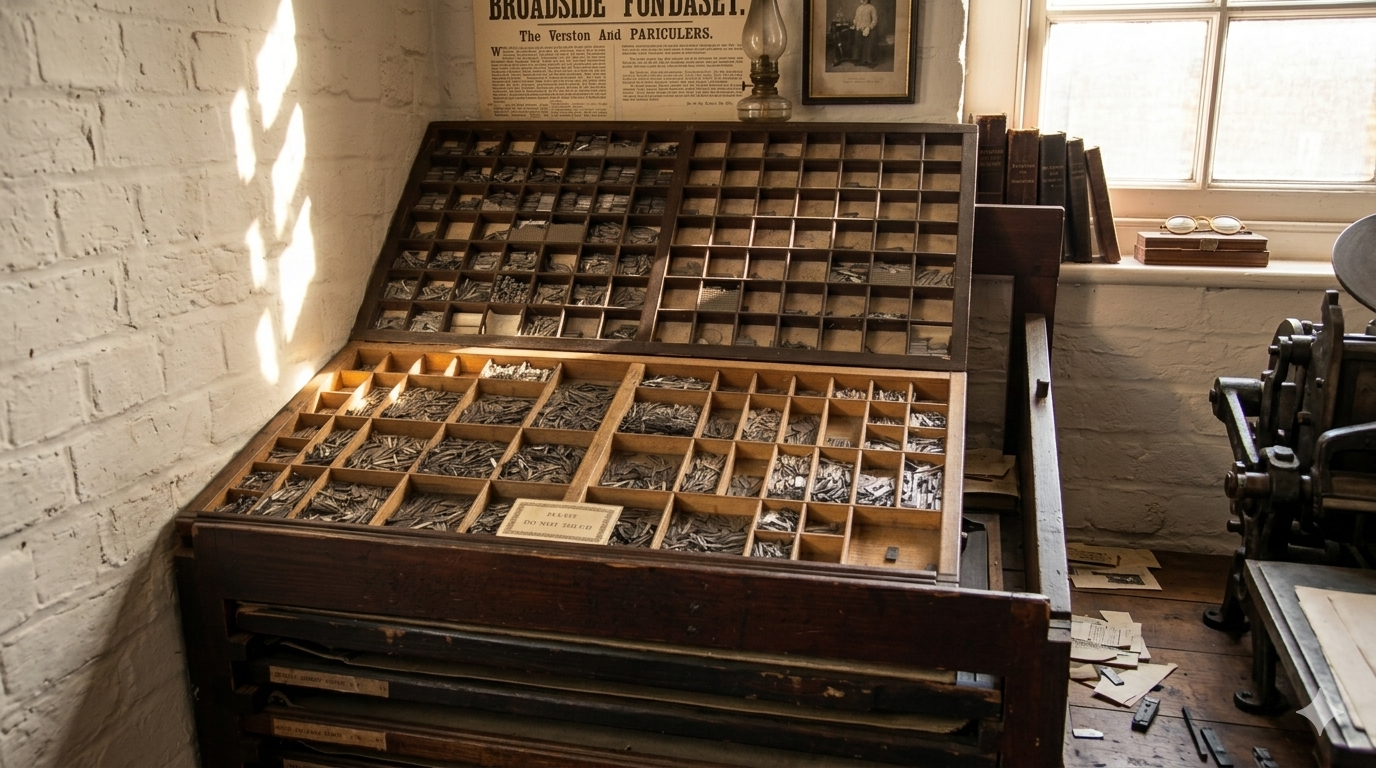
In the age of movable type printing, pioneered by Johannes Gutenberg in the 15th century, typesetters (known as compositors) worked at large, slanted wooden trays called cases. Each case held individual metal letter blocks, sorted into small compartments for speed.
By convention, the tray holding the capital letters was placed on the upper shelf of the compositor’s workstation — the upper case. The tray holding the small letters, punctuation, and frequently used characters sat on the lower, more accessible shelf — the lower case.
Compositors reached up for capitals and down for smalls dozens of times a minute. The physical geography of their workspace quite literally shaped the language.
When mechanical typesetting eventually made hand-composition obsolete, the trays disappeared. However uppercase and lowercase survived, quietly carrying centuries of print-shop muscle memory into the digital age.