Indigo is a dye obtained traditionally from plants of the Indigofera genus. It has been used for thousands of years to color textiles. While we often associate indigo with deep blue color and, of course, with blue jeans, there was a time when this color was so valuable that it became a major commodity in international trade. In colonial India, it became the reason thousands of farmers stood up against the British planters.
How is indigo obtained
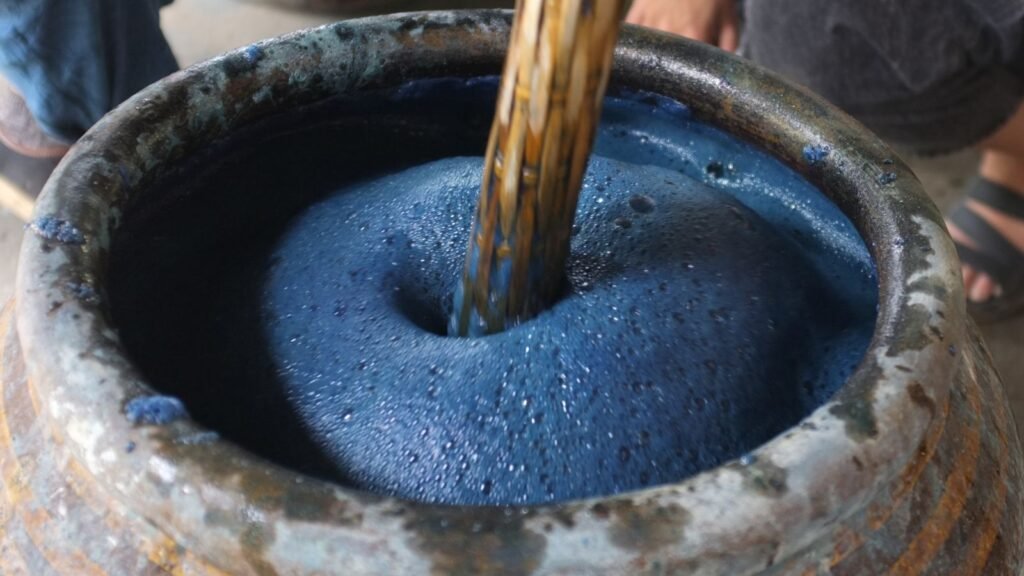
Natural indigo traditionally came from plants of the Indigofera genus, particularly Indigofera tinctoria, known as true indigo. Interestingly, the plant itself does not contain the blue dye in its final form. Its leaves contain a colorless compound called indican. After the leaves are harvested, they are soaked and fermented in water. This converts indican into indoxyl. When the liquid is exposed to oxygen, the indoxyl oxidizes and forms the deep blue pigment called indigotin. The pigment settles at the bottom, where it is collected, dried and made into blocks.
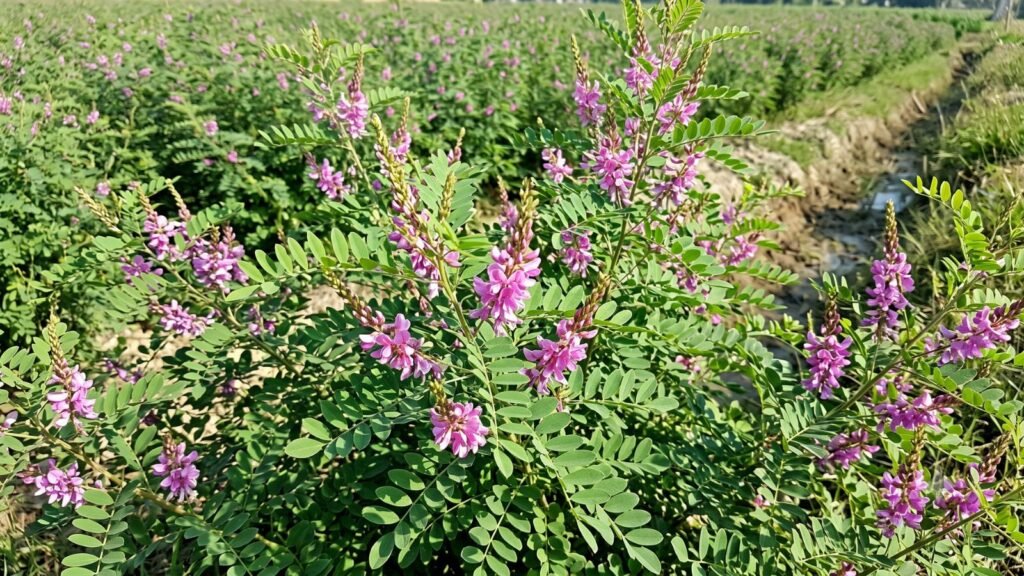
For centuries, indigo was prized for dyeing textiles because it produced a rich and relatively fast blue. It became an important export from India and was eventually used in everything from traditional fabrics to the denim used for modern blue jeans. Today, most commercial indigo is manufactured synthetically, although natural indigo continues to be used by traditional and specialist textile makers.
Why did the British force Indian farmers to grow it
The story took a darker turn under British rule. European demand for indigo was growing, and British planters in Bengal wanted Indian farmers to produce more of it. Under the ryoti system, cultivators were pressured into signing contracts that committed them to growing indigo on part of their land, often at least 25 percent of their holding. Planters provided advances and seed, but the farmers had to cultivate the crop and sell it to the planter.
For the farmers, the arrangement was deeply unattractive. Indigo was often grown on fertile land that they would rather have used for food crops. The crop could also exhaust the soil, while the price paid to cultivators was low. Advances could trap farmers in a continuing cycle of debt and contracts.
Eventually, the farmers said enough was enough. In 1859, thousands of cultivators in Bengal refused to grow indigo. The resistance became known as the Indigo Revolt or Blue Rebellion. The government subsequently appointed the Indigo Commission, which criticized the coercive practices of the planters and concluded that indigo cultivation was not profitable for the cultivators.
The Indigo Revolt marked an important episode in India’s history of resistance to colonial economic exploitation. A color that once represented wealth and trade become a symbol of resistance.