For many people across Andhra Pradesh and Telangana, the first sign of summer is the appearance of Banganapalli mangoes in local markets. Also known as Banginapalli, Banishan, Benisha, or Safeda in the north, this celebrated variety traces its roots to Banaganapalle, a historic town in the present Nandyal district of Andhra Pradesh. The town was once the seat of the Banganapalle princely state, governed by a line of Nawabs before its ruler signed the Instrument of Accession to join independent India in 1948.
The mango has been cultivated in the region for well over a century. The warm, dry climate and distinctive soil conditions of region (especially in the mandals of Banaganapalle, Paanyam, and Nandyal) have shaped the fruit’s character over generations. It earned a reputation for its generous size, and quality.
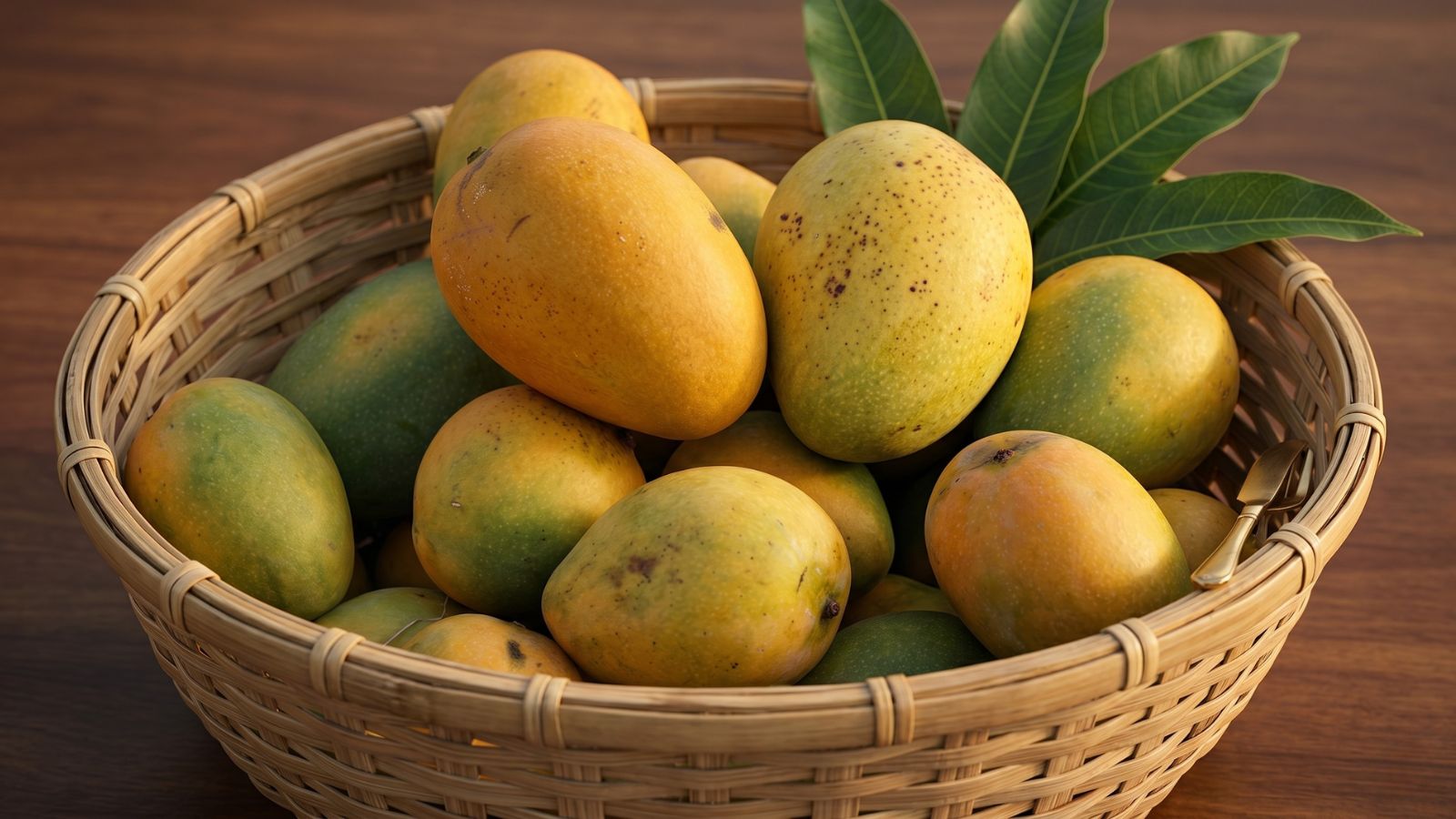
There are several traits that set the Banganapalli apart. The skin ripens to a pale golden yellow and is marked by faint cream-coloured spots, a feature considered distinctive to the variety. The seed is thin, and the flesh is notably low in fibre, lending the fruit a smooth, almost melt-in-the-mouth quality. Its firm texture makes it easy to slice cleanly, and its ability to withstand transport, retaining quality for up to three months in cold storage, has made it a reliable choice for growers and traders across the country.
The variety received Geographical Indication status in May 2017, formally recognizing its unique connection and protecting its name from misuse. The fruit remains one of India’s most widely grown and deeply cherished mango varieties. It’s also a pride of the Telugu-speaking region to fruit lovers across the country.