Few Carnatic compositions capture the spirit of Lord Ganesha as beautifully as “Vatapi Ganapatim Bhajeham.” Its opening phrases are familiar to generations of music lovers. Yet behind this popular kriti is a fascinating story that brings together music, mythology, history and devotion.
The composition was created by Muthuswami Dikshitar (1775–1835), one of the three great composers of the Carnatic Trinity. Dikshitar was known for his command of Sanskrit, his knowledge of temple traditions and the philosophical depth of his compositions. Vatapi Ganapatim Bhaje is set in Hamsadhwani, a bright pentatonic raga (a musical scale that uses only five tones), traditionally associated with auspicious beginnings.
Who is Vatapi Ganapati?
Vatapi was the ancient name of present-day Badami in Karnataka, the powerful capital of the Chalukyas. In the seventh century, it became the centre of a major conflict between the Chalukyas under Pulakeshin II and the Pallavas of Kanchipuram, led by Narasimhavarman I, one of the most formidable rulers of the Pallava dynasty.
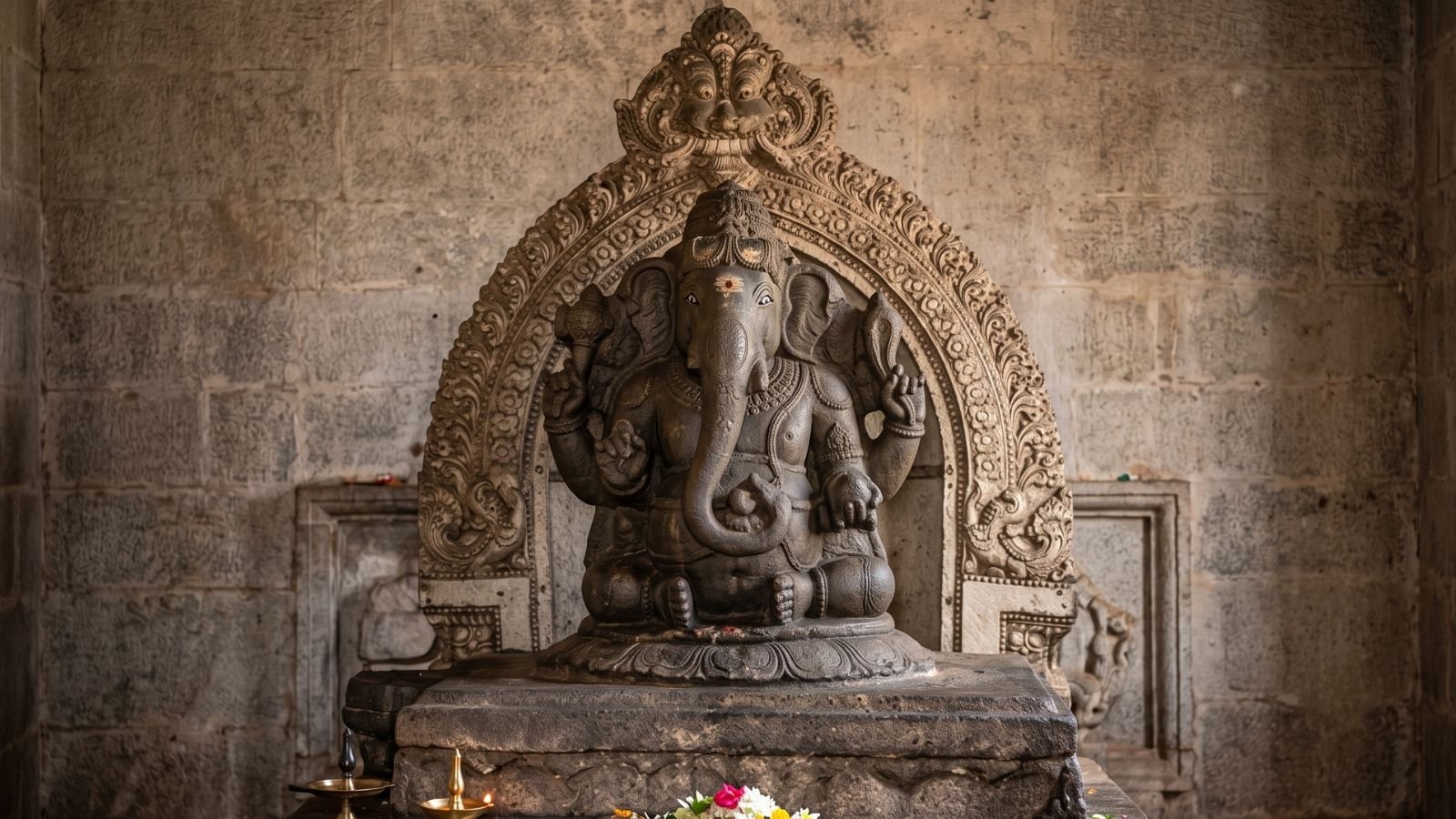
The conflict reached its decisive stage when Narasimhavarman I launched a campaign against the Chalukyan kingdom and, around 642 CE, captured and sacked Vatapi. Pallava inscriptions celebrate Narasimhavarman’s victory and record his title Vatapikonda — “the conqueror of Vatapi.” It was during this period of Pallava military expansion that, according to a long-standing temple tradition, a Ganesha image was brought from the defeated Chalukyan capital to Tiruchengattankudi in Tamil Nadu by Siruthondar (Paranjothi), a Pallava military commander who is traditionally identified with the general who led the campaign. The image is now worshipped as Vatapi Ganapati at the Uthrapathiswaraswamy Temple.
There is, however, an important historical qualification. While the Pallava conquest of Vatapi and Narasimhavarman I’s victory over the Chalukyas are well attested, the specific connection between the present idol at Tiruchengattankudi and a seventh-century image from Vatapi has not been conclusively established through surviving contemporary records. Some art historians have also questioned the antiquity of the present sculpture. The story of Vatapi Ganapati is therefore best understood as a deeply respected temple tradition rooted in a genuine episode of seventh-century Chalukyan–Pallava history, even though the journey of the particular idol and some details surrounding it remain open to historical debate.
What does the kriti convey?
Dikshitar begins with a straightforward expression of devotion: he worships Vatapi Ganapati. He then describes Ganesha as the remover of obstacles, the giver of blessings and a divine presence associated with the sacred sound Om.
The kriti also refers to Muladhara, the foundational centre in yogic thought. This connects Ganesha with ideas of stability, spiritual grounding and the awakening of consciousness. Dikshitar also brings the familiar form of Ganesha into his verses, referring to his elephant face, curved trunk and divine attributes, along with his worship by sages.
“Vatapi Ganapatim” is therefore both a prayer and a vivid portrait of Ganesha. It celebrates the deity while reminding the listener of the importance of seeking strength and clarity before embarking on something new.
Perhaps that is what makes the composition so fitting as an invocation. Before we begin a journey, a task or a new chapter in life, it asks us to pause, seek Ganesha’s blessings and move ahead with faith.
Note: The image used in this blog is not the original idol. It is a recreation based on available photographs and has been used because the original photographs are not clear enough for publication. The recreated image is intended to closely represent the original idol.