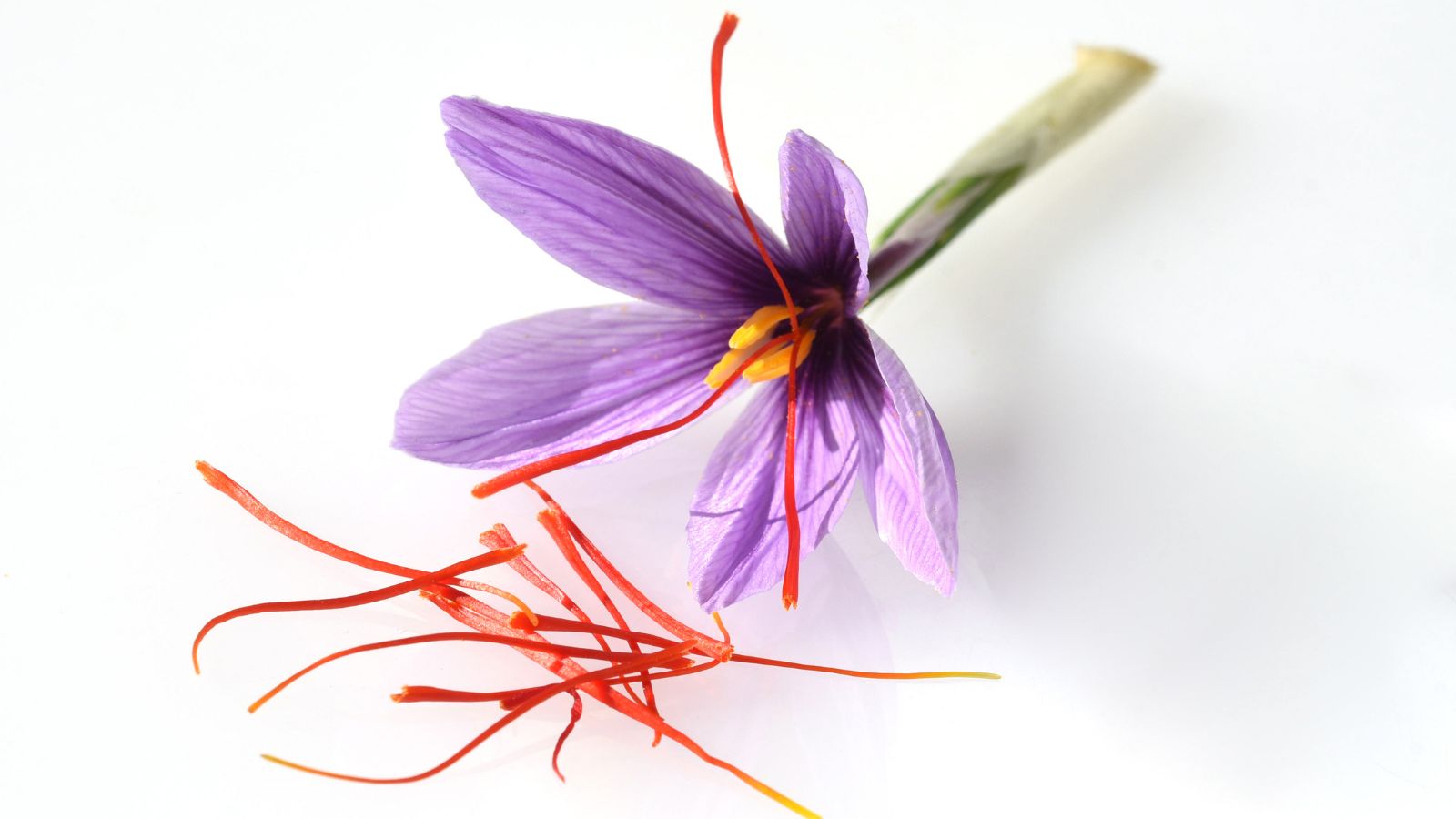
Saffron comes from Crocus sativus, a small purple-flowering plant cultivated primarily in Iran, Kashmir, and Spain. Each flower produces just three slender red stigmas, which are the source of the spice. These must be hand-plucked during a narrow two-to-three-week harvest window each autumn, always before sunrise, as heat degrades the delicate compounds.
To collect 100 grams of dried saffron, roughly 15,000 to 20,000 flowers are required. No machine can replicate the precision of human fingers at this scale, making labor the primary driver of its staggering price.
As of 2026, genuine Grade I saffron retails between $20 and $30 per gram in most markets, while Iranian wholesale saffron trades at approximately $2,900 to $3,000 per kilogram. Kashmiri saffron, considered the finest variety, commands an even steeper premium due to its limited supply and exceptional depth of color. In Hyderabad, a gram of finest Kashmiri saffron costs Rs 810 per gram. That’s a jaw-dropping Rs 8,10,000 per kilogram.
Beyond the kitchen, saffron has a rich parallel life. Ayurvedic and Persian medicine have long prescribed it for mood elevation and inflammation. The textile industry once used it as a dye, producing the iconic saffron-orange of Buddhist robes. Perfumers prize its warm, honeyed depth, and cosmetic brands increasingly feature it in premium skincare formulations for its antioxidant properties.
A spice built entirely on patience, saffron earns every rupee of its worth.