Some words carry entire civilizations inside them. Laconic is one of them.
Laconia was a province of ancient Greece. Its capital was Sparta, a city that valued military discipline above all else, including conversation. The Spartans trained warriors, not wordsmiths. From this relentless austerity came the word spartan, meaning simple, strict, and disciplined. And from their deep distrust of unnecessary words came laconic, meaning brief to the point of bluntness.
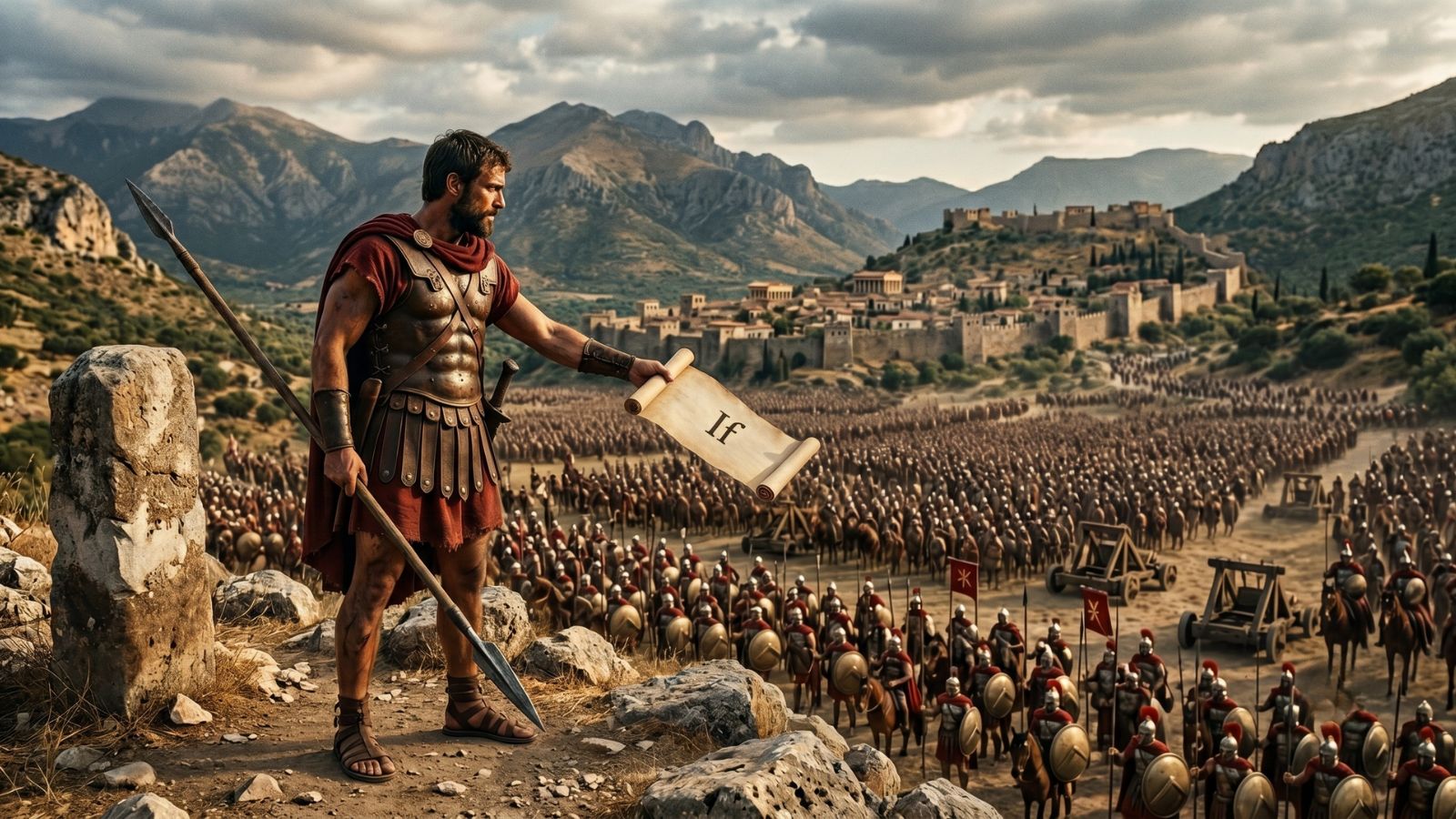
The most famous example of laconic brilliance involves Philip of Macedon, father of Alexander the Great. Flexing his military muscle, Philip sent a warning to Sparta’s leaders: “If I enter Laconia, I shall raze Sparta to the ground.”
The Spartans wrote back one word: If.
No threats. No panic. No wasted breath. Just a single syllable that said everything.
Philip never invaded. Turns out one word was an entire army.
In use
His laconic answer ended the debate instantly.
She lived a spartan life, focused on discipline rather than comfort.