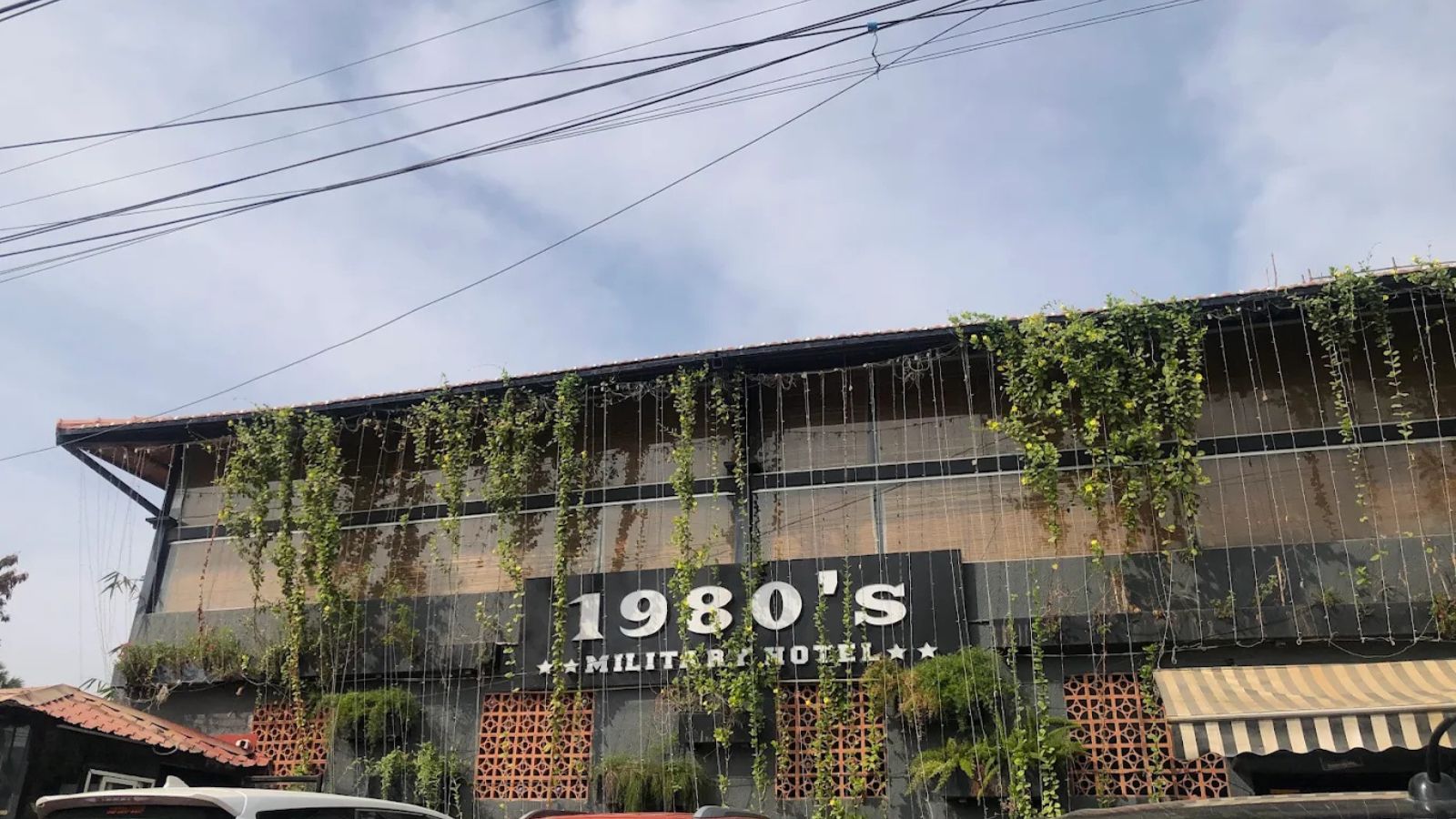
Despite the name, Military Hotels have no official connection with the armed forces. The term refers to a distinctive style of traditional South Indian eateries, especially in Karnataka, that became known for serving hearty non-vegetarian meals at a time when most public restaurants catered primarily to vegetarian customers.
The exact origin of the name remains a subject of debate. One popular theory dates back to 1638, when the Maratha general Shahaji Bhonsle, father of Shivaji Maharaj, captured Bengaluru while serving the Bijapur Sultanate. According to local accounts, some Maratha soldiers or their descendants later settled in the city and opened eateries serving robust Marathi-style meat dishes. Because these founders had military backgrounds, their establishments supposedly came to be known as Military Hotels. However, historians caution that this remains a tradition rather than a proven fact. There is no surviving documentary evidence directly linking seventeenth-century Maratha soldiers to the first documented Military Hotels, which appeared only in the early twentieth century.
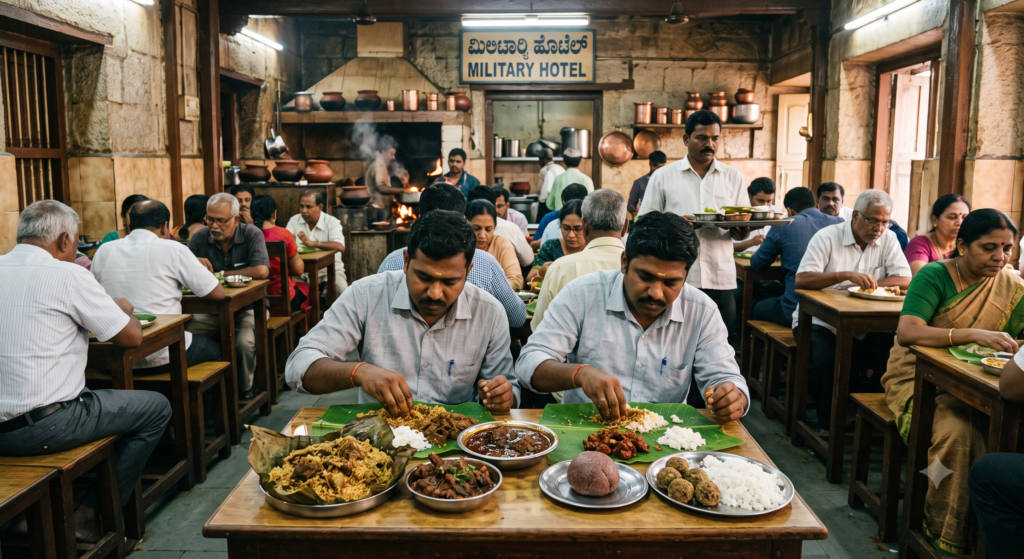
Another widely accepted explanation traces the name to Bengaluru’s later military history under the British, when eateries near cantonments served soldiers and travelers. Yet another theory suggests that the term simply distinguished these meat-serving establishments from the vegetarian “Brahmin hotels” that dominated the region, with “military” becoming synonymous with non-vegetarian food rather than military ownership.
One of Bengaluru’s best-known examples is S G Rao’s Military Hotel, established in 1908 by Sri Govinda Rao. Renowned for its iconic donne biryani and traditional Karnataka meat dishes, it is regarded as one of the city’s oldest Military Hotels. Although British soldiers are believed to have dined there during the colonial period, the restaurant has always been privately owned and has never had any official connection with the armed forces.
Today, Military Hotels can be found across South India, preserving heritage, recipes, and a unique dining culture that has thrived for well over a century.