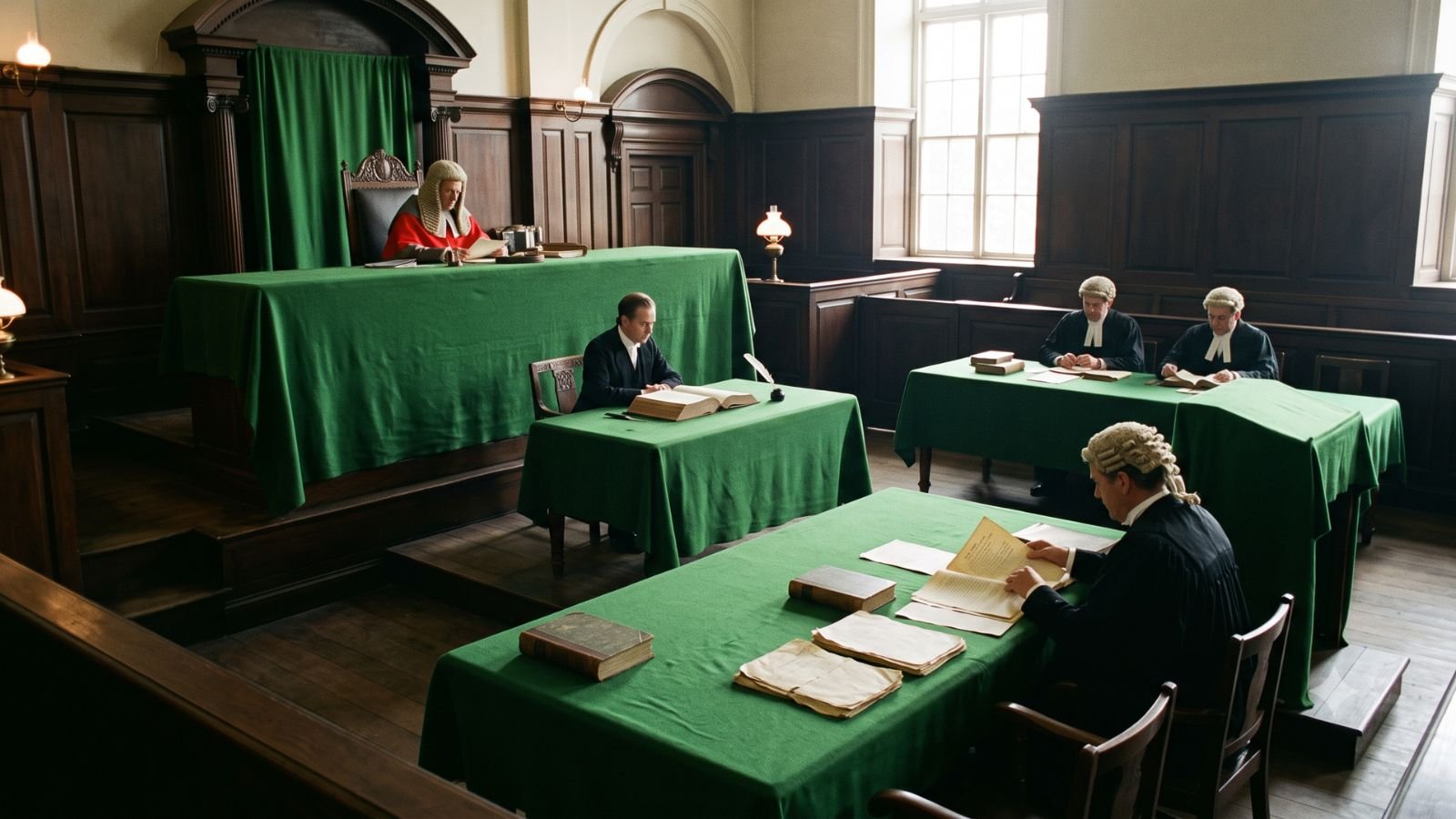
Walk into an old courtroom almost anywhere in the Commonwealth, and you may notice something curious. The judge’s bench, lawyers’ tables, and even witness stands are often covered with green cloth. It may seem like a decorative choice, but the tradition actually began for practical reasons centuries ago.
The fabric used is called baize (pronounced bayz), a thick, durable woolen cloth that became popular in medieval and early modern Europe. Courts in England covered wooden tables with green baize to protect expensive furniture from constant wear, soften the noise of books and writing instruments, and provide a sturdy surface for handling legal documents.
The color green was equally purposeful. Before electric lighting, judges, lawyers, and clerks spent long hours reading handwritten records under candlelight or natural daylight. The subdued green surface reduced glare and was gentler on the eyes than lighter or polished finishes, helping minimize visual fatigue during lengthy proceedings.
As the British legal system spread across its colonies, including India, the custom traveled with it. While many modern courtrooms have adopted contemporary furnishings, green baize continues to survive in several jurisdictions as a symbol of judicial tradition. What began as a practical workplace solution has evolved into one of the legal world’s most enduring visual traditions.