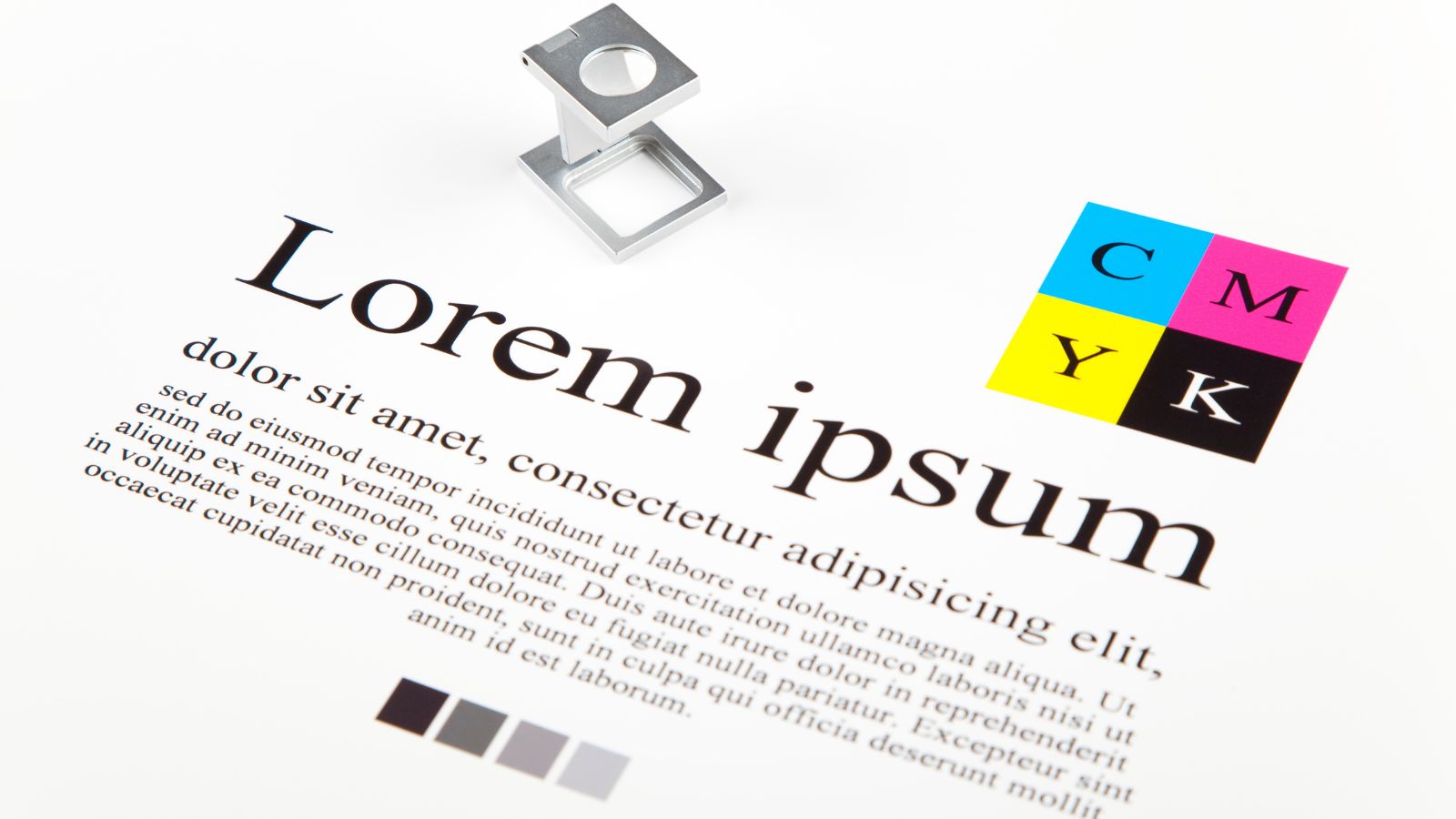
The phrase Lorem Ipsum is a Latin fragment derived from De Finibus Bonorum et Malorum (“On the Ends of Good and Evil”), a philosophical work written by Marcus Tullius Cicero in 45 BC. The standard passage begins with “Neque porro quisquam est qui dolorem ipsum quia dolor sit amet…”, loosely translating to: “Nor is there anyone who loves pain itself, because it is pain and thus wants to obtain it.”
It is not random gibberish. Lorem Ipsum is a deliberately scrambled excerpt of classical Latin, stripped of meaning so readers focus on form rather than content.
Designers and typesetters have relied on this placeholder text since the 1500s, when an unknown printer scrambled the passage to create a specimen type book. It gained modern prominence in the 1960s when Letraset sheets popularized it for desktop layouts.
Its widespread appeal comes down to three qualities. First, it closely mimics the natural distribution of letters found in real English or Romance language text, making viewers to focus on layouts, typography, and color palettes without being distracted by reading content. Second, because it carries no readable meaning, reviewers concentrate entirely on spacing, font choice, and visual hierarchy. Third, its familiarity signals to any collaborator that content is still pending, preventing premature copy edits on what is essentially structural scaffolding.
Today, countless design tools generate Lorem Ipsum automatically, ensuring that the voice of a 2,000-year-old Roman philosopher still quietly shapes every wireframe, pitch deck, and web prototype we build.