Before traffic lights existed, city streets were crowded with pedestrians, horse-drawn carriages, bicycles, streetcars, and an increasing number of automobiles. The solution to this growing chaos came from an unexpected source: the railways.
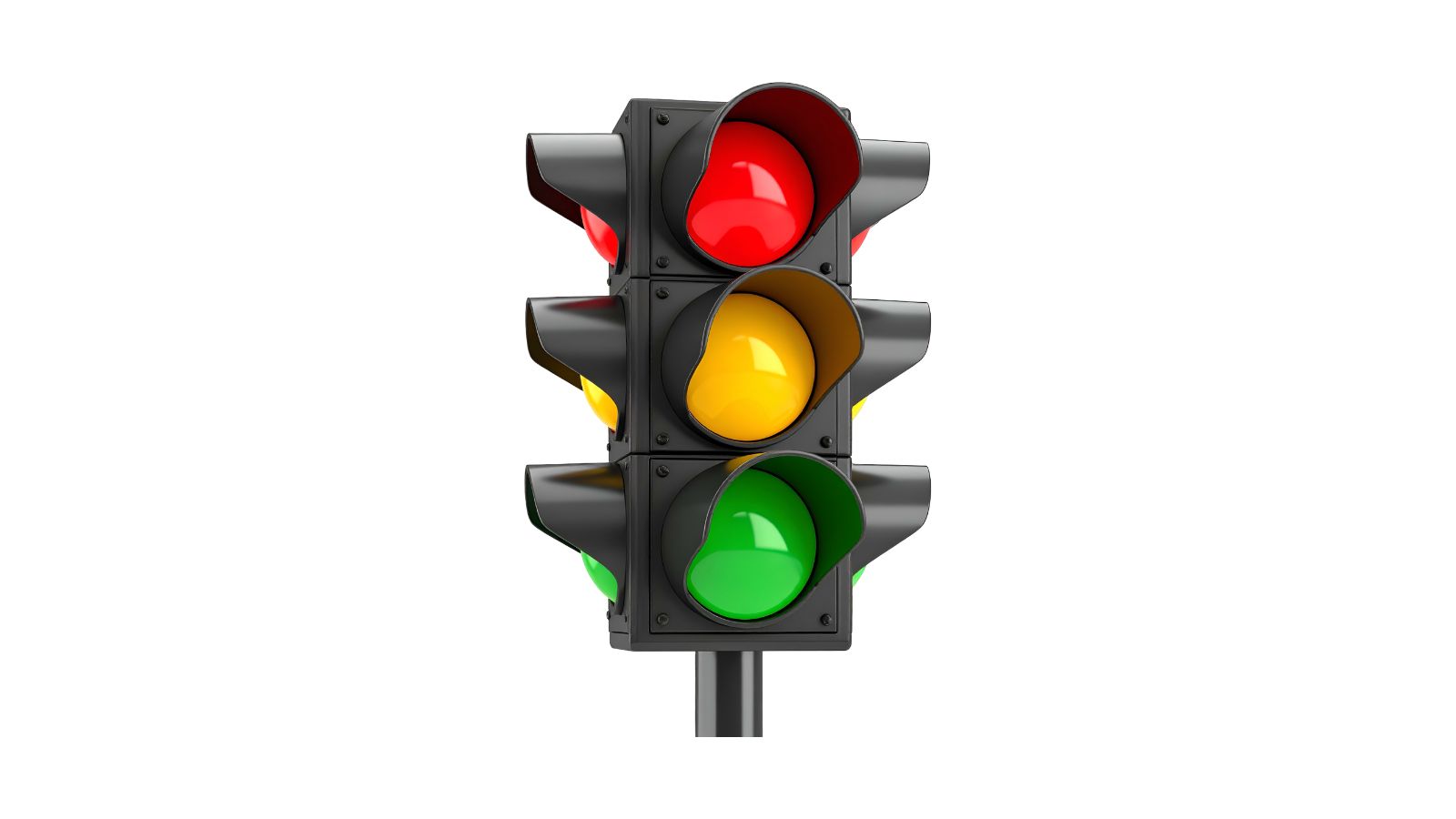
Railway operators began using colored light signals in the 1830s. In the earliest systems, red meant stop, white meant go, and green signaled caution. White, however, proved dangerous. If a red lens broke, the white light behind it could be mistaken for a go signal. To prevent such accidents, railroads reassigned green to mean go and adopted yellow (amber) for caution because it was highly visible and easily distinguished from both red and green. Red remained the stop signal, aided by its long wavelength, which makes it visible from greater distances.
The world’s first traffic signal was installed outside the Houses of Parliament in London in 1868. Designed by railway engineer J. P. Knight, it was gas-powered and manually operated by a police officer. Its service was short-lived, ending after a gas leak caused an explosion.
The first electric traffic signal appeared in Cleveland, Ohio, in 1914, using only red and green lights. In the early 1920s, William Potts introduced the now-familiar three-color system by adding an amber warning light between stop and go. In 1923, Garrett Morgan patented a traffic signal featuring a transitional warning phase, further improving traffic control.
By 1935, red, yellow, and green had been officially standardized across the United States, creating one of the world’s most successful systems of universal visual communication.