Category Miscellaneous

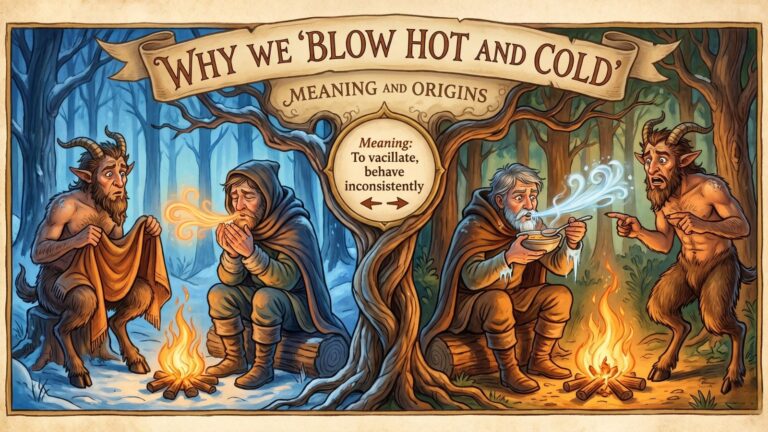
What does “blow hot and cold” really mean

The expression “to blow hot and cold” means to behave inconsistently or to vacillate between opposing attitudes, especially in a way that suggests indecision or insincerity. A person who “blows hot and cold” may support something one moment and oppose…


Ps, Qs, and the art of not messing up

The expression “mind your Ps and Qs” means to be careful about one’s behavior, manners, or language. Used today in offices, classrooms and dinner tables alike, it acts as a gentle reminder to stay polite and attentive, especially in social…

Why do we say “get down to brass tacks”?

The phrase “get down to brass tacks” means to set aside small talk and peripheral details in favor of the core issue. It marks a shift from preliminaries to substance, from generalities to specifics, and from polite conversation to focused…

Lorem Ipsum: the placeholder text that shaped design

The phrase Lorem Ipsum is a Latin fragment derived from De Finibus Bonorum et Malorum (“On the Ends of Good and Evil”), a philosophical work written by Marcus Tullius Cicero in 45 BC. The standard passage begins with “Neque porro quisquam est qui…

The story behind “turn a blind eye”

The expression “to turn a blind eye” means to deliberately ignore something, choosing inaction over acknowledgement. A manager who notices policy violations but says nothing has turned a blind eye. So has a neighbor who witnesses wrongdoing and quietly looks…

Why are school buses yellow?

That unmistakable shade of yellow you see on a school bus is no accident. It is the result of deliberate science, a visionary conference, and one man’s determination to make the roads safer for children. In 1939, Columbia University professor Frank Cyr convened…

Poramboku: the fall of a word that once meant shared wealth

The term poramboku is a fascinating example of how a technical administrative word evolved into a social slur. Derived from the Tamil elements puram (“outside”) and pokku (“account” or “record”), it originally referred to land outside or exempt from revenue registers. During the Chola period…